

Quick Answer
Yes, mouthwash works, but only for the job its ingredients are built for: fluoride rinses help fight cavities, antibacterial rinses cut gum disease bacteria, and breath rinses mostly mask odor.
No rinse replaces brushing, flossing or a professional cleaning. Here is the honest trade-off. A rinse strong enough to knock back harmful bacteria can also suppress the helpful ones when used too often, so more is not better. Choosing starts with the label, not the flavor.
Key Points
- Dr. Stella Kim of SF Dental writes that fluoride rinses fight cavities by strengthening teeth, while alcohol and chlorhexidine rinses kill many bacteria behind gingivitis and periodontal disease.
- Registered dental hygienist Dr. Derik explained in a 2021 video that enamel begins to demineralize below pH 5.5, yet most mouthwashes sit between pH 3 and 6.
- On the 2023 ZOE podcast, researcher Dr. Alpdogan Kantarci advised rinsing once a day before bed, warning that too much mouthwash suppresses the helpful bacteria as well.
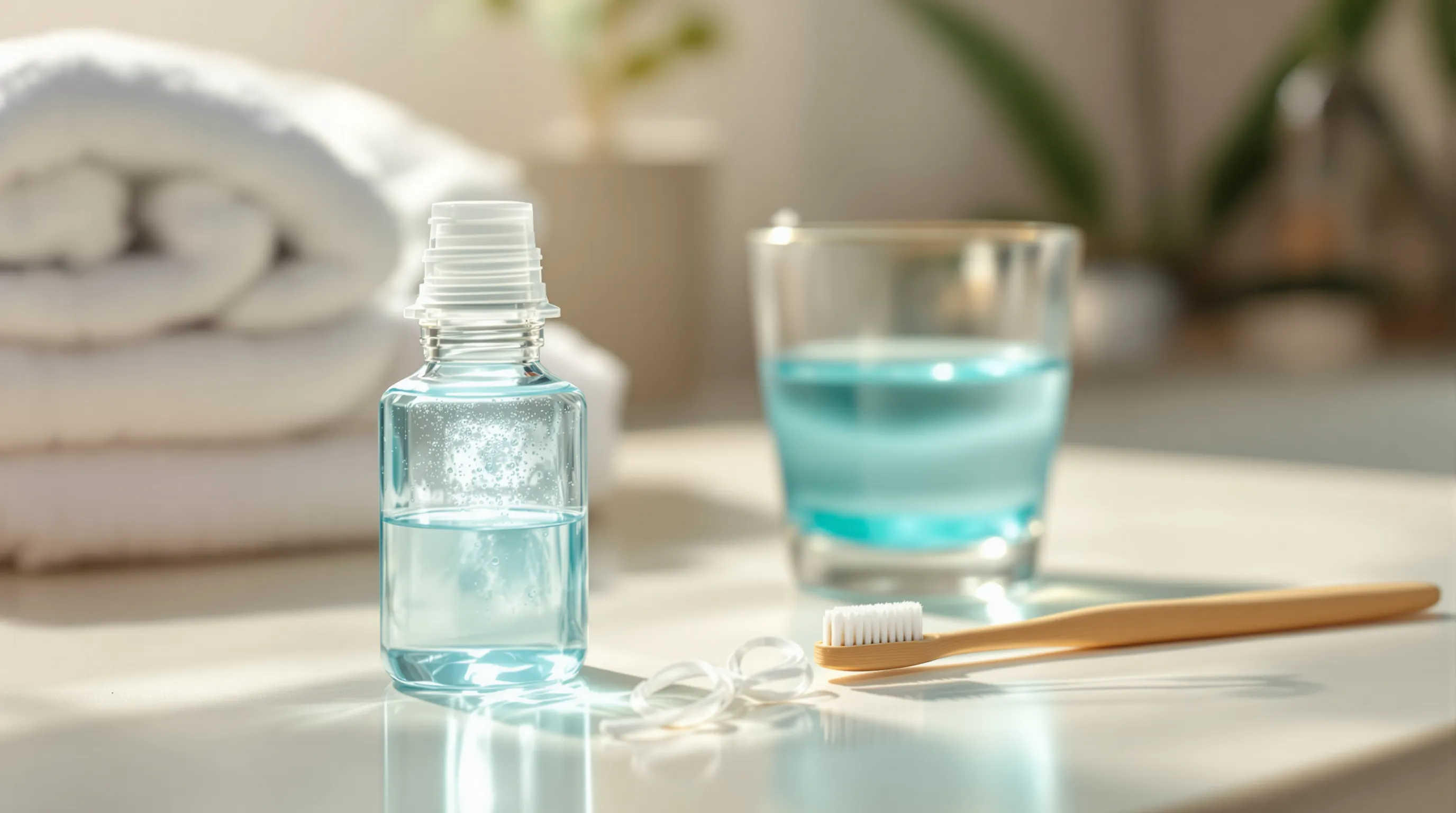
A rinse can help with specific jobs, but the toothbrush and floss still do the heavy lifting.
The best cosmetic dentists in Lawrenceville protect the enamel and gums beneath a beautiful smile, and they will tell you plainly which rinse helps and which one only smells nice.
Why would a cosmetic dentist care about the bottle on your bathroom shelf? Simple. Whitening, bonding, veneers and crowns all rely on healthy enamel and calm gum tissue underneath, so the daily habits that protect those surfaces matter just as much as the work done in the chair. A stunning smile makeover deserves a home routine that keeps it looking fresh for years!
Did you know that two bottles sitting side by side in the oral care aisle can be built for completely different jobs? Some rinses carry fluoride to help fight cavities. Others carry antibacterial agents aimed at gum trouble. Plenty of them mostly freshen breath, and that is all.
So what should you look for in a Lawrenceville cosmetic dentist when it comes to rinsing? Look for someone who asks what you want the rinse to do before suggesting a brand, checks your enamel and gum line at each cleaning, and explains when a stronger product makes sense and when it does not. That kind of guidance turns a vague shopping trip into a clear choice.
Below, you will find what mouthwash can genuinely accomplish, how much rinsing is too much, why acidity deserves a second look, and how antibacterial rinses have even found their way into hospital planning before surgery.
Picture a glossy commercial, a sparkling blue bottle, and a promise in bold letters: "Better than flossing." A famous mouthwash company really did pick that slogan, and Dr. Gary Yanowitz, a Cooper City, Florida dentist, notes that it drew negative feedback for making a false claim. Talk about overpromising! His verdict on the idea of rinsing instead of flossing was blunt: "This is simply not true."
So does mouthwash really work? Yes, when it is matched to a job. A fluoride rinse helps people at high risk for cavities. An antibacterial rinse without alcohol suits active gingivitis. A rinse used only to chase away bad breath is another story. A registered dental hygienist who tests rinses warns that a fluoride or essential-oil rinse used that way will "only mask the real problem," whether that problem is gum disease, decay or an abscess. Even choosing a bottle is tricky. Manufacturers don't print acidity on the label.
Before you buy, turn the bottle around and check the label for an active ingredient such as fluoride. It is not a stand-in for your toothbrush. The sections below separate what a rinse can genuinely do, such as reducing bacteria and helping fight cavities, from the work that only brushing, flossing and regular cleanings can handle, starting with the question nearly everyone asks first.
Does mouthwash really work, or does it just freshen breath?
Yes, mouthwash works, but only for specific jobs. Fluoride rinses help fight cavities and antibacterial rinses knock back gum-disease bacteria, while no rinse can replace brushing, flossing or professional cleanings.
Before you grab the next bottle off the shelf, run through these steps:
- Name the job you want done: fresher breath, fewer cavities, or calmer gums.
- Check the label for an active ingredient that matches that job, such as fluoride for cavity protection.
- Keep brushing and flossing exactly as before, because the rinse is an extra, never a swap.
- Book a dental visit if bad breath or bleeding gums keep coming back.
Dr. Stella Kim, a San Francisco dentist and UCSF School of Dentistry graduate, laid out the science in an SF Dental explainer last updated in 2020. Fluoride rinses have been shown by scientific studies to fight cavities by strengthening teeth and reducing demineralization. Alcohol and chlorhexidine rinses kill many of the bacteria responsible for periodontal disease and gingivitis. Then came the line every bathroom shelf should carry: "dental rinses are not a replacement for proper oral hygiene." Isn't it amazing how one sentence can save a smile?
The common assumption is that a minty, tingly mouth is a clean mouth. Well, that idea could not have been more wrong! Bad breath can even begin beyond the mouth, in the digestive tract, according to one oral health researcher, and no rinse reaches that far. Persistent bad breath is usually a sign that something else is wrong with oral health, the same explainer adds, so it calls for a dentist rather than a stronger rinse. At your next cleaning, ask your hygienist whether your gums or your enamel need the extra help.
Why does this matter so much to a practice like ours? Our doctors trained for the moment small problems stop being small. Our team's background includes a DMD and residency with honors in prosthodontics and oral reconstruction, the work of rebuilding teeth that have broken down or gone missing. That kind of training keeps us honest about how much a nightly swish can protect, and how much it can't. We are also certified in BOTOX Cosmetic and dermal fillers, so we think about the whole smile, the teeth and the face around them, rather than one product in one bottle.
Straight talk like this is part of what we offer every patient. Imagine Advanced Dental Arts holds a 4.9 average rating from 587 Google reviews. If you are still hunting for a dental home closer to your neighborhood, our guide to choosing a dentist near West Windsor walks through what to check before you book.
So which rinse earns its spot on the shelf, and how much of it is too much? Let's look at what the researchers say about rinsing in moderation.
How much of the mouthwash on store shelves is built to treat anything?
Swishing feels like doing something for your mouth. A market report updated this fall suggests the biggest category on the shelf was built mainly for how that swish feels.
Fortune Business Insights, a firm that sizes consumer markets, puts cosmetic mouthwash at about 45% of the global market in its report last updated in October 2026, ahead of therapeutic rinses at about 40%. The firm describes the leader plainly: cosmetic mouthwash "does not typically contain active medicinal ingredients but focuses on providing instant freshness and mild antibacterial action."
Sales share cannot tell you how many people rinse with each kind or what happens in their mouths. The split does suggest that the bottle in your bathroom may be doing a smaller job than you think.
The rinses that do more list an active ingredient, and dentists group them by what that ingredient does. Dr. Stella Kim, a San Francisco dentist, writes that fluoride rinses "have been shown by scientific studies to fight cavities by strengthening the teeth and reducing demineralization," while alcohol and chlorhexidine rinses "kill many of the bacteria responsible for periodontal disease and gingivitis." A post from the Florida practice of dentist Gary Yanowitz starts every choice from the purpose: cavity risk, gingivitis or periodontal disease.
| The job you want done | What to look for | What it can do | Where it stops |
|---|---|---|---|
| Fresher breath | Often nothing: cosmetic rinses typically lack active medicinal ingredients | Instant freshness, mild antibacterial action | Fixing whatever is causing the odor |
| Fewer cavities | Fluoride | Strengthens teeth and reduces demineralization | Fluoride is "only one factor" in how cavities form, one hygienist notes |
| Gum bacteria | An antibacterial rinse. For gingivitis, one dentist advises an alcohol-free one | Kills many of the bacteria behind gingivitis and periodontal disease | Loosening plaque or replacing flossing |
| Surgery or advanced gum treatment | Chlorhexidine, by prescription in the US | Very powerful antibacterial action for a set course | Everyday use. Prescription rinses come with a set dosage, a set length of use and possible side effects |
The strongest antibacterial in that table is also the hardest to buy. Chlorhexidine is prescription-only in the US "because it's a very powerful mouthwash," said Dr. Alpdogan Kantarci, who researches oral bacteria and their links to diseases such as Alzheimer's, on the ZOE health podcast in 2023. Dentists do not use it routinely, he added, on anyone who isn't going through dental surgery or more advanced treatment.
Chlorhexidine's benefits have been measured most clearly in hospitals. Researchers writing in PLoS ONE in 2021 built a cost model for patients having abdominal surgery in South Africa, borrowing evidence from cardiac surgery, where the rinse reduced postoperative pneumonia with a relative risk reduction of 0.52. Patients in the model received the rinse twice, immediately before anaesthesia. It came out both cheaper and more effective than no rinse: average costs of $3,675 against $3,958, and a pneumonia proportion of 0.029 against 0.042. No randomized trial has tested the rinse in abdominal surgery, and the authors write that there is "an urgent need for a robust clinical trial." The best-documented use of the most powerful rinse is a short, supervised course around a medical procedure, a long way from a nightly swish.
Freshness, the main promise of the best-selling category, has its own catch. Dr. Derik, a registered dental hygienist who publishes independent tests of rinses, says bad breath is the most common reason people reach for mouthwash. Its sources include poor hygiene, tonsil stones, post-nasal drip, gum disease, active decay and untreated abscesses. For those, "a fluoride or essential oils rinse will only mask the real problem." Dr. Kim agrees: a rinse may temporarily cover up bad breath, "but it won't solve the underlying issue."
Some marketing claims fail outright. The Yanowitz post recalls a well-known mouthwash company that drew criticism for the slogan "Better than flossing," and responds: "Now for the reality: This is simply not true." The same post calls claims that a rinse can loosen plaque "not accurate."
Read side by side, the evidence splits mouthwash into two products sharing one name. One sells the feeling of a clean mouth, which arrives on contact whatever is happening underneath. The other carries an ingredient with a specific job, such as fluoride for enamel or an antibacterial for gum bacteria, and its strongest version comes by prescription for a limited time. Mouthwash does work, as long as you know which of the two you are holding.
- Read the ingredient list before the flavor: by the market report's description, a rinse without an active medicinal ingredient mainly offers freshness and mild antibacterial action.
- If your dentist has flagged a high cavity risk, look for fluoride on the label. For gingivitis, one dentist's advice is an antibacterial rinse without alcohol.
- If you rinse because of bad breath, have the cause checked before you buy a stronger bottle.
- If you are prescribed chlorhexidine around surgery or gum treatment, ask how many days the course should run and which side effects to watch for.
- Ignore labels and ads that promise to replace flossing or loosen plaque.
How we checked this
We used a commercial market research report, posts from two dental practices, a hygienist's video, a podcast interview with an oral health researcher and a peer-reviewed cost model. None of the figures come from our practice. The market shares describe sales by product type. They cannot show how many people use each kind or what results they get. The PLoS ONE study is a model that borrows its effect size from cardiac surgery, and no randomized trial has tested the rinse in abdominal surgery. The hygienist recommends specific products, and the dentists quoted run practices, as we do. We provide cleanings and gum care, so we have a stake when readers see a dentist about bad breath. Still unknown: none of our sources measured how much everyday over-the-counter rinsing changes gum health over years.
- Fortune Business Insights, global mouthwash market report, last updated October 2026.
- Dr. Stella Kim, DDS, SF Dental, guide on whether mouthwash is necessary, updated July 28, 2020.
- Yanowitz Dentistry, post on choosing a mouthwash, June 2025.
- Dr. Alpdogan Kantarci, ZOE podcast episode on oral health, October 2023, at 38:52.
- Kachapila et al., PLoS ONE cost model of preoperative chlorhexidine mouthwash, August 12, 2021.
- Dr. Derik, RDH, video on whether mouthwash helps or hurts teeth, December 2021.
Is more mouthwash always better for your teeth and gums?
No. Mouthwash helps most in moderation, about once a day, and a gum rinse is a short-term aid. Gum symptoms that linger beyond a couple of weeks call for a dentist.
Picture someone swishing a capful after breakfast, after lunch, after dinner and again at bedtime, sure that every rinse adds one more layer of armor. It feels so responsible! Yet the people who study oral bacteria for a living tell a very different story.
On a 2023 episode of the ZOE podcast, oral health researcher Dr. Alpdogan Kantarci called mouthwash "a good additive" for oral health, then added that "not all mouthwashes are actually really created equal." His advice was refreshingly blunt: "So don't get crazy about mouthwashes either." If you rinse, he said, "do it once a day before you go to bed at night, that's where your body is the most helpless." Rinse too much, he explained, and you end up "suppressing all the good guys as well." In moderation, the helpful bacteria recolonize quickly. If a dentist ever prescribes a stronger rinse for you, follow the directions on dosage and length of use closely, and ask about side effects before you start.
Your mouth is a garden, not a battlefield. Scrubbing it bare every few hours misses the point.
Contrary to the idea that a rinse can be a permanent fix for sore gums, the experts treat it as a short course. For gum inflammation or bleeding, a gentle rinse built on ingredients such as disodium phosphate, sodium chloride, sodium benzoate and sodium bicarbonate can be one option. The catch? Limit it to about two weeks, and if symptoms persist, it is time to see your dentist. A rinse can calm things down. It cannot tell you why your gums are bleeding.
That's where the people behind the rinse come in. Our doctors include a Diplomate of the ABDSM, board certified in dental sleep medicine, so the mouth at night is familiar territory for us. If snoring or restless nights are part of your story, mention them at your next checkup along with your rinse habits, since bedtime is when the researchers say your body is the most helpless.
And when bleeding gums outlast that two-week rinse? Forty-two years in the same Lawrenceville office means most cases finish here rather than moving between specialists, so a gum problem spotted at a cleaning at Imagine Advanced Dental Arts doesn't send you bouncing across Mercer County. Families coming from nearby towns can read our guide to choosing a dentist near Plainsboro for what to look for in a long-term dental home.
Still, there's a twist hiding inside many of the bottles themselves, and it has everything to do with acid.
Can mouthwash hurt your teeth, and how do you pick a safe one?
It can. Many rinses are acidic enough to soften enamel and worsen sensitivity, so choose by active ingredient and acidity, not by flavor or brand name.
Here's the irony that stopped us in our tracks. In a 2021 video, Dr. Derik, a registered dental hygienist, explained that enamel begins to demineralize at a pH below 5.5, and then dropped the bombshell: "the irony here is that most mouthwashes are acidic." By his account, most rinses sit between pH 3 and 6. The softer surfaces around exposed roots fare even worse, because dentin erodes at just 6.5. (A quick refresher: pH measures acidity, and the lower the number, the more acidic the liquid.)
| What's in your mouth | Acidity level that matters | What it means for you |
|---|---|---|
| Tooth enamel | Starts to demineralize below pH 5.5 | An acidic rinse can weaken the hard outer shell |
| Exposed roots (dentin) | Erodes at pH 6.5 | Receding gums make you more vulnerable |
| Most mouthwashes | pH 3 to 6 | Many fall below the enamel threshold |
Did you know manufacturers don't print pH on the label? Dr. Derik noted that pH levels are not disclosed, which pushed him to test rinses independently, and by his testing even well-known brands carrying an ADA seal landed on the acidic side. For anyone with receding gums, he warned, "an acidic mouthwash can actually compound the problem making your sensitivity much worse." Well, nobody signs up for that!
So how do you choose? The Florida dentist behind that "Better than flossing" critique offers a simple sorting rule in a 2025 post, and we agree with every bit of it:
- High risk for cavities? Look for fluoride on the label, because "If you are at high risk for cavities, you would benefit from a fluoride mouthwash."
- Active gingivitis? Pick an antibacterial rinse without alcohol.
- Active periodontal disease? An antibacterial rinse is appropriate, but choose it with your dental team.
- Any rinse at all? "Beware of any mouthwash that has alcohol. This is worth mentioning twice."
He is just as firm about the claims on the box. "Beware of claims that a mouthwash can loosen plaque. This is not accurate." Plaque comes off with a brush and floss. Period.
The takeaway is freeing. You don't need the fanciest bottle. You need the right one, used gently. When enamel has already worn thin, a rinse can't rebuild it, and our page on cosmetic and restorative dentistry for East Windsor patients explains how worn or sensitive teeth can be repaired.
We were thrilled when Imagine Advanced Dental Arts was awarded Practice of the Year, and we take that honor as a reason to stay honest about what a bottle can and can't do. Next up, the jobs that belong to your toothbrush, your floss and your hygienist alone.
How do you find the best dentist in Lawrenceville, NJ, to guide your rinse choice?
Look for a dental team that asks what job your rinse should do, checks your gums and enamel at every cleaning, and treats mouthwash as a helper rather than a cure.
Think about how far this conversation has traveled! Not long ago, a bottle could promise to replace floss and plenty of people believed it. Today, hygienists test acidity on their own because labels stay silent, and researchers urge moderation over endless swishing. We have come a long way, and the direction is clear. So ask any dentist you are considering which rinse, if any, they would suggest for your mouth, and listen for an answer tied to your gums or enamel rather than a brand name.
That shift puts the real power back where it belongs. Your toothbrush and floss do the scrubbing. Your hygienist removes what they miss. Your dentist spots trouble early. When you call a practice, ask whether the hygienist will check your gum line and enamel and talk through your current rinse at the same visit.
So bring your questions, and your bottle, to your next visit. Answers to the most common mouthwash questions are waiting just below.
Summarize This Article With AI
Open this article in your preferred AI engine for an instant summary.
Frequently Asked Questions
What else do people ask about whether mouthwash really works?
Questions about pregnancy, canker sores, kids' rinses, taste changes and whole-body health come up alongside the big one. Each answer depends on the job you want the rinse to do.
Is it safe to use mouthwash while pregnant?
For most expecting moms, a rinse can actually help! A San Francisco dental practice's explainer notes that the bacteria behind gum disease, an infection and inflammation of the gum tissue, have been shown to raise the likelihood of preterm birth and low birth weight. It adds that dental studies show women who use mouthwash during pregnancy are less likely to give birth preterm. Choose the formula with your dentist in the loop.
Can mouthwash soothe a canker sore?
It can. The same explainer says an alcohol-free or low-alcohol rinse can relieve canker sores by clearing bacteria from the sore spot. A high-alcohol rinse? That may bring a strong sting instead. Ouch!
Are there mouthwashes made for kids?
Yes, and some are genuinely fun! Certain children's rinses change the color of plaque on the teeth, so kids can see exactly where their brushing missed. One dentist writing in 2025 calls these plaque-disclosing rinses "a great learning tool for the child and the parent." Adults can borrow the trick to check their own brushing, too.
Why does food taste different after a strong rinse?
Strong mouthwash can reduce your sense of taste. That warning comes from the same 2025 post, which puts it plainly: "Take care of your taste buds." If flavors seem muted after rinsing, a gentler formula may suit you better.
Does a healthy mouth really matter for the rest of the body?
Did you know oral disease has been tied to more than 50 systemic health conditions, including Alzheimer's, diabetes and heart disease? That figure comes from the introduction to the 2023 ZOE episode, which describes the link as "always microbial, inflammatory, or both." Researcher Dr. Alpdogan Kantarci adds that the tongue is "a big reservoir" for bacteria, so cleaning it after you brush earns a spot in the routine. A rinse can lend a hand. The heavy lifting still happens with a brush and floss.
How can you book a visit with Imagine Advanced Dental Arts?
Reach us through the contact page on our website. We serve patients across New Jersey with four credentialed dentists, so whether you need an antibacterial rinse for bleeding gums or a fluoride rinse for high cavity risk, there is a doctor here ready to match the bottle to the job.
Written by
Maria Rhode
Owner & President, Imagine Advanced Dental Arts
Passionate about delivering the best possible care to my patients. From my days in residency to owning a beautiful hi-tech dental office, I never stop learning and advancing myself and now my practice.
Connect on LinkedIn