

Quick Answer
An annual dental checkup in Lawrenceville includes a health history update, a professional cleaning, gum measurements, an oral cancer screening, X-rays only when your risk calls for them and a dentist's exam.
Timing differs by person. Adults with gum disease or a high cavity rate may return sooner than their kids. Cost, not memory, usually breaks the schedule. For families also asking who the best cosmetic dentists in Lawrenceville are, one practice handling checkups and cosmetic care lets parents raise whitening or veneers at the same visit.
Key Points
- In 2022, only 67.6% of New Jersey adults reported visiting a dentist or dental clinic in the past 12 months, according to the New Jersey Department of Health.
- The CDC's National Center for Health Statistics counted 86.9% of children with a past-year dental visit in 2019, against just 65.5% of working-age adults .
- America's Health Rankings reports that cost of care is the most common reason adults skip the dentist, even among adults with private dental insurance .
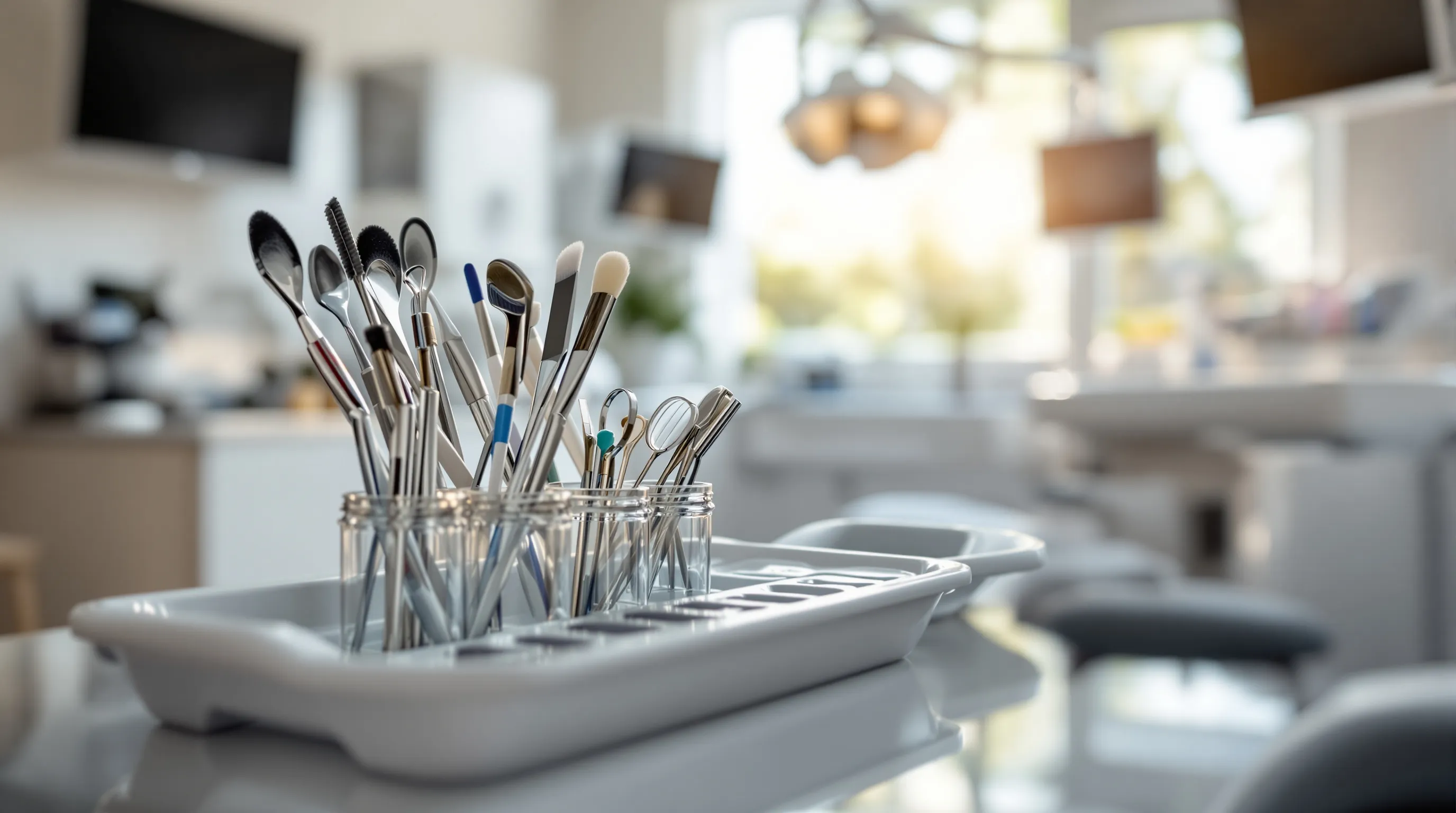
One checkup visit, two generations: annual dental checkups in Lawrenceville, NJ.
Families around Mercer County keep asking one question: which dental office in Lawrenceville treats both adults and children? It sounds simple. It isn't, and the research section below walks through why!
The New Jersey Department of Health puts the stakes plainly: "Oral health care is an essential component of total health care." Its adult survey shows how unevenly that message lands. In 2022, 65.8% of Asian adults in New Jersey reported a dental visit in the past year, a rate that sat below White adults and above Black and Hispanic adults in the same survey.
Did you know the state counts a visit for any reason, orthodontist trips and emergencies included? That detail matters. A visit on paper is not always a preventive checkup, so the share of adults getting a real cleaning and exam may be lower than the headline figure suggests. The department also warns that "infrequent use of dental services has been associated with poor oral health among adults," and notes that even people with no teeth left need regular monitoring.
So what does all of that mean for a Lawrenceville or Ewing household? Ahead, you will find each step of a checkup, how often each family member really needs one, why cost rather than forgetfulness keeps so many adults away, and a quick myth or fact quiz. Families comparing practices near Princeton, or weighing cosmetic work in Lawrenceville, will also see why one dental home for every age keeps the whole calendar honest, starting with the youngest patients in New Jersey's classrooms.
In 2022, New Jersey did something it had never done before! Screeners visited approximately 30 schools and checked the teeth of over 1,400 third-graders, the state's first-ever Basic Screening Survey, the New Jersey Department of Health reports. The state had not yet published what those screenings found, but it did note a milestone: it was the first time New Jersey sent data to the CDC's national oral health tracking system.
Kids get attention. Grown-ups often do not.
Before your next call to the office, ask which family members are due and what each of their appointments will include. Bring a list of every family member's current medications, since that history update is the first thing the team reviews.
Money shapes who shows up. A national survey of nearly 12,000 adults, run from November 2024 to February 2025, found 71% of U.S. adults reported a dental visit in the past year. Yet in that 2025 report, only 46% of adults earning under US$24,000 had gone, against 86% of those earning US$180,000 or more. Income was the strongest predictor in the whole survey.
So what exactly happens once you are in the chair, and who in the family needs to come back first?
Questions this article answers
Top questions this guide answers:
- What happens at a dental checkup, step by step?
- How often should adults and kids see the dentist?
- Why do annual checkups matter in New Jersey?
One honest caveat: the Gallup researchers call the health link likely two-way. Feeling well may send people to the dentist, too. Either way, the visit itself is where the answers start.
Why do annual dental checkups matter so much for Lawrenceville and Ewing families?
Annual checkups catch small problems before they turn painful, and local patients have noticed: Imagine Advanced Dental Arts holds a 4.9 average rating from 587 Google reviews.
Before you book anyone's next visit, run through these three quick steps:
- Write down when each family member last had a cleaning and exam.
- Note anyone with bleeding gums, tooth sensitivity, new medications or a recent hospital stay.
- Ask the office to book parents and kids on the same day, so no one quietly falls off the schedule.
Here is a number that stopped us in our tracks. In 2022, only 67.6% of New Jersey adults reported visiting a dentist or dental clinic in the past 12 months, according to the New Jersey Department of Health. That means roughly one in three adults in our state skipped the dentist entirely that year! The gaps run deeper, too. The same 2022 state data showed Hispanic adults (58.6%) and Black adults (59.3%) trailing White adults (74.2%), and adults with more schooling were more likely to have gone.
New Jersey has been working hard to change that picture. Did you know that in July 2019, the Department of Health brought on a State Dental Director, the first in over 30 years? Three years later, in 2022, its Oral Health Services Unit finished the state's first-ever State Oral Health Plan, covering 2023 to 2028. As you can see, Trenton is finally treating the mouth as part of the body. We could not be happier about it!
The common assumption is that skipping a checkup is harmless when nothing hurts. Well, that belief could not be more wrong. The state health department links infrequent dental visits to poorer oral health among adults. Silence is not the same as health.
Our own team sees the other end of that story. Our doctor's training includes a DMD and residency, with honors in prosthodontics and oral reconstruction, the work of rebuilding teeth after problems have gone too far. That is exactly the care a steady checkup routine helps families avoid. The same doctor is also certified in BOTOX Cosmetic and dermal fillers, a reminder of how much can happen under one roof once a family has a true dental home.
A review of 4 sources, the state's survey data plus our practice's own record, points one way. Regular visits keep care small. Skipped visits make it big.
If you are still comparing offices, our guide to the checks to make before booking a dentist near West Windsor covers the questions worth asking first. Once you have chosen, the real question becomes what actually happens in that chair, and how the children's numbers compare to their parents'.
Why do kids keep their checkups while parents fall behind?
Children usually stay on schedule while parents drift, and forty-two years in the same Lawrenceville office means most cases finish here rather than moving between specialists.
Let's look at the timeline, because it tells a story of real progress! In the year 2009, 78.4% of American children aged 2 to 17 had a dental visit in the past year, according to the CDC's National Center for Health Statistics. Three years later, in 2012, that figure had climbed to 82.3%. By 2018 it reached 85.9%, and in 2019 the agency counted 86.9% of children with a visit in the past year. Families everywhere were kicking butt at getting kids into the chair.
The grown-ups tell a different story. The same CDC data show adults aged 18 to 64 barely moved from 2009 to 2013, then crept from 61.7% in 2013 to 65.9% in 2018. In 2019, only 65.5% of working-age adults had a dental visit in the past year. Kids kept sprinting. Parents walked.
Here is the friction. Contrary to what many parents expect, the adults in the house often carry the bigger risk. The CDC notes that most adults show signs of periodontal or gingival disease, and that routine visits are recommended for everyone aged 1 year and over. A parent who books three children and skips their own cleaning is protecting the wrong mouths first.
Children's guidance adds a twist of its own. A first visit belongs when the first tooth appears and no later than the first birthday. Teens in braces or clear aligners still need their regular cleanings and exams, because orthodontic appointments do not replace them. Each age brings its own reason to stay on the calendar.
This is where a single dental home earns its keep. Because most of our cases finish in our own Lawrenceville office, a parent's checkup and a child's checkup can be planned side by side, with no referral chain to chase. Our team also includes a Diplomate (ABDSM), board certified in dental sleep medicine. So a parent's routine exam can turn into a conversation about snoring or sleep, right there, without starting over at a new office.
Families coming from across the river or up Route 1 can compare their options with our list of five checks before booking a dentist near Plainsboro. The point stands either way. Kids tend to stay on track. So book the parent's cleaning first, then fit the children's visits around it.
So why do the grown-ups slip in the first place? The research section below walks through what the surveys found.
How often does each person in your family really need a checkup?
Most of us learned to see the dentist twice a year. Under one national guideline, a healthy adult can go 24 months between reviews, while nobody under 18 should go past 12.
The guideline comes from England's National Institute for Health and Care Excellence, known as NICE, which advises dentists there on recall intervals. Its shortest routine interval is 3 months. The longest, 24 months, is reserved for adults "who have repeatedly demonstrated that they can maintain oral health" and are not considered at risk, and NICE says even they reach it only "over time."
So why do children get a shorter limit? NICE points to evidence that decay "can be more rapid in children and adolescents than in older people," and faster still in baby teeth. It caps adults for a human reason too. Gaps longer than 24 months "could diminish the professional relationship between dentist and patient, and people's lifestyles may change."
American practices reach a similar answer without a national rulebook. A dental group in Sugar Land, Texas, calls the six-month visit "a useful starting point" and adds that "it is not a universal rule." The ideal schedule, it writes, "depends more on current risk than age." The CDC recommends routine visits from age 1, linking them with fewer treatments and lower dental costs.
| Who | Common starting point | What can change it |
|---|---|---|
| Babies and toddlers | First visit when the first tooth appears, no later than the first birthday | Pediatric dentists adjust visits to each child's risk |
| Children and teens | About every six months. NICE sets 12 months as the longest gap | Braces or aligner visits do not replace cleanings and exams |
| Healthy, low-risk adults | Once or twice a year. NICE allows up to 24 months, only after a proven track record | New problems, new medications, lifestyle changes |
| Adults on gum disease maintenance | Every three or four months | How the gums respond to treatment |
| Adults with other risk factors | More often than the baseline | Frequent cavities, smoking, chronic dry mouth, diabetes, pregnancy, dentures or implants, difficulty brushing or flossing |
How does a dentist decide which row fits you? Partly with a small ruler. Whitney, a dental hygienist who explains checkups on her Teeth Talk Girl channel, says gum pockets are measured "about once a year." Readings of 1 to 3 mm are normal, 4 mm is borderline, and "five and up often indicates bone loss or gum disease." Bitewing X-rays follow risk too: usually yearly, but at every cleaning for patients with a high cavity rate or bone being watched for gum disease.
Every interval in that table assumes the person actually comes in. Survey data show where people stop coming.
Read the gap with care. The surveys only ask about the past 12 months, so they cannot separate a low-risk adult on a deliberately longer interval from one who has simply stopped going. What they can show is who stops. In New Jersey in 2022, 32.4% of adults did not report a visit in the past year. Gallup's recent national survey, which tied visits most closely to income, also found smokers less likely to go. America's Health Rankings, which analyzes CDC survey data, reports that cost is the most common reason adults give for skipping, "even among adults with private dental insurance."
Line those findings up against the risk table and they overlap. Smoking is on the Texas practice's list of reasons to come in more often. So are dentures and implants, which make up much of our own work. Some adults least likely to keep a yearly visit carry exactly the risks that call for shorter gaps. NICE also tells dentists to weigh "the financial costs to the patient" and the patient's "ability or desire to visit the dentist" when choosing an interval. Cost is part of setting a schedule, and it is fine to raise it.
Six months was always a rough default, and so is twelve. The right interval is set one person at a time, and in most families the person most likely to fall behind is a parent. Some parents may also need to come back sooner than anyone else in the family.
Four checks for your family's schedule
- At the end of each checkup, ask the dentist to name that person's return interval and what would change it.
- Ask for your gum pocket readings. If any read 4 mm or more, ask whether your interval should be shorter.
- If cost or time has pushed your visits apart, say so when the interval is set, and ask which parts of the next visit are clinically needed.
- If you smoke, have had gum treatment, or wear dentures or implants, ask whether once a year is enough for you.
How we checked this
We used national clinical guidance from England, federal and New Jersey survey data, a Gallup survey reported by Dental Tribune, an America's Health Rankings analysis, a Texas dental practice's guide and a hygienist's video. No figures in this section come from our own practice. NICE writes guidance for dentists in England, and American practice may differ. The survey figures are self-reported. The CDC says its 2019 data are not fully comparable with earlier years. Gallup's findings show associations, not causes. The Texas practice and the hygienist are practitioners describing common practice, not researchers. As a dental practice, we have a stake in people keeping their checkups. Still unknown: how many adults without a past-year visit were on a deliberate longer interval, and how longer intervals work out for low-risk adults in the United States. None of our sources measured either.
- National Institute for Health and Care Excellence, dental recall interval recommendations, retrieved November 11, 2026.
- CDC National Center for Health Statistics, Health, United States dental visits data, last reviewed August 2, 2024.
- New Jersey Department of Health, adult dental visit indicator, October 9, 2024.
- Dental Tribune US, report on Gallup dental visit findings, July 22, 2025.
- America's Health Rankings, dental visit measure, 2024 data.
- Avalon Dental Group, Sugar Land, Texas, guide to visit frequency by age, undated.
- Whitney, dental hygienist, Teeth Talk Girl checkup walkthrough video, April 9, 2024.
What happens at each checkup visit, and what really keeps adults away?
Each checkup moves through a health history, a professional cleaning, a full exam, X-rays only when needed and a care plan, and Imagine Advanced Dental Arts was named Practice of the Year.
Here is the order most visits follow, from the moment you sit down:
- Health history update. New medications, recent hospital stays and symptoms such as sensitivity, bleeding gums or jaw pain all get noted first. Some blood pressure and asthma medicines can dry the mouth, which raises the risk of decay and gum disease.
- Professional cleaning. A hygienist removes plaque and tartar from spots brushing and flossing miss, then polishes the teeth.
- Full exam. The dentist checks teeth, gums and soft tissues for decay, gum disease, bite problems and any unusual lumps, sores or discoloration.
- X-rays, only if needed. Images reveal decay between teeth and bone changes the eye cannot see, but not every visit calls for them.
- Care plan and coaching. You leave knowing what is healthy, what needs watching and what needs repair, plus home-care tips.
Simple, right? So why do so many adults skip it?
Conventional wisdom says people just forget, and that one more reminder card will fix it. Well, the data say otherwise! America's Health Rankings reports that cost of care is the most common reason adults give for not visiting the dentist, even among adults with private dental insurance. Its analysis of 2024 survey data found 67.5% of U.S. adults had seen a dentist in the past year, with Connecticut on top at 75.2% and Texas at the bottom with 58.1%. The same report finds visit rates rise with every step up in household income, and that one in 5 adults ages 20 to 64 has untreated cavities.
The research section above shows who that hits hardest. Insurance alone does not knock it down.
That changes what a family should actually do. Ask about fees, coverage and payment options before the appointment, not after. Ask, too, whether X-rays are due at this visit or can wait, since not every checkup calls for them. Dental offices across the country make the same case for showing up: a small cavity found at a checkup is easier and less invasive to fix than one found by a toothache.
We are thrilled every time a parent who has been putting off their own visit finally books it. If you are weighing practices east of Lawrenceville, our rundown of six things to check before booking a dentist near Mercerville includes the cost questions worth raising on that first call.
Once the fees are clear and the chair is booked, the next question is timing. Does everyone in the family really need to come back on the same six-month clock?
Which dental office in Lawrenceville treats both adults and children?
Imagine Advanced Dental Arts in Lawrenceville sees parents and children in one office, which makes it easier to keep each person on the return date their own mouth calls for.
That return date is about to get more personal. Dental hygienist Whitney, who explains cleanings on her Teeth Talk Girl channel, notes that bitewing X-rays are "usually taken about once a year depending on your cavity risk," and may come at every cleaning for someone with a high cavity rate. Gum pockets of 1 to 3 mm are healthy. Four is borderline. Five and up often signals bone loss or gum disease.
Those numbers will steer the calendar. A child with clean readings and a parent at 5 mm should not share one schedule.
Think how far New Jersey has come, from decades without a state dental director to screening its third-graders. Now the next step belongs to families: book everyone, then ask why each return date is what it is.
Summarize This Article With AI
Open this article in your preferred AI engine for an instant summary.
Frequently Asked Questions
What else do families ask about annual dental checkups in Lawrenceville?
Families usually want to know what the cancer screening checks, who gets fluoride, why the health history matters, whether insurance removes cost worries and how to book everyone together.
What does the oral cancer screening at a checkup look at?
The hygienist, the dentist or both check the sides of the tongue, under the tongue, the inner cheeks, the inner lips and the back of the palate and throat. They are looking for any suspicious lumps or bumps. It takes moments, and it happens before or after the cleaning.
Do adults get fluoride too?
Sometimes! Fluoride varnish is a coating painted onto the teeth with no waiting period afterward. Most kids receive fluoride, while only some adults do, based on their cavity and sensitivity risk.
Why update the health history at every visit?
New medications, medical changes and recent hospital stays can all affect your mouth. That quick review opens every checkup for a reason.
Does dental insurance mean cost won't get in the way?
Not always. America's Health Rankings reports that cost of care is the most common reason adults skip the dentist, even among adults with private dental insurance. Ask us about fees before the visit, not after.
How can a whole family book checkups together?
Reach us through our contact page. We serve patients across New Jersey with four credentialed dentists, so parents and kids can line up their visits on the same day, and what you do at home between those visits matters just as much.
Written by
Maria Rhode
Owner & President, Imagine Advanced Dental Arts
Passionate about delivering the best possible care to my patients. From my days in residency to owning a beautiful hi-tech dental office, I never stop learning and advancing myself and now my practice.
Connect on LinkedIn