
Because implants continue to be treated as cosmetic and often excluded from insurance, patients near Pennington will keep facing costs in the thousands of dollars, driving stronger demand for financing and phased treatment plans over the next 12-24 months.

- Maria Rhode, D.M.D.
- Vivien Mesina, D.M.D.
- Sara Siddiqui, D.M.D.
- Jared Levin, D.D.S.
Dental Implants and Veneers for Pennington, NJ: A Patient's Guide
Dentist near Pennington, NJ
Imagine Advanced Dental Arts has cared for Pennington patients for over 40 years from our office on Princeton Pike in Lawrenceville, NJ.
Imagine Advanced Dental Arts3100 Princeton Pike, Building 2
Lawrenceville, New Jersey 08648
Driving directions from Pennington, NJ
- Head south on N Main St toward W Delaware Ave-1.0 mi
- Slight left onto Lawrenceville Pennington Rd/Pennington Lawrenceville Rd-Continue to follow Lawrenceville Pennington Rd-3.5 mi
- Continue onto Franklin Corner Rd-1.1 mi
- Turn left onto Princeton Pike-Destination will be on the right-410 ft
Quick answer
Veneers change how existing teeth look; implants replace teeth that are gone. If the tooth is still there and sound, a veneer is usually the conservative answer. If it is missing or failing, an implant is the one that restores function. Mail-order clip-on veneers are a separate product category: removable covers that do not bond to enamel and carry no clinical track record.
Three things people believe. Myth or fact?
Call each one, then see how other readers called it.
1
Veneers ruin your teeth. Modern porcelain veneers typically require only 0.5 mm of enamel reduction. That is a minimal, conservative preparation. The tooth beneath remains structurally intact. Aggressive over-preparation is a technique problem, not an inherent feature of veneers.
2
Dental implants are not an option if you have bone loss. Bone grafting, sinus lifts, and newer guided surgical techniques have made implants possible for many patients once considered ineligible. According to research on robotic implant placement, surgeons can now position fixtures in the upper jaw without bone grafting in cases that previously required it. A second opinion is always worth seeking.
3
Snap-on veneers from the internet are the same thing as porcelain veneers from a dentist. Mail-order removable clip-on veneers are worn over the teeth like a cosmetic cover; they do not bond to enamel, require no tooth preparation, and carry no clinical longevity data comparable to professionally placed porcelain. They are two entirely different categories of product.
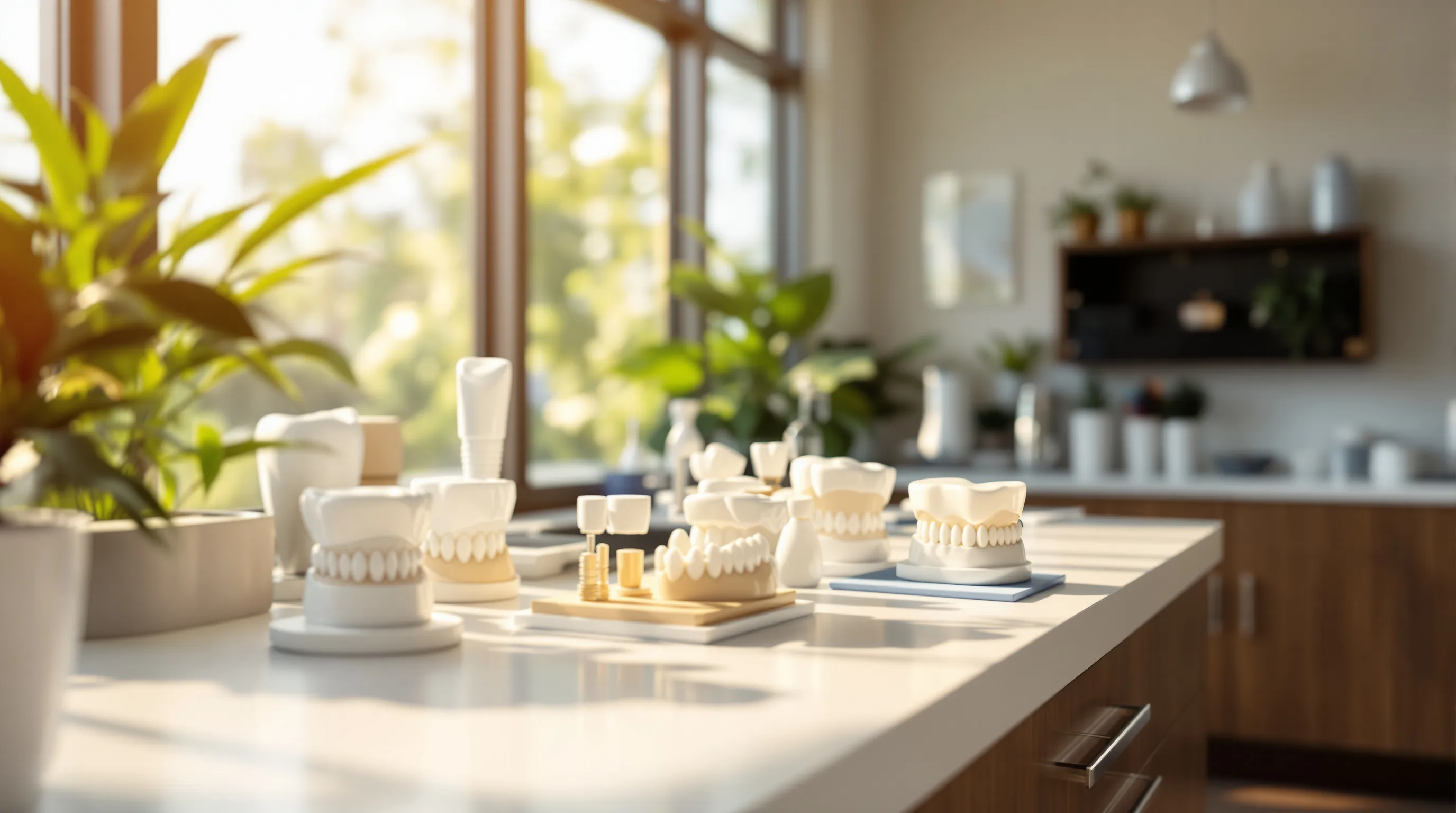
Comprehensive consultations help Mercer County patients understand whether dental implants, porcelain veneers, or a combination of both best fits their goals.
Quick Answer
Dental implants refers to titanium tooth roots fused permanently to the jawbone; porcelain veneers are 0.5 mm cosmetic shells bonded to the front of existing teeth. They treat different problems. Implants replace missing teeth. Veneers improve the appearance of teeth that are structurally present but cosmetically compromised.
Both treatments are available for qualifying patients across Mercer County, with a comprehensive evaluation determining which path makes clinical sense. Patients previously told they did not qualify for implants due to bone loss may be eligible today with guided placement and bone regeneration techniques.
Did this answer your question?
Dental implants and porcelain veneers serve fundamentally different clinical purposes. Implants replace missing teeth with titanium fixtures that fuse permanently to the jawbone. Veneers improve the cosmetic appearance of existing teeth with 0.5 mm porcelain shells bonded to enamel. Both treatments are available to qualifying patients in Mercer County, including those coming from Pennington, Hamilton, and Hopewell Township.
The decision between them starts with one question: do you have a missing tooth, or a tooth that is structurally sound but cosmetically compromised? That single fork determines whether the clinical conversation goes toward restorative implantology or cosmetic bonding. Patients sometimes arrive expecting one answer and leave with a different recommendation after imaging confirms the real state of their bone and enamel. This is why a clinical evaluation matters more than any amount of online comparison shopping.
Implant success rates are high when patient selection is right. Research on modern implantology shows that osseointegration, the biological process by which titanium bonds to living bone, was first documented by Professor Per-Ingvar Branemark in 1952, and the principle has not changed in seven decades. What has changed is the precision of placement, the predictability of outcomes, and the range of patients who qualify.
Porcelain veneers, meanwhile, have a parallel record of documented patient satisfaction. A thread examining veneer outcomes over multiple years found that patients who managed their bite forces, wore night guards when recommended, and kept regular cleanings reported restorations still in service a decade or more after placement. The patients who struggled were those with untreated grinding or those whose initial preparation removed too much enamel. Technique drives outcomes. Longevity depends on it.
This guide covers both treatments in clinical detail: how each works, who qualifies, what differentiates a well-executed result from a compromised one, and how Mercer County patients can make the evaluation appointment count.
Dental implants and porcelain veneers are the two most requested restorative and cosmetic treatments for patients across Pennington, Lawrenceville, and Mercer County. They serve fundamentally different purposes. Implants replace missing roots. Veneers transform the visible surface of teeth that are still present. Choosing the wrong track costs time, money, and in some cases, structure that is difficult to recover.
The implant side of dentistry has moved faster than most patients realize. Practices at the clinical frontier now complete full virtual implant surgery digitally before a single incision is made, mapping bone density, nerve pathways, and fixture position in three dimensions. The same AI screening tools deployed in medical imaging now review dental x-rays in active clinical practice, flagging early bone loss and cavities the unaided eye can miss. Implant treatment is no longer just surgery; it is precision-guided surgery. Patients who would have been told ten years ago that bone loss disqualified them may have options today that simply did not exist then.
The cosmetic side of dentistry has fractured in a different direction. Patients researching veneers now encounter both clinical bonded porcelain restorations and removable clip-on cosmetic alternatives from direct-to-consumer brands, sold without any professional evaluation and arriving by mail. The marketing language overlaps enough to confuse. These are not the same product. One is a permanent clinical restoration with a multi-decade track record. The other is a removable cosmetic accessory.
This guide covers both paths: who qualifies for each, what the process looks like in a modern Mercer County practice, and how to tell a provider equipped to deliver real results from one who is not.
How Did Dental Implants and Veneers Become Two of Dentistry's Most Trusted Treatments?
Dental implants are titanium tooth roots that fuse permanently with bone; porcelain veneers are 0.5mm cosmetic shells bonded to the front of existing teeth and lasting 15 to 25 years.
According to the documented history of dental implantology, the earliest recorded tooth replacements in ancient China used carved bamboo pegs roughly 4,000 years ago. Archaeologists in 1931 found seashell implants in the jawbone of a young Mayan woman from approximately 1,350 years ago, and bone had grown around two of the three shells, suggesting successful osseointegration even then. An analysis of dental history across more than four millennia shows that humans have been replacing missing teeth across every civilization, but every prior solution failed where titanium ultimately succeeded. These were ancient people solving a problem we still work to solve for our Pennington patients today, as of .
The modern breakthrough came in 1952, and it was an accident. Dr. Per-Ingvar Brånemark, a Swedish researcher, had inserted titanium-encased optical devices into rabbit legs to study bone healing. When he tried to remove the devices, he discovered that the titanium had fused permanently with the bone. He named this process osseointegration, and the modern implant era began. In the mid-1960s, Brånemark performed the first successful titanium implant surgery on a man with jaw deformities and no lower teeth. Four titanium implants supported that patient's dentures until his death four decades later. Well, a track record like that is very hard to argue with!
Use the two-question test before weighing any treatment option. First: is the tooth still there? Second: does it need structural replacement, or cosmetic improvement? Those two answers route nearly every patient correctly. Implants solve absence. Veneers solve appearance. Mixing up which problem you have is the most common mistake we see in patients who research online before consulting a dentist, and it leads to mismatched expectations and wasted time.
Today's porcelain veneers are approximately 0.5mm thin, similar in thickness to a contact lens, and they bond to the front surface of a tooth to transform its color, shape, and size. Patient experience compiled from long-term accounts shows veneers lasting 15 to 25 years with proper care, and some patients have reported their original sets still functioning after 25 years of daily wear. The material is remarkably durable. The longevity depends on the quality of the placement and how faithfully the patient follows up afterward.
A common misconception is that getting veneers means grinding your teeth down to stumps. The reality is that proper veneer preparation involves a minimal reduction of the front enamel surface to create a bonding surface. The tooth remains structurally intact. Patients who have been told otherwise sometimes avoid a treatment that could genuinely transform their confidence and their quality of life, and that is a shame.
According to Research Features' reporting on Dr. Jeffrey Ganeles and the South Florida Center for Periodontics and Implant Dentistry, today's advanced imaging systems allow practitioners to perform complete virtual implant surgery before making a single incision, mapping nerve pathways and bone density in three dimensions. The same AI screening tools that compare dental x-rays against algorithms trained on hundreds of thousands of images now identify cavities and bone loss earlier than the unaided eye. Implants and veneers have always been remarkable. What has changed is the precision and comfort with which they are delivered today.
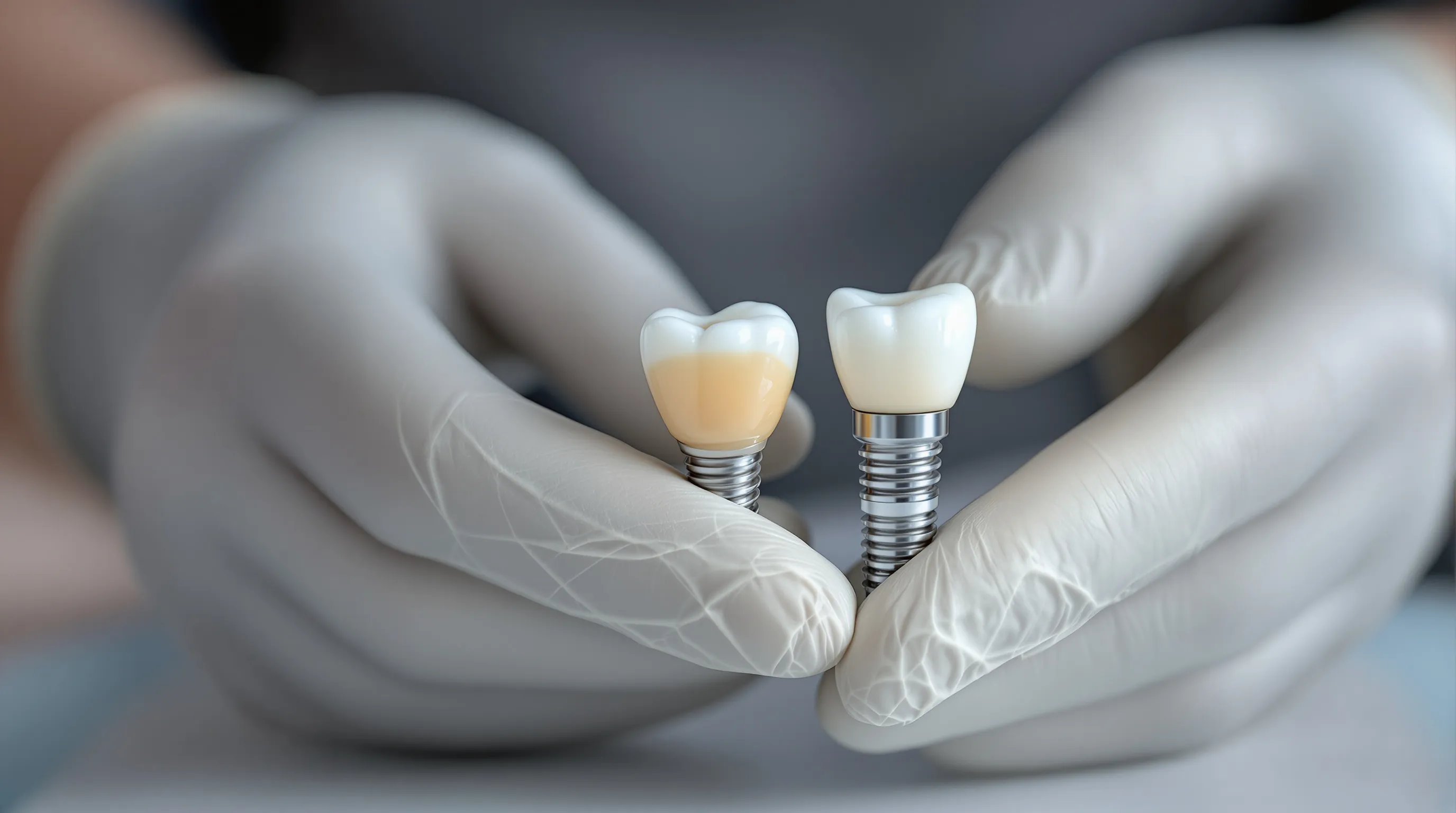
Are Snap-On Veneers a Real Alternative to Clinical Porcelain Veneers?
Mail-order clip-on veneers are removable cosmetic covers worn over natural teeth; they do not bond to enamel, do not replace missing teeth, and carry no established clinical track record.
The direct-to-consumer veneer market has grown dramatically, and we see the results in our consultations regularly. Companies like Brighter Image Lab sell clip-on removable veneers that pop over existing teeth, with entry tiers starting at around $795. Customers receive a home impressions kit, the company 3D prints a smile model, shapes and details the veneers, and the finished product arrives by mail. A review video featuring one customer trying on a set went viral with roughly 17 million views, and the clip drew commentary from a licensed orthodontist who called the product the best fake veneers he had ever seen. That is a remarkable amount of consumer reach for a product with no clinical evaluation process behind it.
In practice, these products serve a fundamentally different purpose than bonded porcelain veneers. Snap-on veneers are removable cosmetic covers. They clip on in the morning and come out at night. Removable is not the same as restored. A patient who wants a transformation that holds through meals, years of wear, and everything daily life demands will not find it in a mail-order clip.
There is also a deeper concern we feel strongly about raising. Professional dental evaluations use digital imaging, AI-assisted x-ray screening, and clinical examination to detect conditions patients cannot identify themselves. According to a DentistryIQ clinical review, conditions like internal root resorption are often completely asymptomatic early and are typically discovered only on dental radiographs. Bypassing professional oversight to purchase cosmetic products online means potentially missing conditions that require clinical treatment before any cosmetic work can be safely considered. Cosmetic work done over undiagnosed problems makes those problems harder to fix.
The contrast is clear. Clinical porcelain veneers are bonded permanently to enamel, placed only after a full evaluation, facial analysis, and digital mock-up review, and they hold up through decades of daily use. Snap-on veneers are removable cosmetic accessories. Both can make a smile look different in a photo. Only one of them actually restores it. We do not tell patients that mail-order clip options are valueless for every purpose, but we do say this clearly: if you want a result that holds up through life, the clinical path is the only one with a real track record behind it.
Online viral content about smile products reaches tens of millions of viewers. Clinical outcomes do not go viral. That gap is worth naming. The best dental decision is not the one with the most social media momentum; it is the one made after a proper evaluation by a practitioner with the technology to see what is actually happening in your mouth. That evaluation catches things a selfie never will.
How Do You Choose the Right Dentist for Veneers or Implants in Mercer County?
Look for a practice with documented experience in both restorative and cosmetic dentistry, 3D planning technology, and a consultation that connects your concern to the right treatment before any fee is discussed.
The most common mistake we see patients make is choosing a dentist based on proximity or price before evaluating credentials and technology. That ordering gets it backwards. The technology and training a practice carries determines what outcomes are achievable for your specific anatomy, and the cost conversation only becomes meaningful once you know what the correct treatment actually is.
A pattern we see consistently: patients who spent the most time and money on the wrong treatment were the ones who skipped the full evaluation and went straight to price. Patient accounts from dental community forums show a recurring scenario: people facing failed teeth discover that their insurance classifies implants as cosmetic and declines coverage, leaving multi-thousand-dollar out-of-pocket bills they had not anticipated. Patients who asked about financing coordination upfront were far better positioned to move forward without financial disruption. Ask about insurance and payment options before your first appointment, not after your treatment plan is written.
According to Research Features' reporting on Dr. Jeffrey Ganeles and the South Florida Center for Periodontics and Implant Dentistry, practices at the leading edge of implant dentistry now combine AI-assisted x-ray analysis, three-dimensional surgical planning, and guided placement techniques that dramatically reduce the need for preparatory procedures that patients used to dread, like bone grafts. Patients who might have been told years ago that they were not implant candidates because of bone density loss may now have options that simply did not exist a decade back. Technology has opened the door for patients who were previously told no.
When evaluating cosmetic dentistry providers, four criteria matter most. First: does the practice use digital smile design or facial analysis before recommending veneers? Second: can they show you a mock-up before any tooth preparation begins? Third: do they have documented long-term cases from patients with a similar starting point? Fourth: do they explain alternatives honestly, including situations where veneers would not be the strongest choice?
- Request before-and-after cases for patients with a similar presentation to yours
- Ask for a digital mock-up before agreeing to any enamel preparation
- Confirm the practice uses CBCT or cone-beam imaging for implant planning
- Make sure your evaluation covers both restorative and cosmetic options, not only one path
At Imagine Advanced Dental Arts, our consultations cover both tracks, because patients often arrive thinking they need one treatment and discover mid-conversation that a different approach fits their situation better. The combination of diagnostic imaging and a team that handles implant placement alongside cosmetic redesign means the full picture is available before any decision is made. The practice that can do both is the one that gives you the honest answer.
Mercer County patients have real options. The question is not whether good implant and cosmetic dentistry exists nearby. The question is whether the practice you choose has the technology and the clinical range to match the treatment to your actual situation rather than the treatment they happen to offer most often.
What Will Shape Implant and Veneer Decisions for Pennington Patients in the Next 12-24 Months?
Two forces will define cosmetic and restorative dentistry in Mercer County over the next two years: robotic placement that compresses implant treatment timelines, and budget alternatives pulling cosmetic demand away from clinical veneers.
That is the honest picture. Dentistry is not standing still, and neither are the forces pulling patients toward or away from clinical care. Here is where the evidence points:
| Signal | What We Expect | Why It Matters to You |
|---|---|---|
| Robotic and guided implant placement expands eligibility | According to research on robotic implant systems, surgeons can now place fixtures in the edentulous upper jaw without bone grafting in cases that previously required it. Same-day approaches like full-arch immediate loading will spread to more NJ practices over the next 24 months. | Patients previously ruled out due to bone loss are increasingly finding they qualify. A current evaluation may reach a different conclusion than one from three or five years ago. |
| Budget cosmetic alternatives capture price-sensitive demand | Mail-order removable veneer products are drawing tens of millions of views on social platforms and will continue pulling budget-conscious buyers toward no-preparation, no-bonding cosmetic covers. This trend is real but low-confidence; clinical veneers retain a strong patient satisfaction record that online products cannot match for longevity. | Patients weighing cost against outcomes should understand that removable clip-ons are a short-term cosmetic cover, not a clinical restoration. The 15-to-25-year lifespan of bonded porcelain is not achievable with a removable product. |
| Implant costs remain largely out of pocket | Insurance coverage for implants is unlikely to broaden materially in the near term. Patients will continue facing multi-thousand-dollar out-of-pocket costs, sustaining strong demand for phased treatment plans and dental financing. | Budget planning matters before your consultation, not after. Ask about financing options early. A phased approach lets some patients begin treatment sooner than they expected. |
What most patients miss: the guidance to "compare a few offices before deciding" often delays care that would have been straightforward from the start. Implant and veneer consultations are typically free or low-cost. The evaluation itself clarifies more than any amount of online research. We have seen patients in our Lawrenceville practice spend months weighing options and then learn in a single appointment that their situation was simpler than they feared. The technology is ready now. The bigger variable is whether patients arrive to find out.
Looking Ahead: 12-24 months Forecast
Where Pennington implant and veneer care heads next
Three scored forecasts on how restorative and cosmetic dentistry near Mercer County, NJ shifts for patients over the next one to two years.
A
Forecasts for local implant and veneer patients
Use each forecast to weigh timing, budget, and provider choice before booking a consult in the Pennington area.
Implant workflows that place fixtures in the atrophied upper jaw without additional bone grafting, paired with AI x-ray screening and same-day approaches like TeethToday, will spread among specialist-led NJ practices, moving more adult patients toward faster, fewer-visit implant treatment within 12-24 months.
Mail-order removable snap-on veneers from makers such as Brighter Image Lab, boosted by try-on clips reaching roughly 17 million views, will keep capturing budget-conscious cosmetic buyers over the next 12-24 months, so a share of local smile-makeover interest converts to consumer products rather than clinical consults.
Faint but Worth Noting Researchers report robotic placement in the edentulous maxilla without bone grafting and AI already deployed for x-ray screening in active practice. A single removable-veneer try-on video reached about 17 million views and drew commentary from a reviewing orthodontist, signaling mainstream consumer pull. Patients report dentists recommending implants after failed teeth while insurance declines coverage, leaving multi-thousand-dollar out-of-pocket bills.
B
What patients and NJ clinicians are reporting
Both supporting reports and contrary experiences are shown so you can judge each forecast for yourself.
Implant cost stays out of pocket
58
Supporting evidence
- Backing it: Are dental implants worth the money? [Community / Forum]
- Thinking about dental implants is it worth it or should I keep looking. is the strongest public backing for this call. [Community / Forum]
Robotic and guided implants shorten treatment
56
Supporting evidence
- Brace yourself: Robotic precision in dental implants - Medium points the same way. [Blog]Dr. Jeffrey Ganeles and fellow researchers at the South Florida Center for Periodontics & Implant Dentistry (USA) are the primary researchers behind this work on robotics in dental implants.
Removable veneers pull budget cosmetic demand
50
Supporting evidence
- The case rests on Snap On Removable Dental Veneers Review. [Video]Growth of direct-to-consumer, mail-order cosmetic dentistry using at-home impression kits and 3D printing. “they don't move like they're tight enough that they do stay on your teeth I've not had any issue of them like moving in my mouth”
- BEST Fake Snap On Veneers? A Response to @Thebentist is what puts this forecast on the board. [Video]The client's try-on video went viral with roughly 17 million views (per speaker). “This is probably the best fake veneers I've ever seen." - attributed to the reviewer's sentiment / speaker.”
C
What could shift these outcomes
Real-world conditions such as insurance rules and device adoption that would change how these forecasts play out.
A Little Wiggle Room
We are most confident in 58, though 50 could prove us wrong in the best way.
- The moment regulators or buyers head the other way, Implant cost stays out of pocket is the exposed call.
- Should the evidence swing against the mainstream view, Removable veneers pull budget cosmetic demand outlasts the rest.
Methodology
These calls come from balancing the strongest evidence against the weakest, then owning our blind spots.
What Does Choosing the Right Treatment Actually Change for Your Smile?
The difference between an implant and a veneer is the difference between replacing something you lost and perfecting something you still have. That distinction shapes every step of the journey: the consultation questions, the timeline, the cost, and what your smile looks like five, ten, and twenty years from now.
Dentistry has come a long way. According to researchers tracking robotic implant placement, surgeons can now position fixtures in the upper jaw without bone grafting in cases that once required months of preliminary surgery. That kind of progress means patients who were told years ago that they were not candidates deserve a second opinion. Regenerative techniques and guided placement have expanded the pool of people who can benefit from a permanent restoration. We see this in our Lawrenceville practice regularly: patients arrive resigned to a gap or a removable appliance, and they leave with a treatment plan they did not expect was possible.
Porcelain veneers, meanwhile, remain one of dentistry's most reliable cosmetic tools precisely because they preserve the tooth beneath. A well-designed veneer at 0.5 mm of reduction is conservative dentistry. The transformation can be dramatic. The trade-off is commitment: once veneers are bonded, they are part of your oral health for the life of the restorations.
Pennington-area patients do not need to choose blindly. A thorough evaluation, genuine clinical conversation, and a practice experienced in both treatments make the decision straightforward. The technology is ready. The question is whether you are.
Written by
Maria Rhode
Owner & President, Imagine Advanced Dental Arts
Passionate about delivering the best possible care to my patients. From my days in residency to owning a beautiful hi-tech dental office, I never stop learning and advancing myself and now my practice.
Connect on LinkedInIs It Time to Find Out Whether You're a Candidate for Implants or Veneers?
Clinical dentistry has changed considerably. Patients previously told implants were not an option because of bone loss may qualify today, and the evaluation takes one appointment. Book a consultation at Imagine Advanced Dental Arts to get a clear picture of what fits your smile, your anatomy, and your timeline before committing to any treatment.
Schedule Your Consultation
Summarize This Article With AI
Open this article in your preferred AI engine for an instant summary.
Frequently asked questions
+Are dental implants really worth it?
Dental implants are titanium fixtures that fuse permanently with the jawbone, functioning like a natural tooth root. For patients who are good candidates, the investment is typically worth it because the restoration can last decades with proper care, and it preserves the bone that would otherwise resorb after a tooth is lost. Community discussions among patients who have gone through the process consistently describe satisfaction once healing is complete, even among those who initially hesitated over cost.
+How long do porcelain veneers last?
Properly placed and maintained porcelain veneers typically last between 15 and 25 years. Longevity depends on bite habits, whether you grind your teeth, and how consistently you attend professional cleanings. We recommend a night guard for patients who show signs of bruxism, because grinding is the fastest way to shorten veneer lifespan.
+Can I get dental implants if I've already lost bone in my jaw?
Often, yes. Bone grafting, sinus lifts, and modern guided surgical techniques have made implants accessible to many patients who were previously told they were not candidates. The only way to know your specific eligibility is a 3D CBCT scan and clinical evaluation at a practice experienced in both restorative and implant dentistry.
+What is the difference between snap-on veneers and real porcelain veneers?
According to reviews of mail-order cosmetic products, removable clip-on veneers are worn over existing teeth like a cover and require no tooth preparation or bonding. Clinical porcelain veneers are permanently bonded after conservative enamel reduction and are matched to your natural bite and color. The two products are not interchangeable in function, durability, or clinical outcome.
+Does dental insurance cover implants or veneers?
Dental insurance rarely covers implants or cosmetic veneers, as most plans classify both as elective procedures. Patients should expect to pay out of pocket and ask about financing at their consultation. Phased treatment plans can help spread costs over time when multiple implants or a full smile makeover is planned.
+How do I know whether I need an implant, a veneer, or something else?
The starting point is always a comprehensive exam. Implants replace missing teeth; veneers improve the appearance of existing teeth. If your teeth are structurally sound but cosmetically concerning, veneers are typically the right conversation. If you have a gap or a failing tooth, implant candidacy is evaluated first. We welcome new patients from across Mercer County, including Pennington, for exactly this kind of consultation.
Ready to redefine your dental experience?
Schedule a consultation with our team and discover comfortable, customized care in Lawrenceville, Jersey.