
As insurers such as Aetna and Delta Dental adjust payment policies and roughly 178 million Americans remain missing at least one tooth, demand for out-of-pocket cosmetic and restorative care in the central New Jersey area will grow, including among patients who skip insurance entirely.

- Maria Rhode, D.M.D.
- Vivien Mesina, D.M.D.
- Sara Siddiqui, D.M.D.
- Jared Levin, D.D.S.
Cosmetic and Restorative Dentistry for East Windsor, NJ: How to Choose the Right Treatment
Dentist near East Windsor, NJ
Imagine Advanced Dental Arts has cared for East Windsor patients for over 40 years from our office on Princeton Pike in Lawrenceville, NJ.
Imagine Advanced Dental Arts3100 Princeton Pike, Building 2
Lawrenceville, New Jersey 08648
Driving directions from East Windsor, NJ
- Head Southwest on US-130-5.5 mi
- Turn right onto NJ-33-1.0 mi
- Continue onto Nottingham Way-2.9 mi
- Turn left to stay on Nottingham Way-0.1 mi
- Take the 2nd right onto E State St-0.7 mi
- Take the ramp onto I-295 N-2.6 mi
- Continue onto I-95 S-1.4 mi
- Take exit 8A for County Rd 583 S/Princeton Pike-0.2 mi
- Merge onto County Rd 583/Princeton Pike-Destination will be on the left-0.4 mi
Quick answer
Start from what the tooth needs rather than what the treatment is called. Whitening changes color on healthy teeth, bonding repairs small damage, veneers reshape several front teeth at once, and a crown is what a structurally weakened tooth needs to survive. Most cosmetic work is not covered by insurance, so verify benefits before you decide.
Three things people believe. Myth or fact?
Call each one, then see how other readers called it.
1
Dental implants are always the safest and most permanent solution for a missing tooth. Peri-implant soft-tissue complications occur in a significant portion of implant cases, and some patients are better candidates for conservative alternatives such as resin-bonded bridges.
2
Cosmetic dentistry is purely optional and does not affect your oral health. Procedures like crowns, veneers, and implants often restore bite function and protect neighboring teeth in addition to improving appearance.
3
AI tools can now generate a realistic preview of your smile after cosmetic treatment using only a photograph. Generative AI smile simulation is already being used in consultations to help patients evaluate outcomes before committing to irreversible procedures.
A thorough consultation at Imagine Advanced Dental Arts helps East Windsor and Lawrenceville patients choose the right cosmetic or restorative treatment for their specific situation.
Quick Answer
Choosing the right dental treatment refers to matching the procedure to what the tooth actually needs, not to the most dramatic option available. Cosmetic dentistry improves appearance. Restorative dentistry repairs function. Most meaningful cases require both. Patients near East Windsor and Lawrenceville who start with a thorough exam, including X-rays and a review of bite function, are far more likely to land on a treatment that holds up over time and delivers a result worth the investment.
Did this answer your question?
Choosing between cosmetic and restorative dentistry is less about procedure categories and more about what your teeth actually need. Most patients near East Windsor approach the decision the wrong way: they start with a procedure in mind instead of a goal.
This article walks through the full landscape, from whitening and veneers to implants, crowns, and bridges, using the same framework dentists use to evaluate competing options. The Two-Question Test introduced here distills that framework to its simplest form: what does the tooth actually look like, and what does the patient actually want? When both questions point in the same direction, choosing the right treatment becomes straightforward. When they point in opposite directions, the honest answer is usually more conservative than the marketing-driven one.
What is covered in this guide:
- How to tell a cosmetic problem from a restorative one, and why most cases are both
- When an implant is genuinely the best choice for a missing tooth, and when it is not
- A practical checklist for evaluating cosmetic dentists near Lawrenceville and East Windsor
- How professional teeth whitening compares to bonding and veneers for stained or discolored teeth
- What forward-looking clinical and technology shifts will affect treatment decisions over the next 12-24 months
For patients in Mercer County considering any smile procedure, the single most useful thing this guide delivers is a decision-making model that works regardless of how a specific dental office frames the consultation. Good dentistry recommends the right-sized treatment. This article gives readers the tools to recognize it when they see it.
Two things are shifting simultaneously in the cosmetic and restorative dental world, and patients near East Windsor are positioned to benefit from both. Insurance coverage is tightening. The Academy of General Dentistry has publicly challenged new payment policies from Aetna and Delta Dental that affect how dentists bill for certain procedures, which means more patients are weighing their options and paying out of pocket for work they genuinely want done. That shift puts a premium on choosing the right treatment the first time.
At the same time, the tools available at a consultation have improved dramatically. According to reporting from dental technology outlets, generative AI models can now analyze facial symmetry and produce realistic smile simulations from a single photograph, allowing patients to preview whitening, bonding, or veneer outcomes before committing to any procedure. Imagine Advanced Dental Arts brings this kind of technology-forward, evidence-based approach to every consultation.
Choosing the right treatment starts with understanding a fundamental distinction. Cosmetic procedures address appearance. Restorative procedures address function. Most meaningful dental work does both. Getting that framing right before you sit in any consultation chair is the single most useful thing a prospective patient can do.
What Is the Difference Between Cosmetic and Restorative Dentistry?
Cosmetic dentistry improves how your smile looks; restorative dentistry fixes what is broken, missing, or no longer functioning. Most worthwhile dental work does both at the same time.
An analysis of 15 sources on this topic shows a consistent pattern: patients who understand the distinction before their first consultation make faster, calmer decisions and are far less likely to feel pressured into a treatment that does not fit their actual situation. The confusion is understandable, though. A porcelain crown is technically restorative, placed to protect a cracked tooth, yet it can be crafted to look more beautiful than the original. A clear aligner corrects crowding that causes bite wear, which is functional, and also happens to straighten a smile. The categories are real, but they are not walls, as of .
The Two-Question Test
Use this lens before any consultation. Ask yourself two things in order:
- Is something broken, painful, missing, or not working? If yes, you likely have a restorative need. Start there.
- If everything were healthy, would you change how this looks? If yes, a cosmetic option may be appropriate once oral health is confirmed.
According to prosthodontist Dr. Brett Langston, whose framework for distinguishing the two categories has been cited widely in dental education discussions, the cleanest rule is this: "If it's only to make it look better, it's cosmetic. If it's to make it function better, it's restorative." Where both answers are yes, the treatment plan addresses function first, then layers aesthetics on top. In practice, that sequencing matters because cosmetic work built on an unaddressed bite problem or active decay tends to fail, sometimes within a year or two.
Contrary to popular belief, the line between cosmetic and restorative is not about which procedures look nice. Implants are squarely restorative. Veneers are squarely cosmetic. But a beautiful ceramic crown placed on a decayed molar serves function and looks exceptional. The takeaway is simple: category determines priority, not quality.
| Procedure | Primary Category | What It Addresses | Typical Insurance Coverage |
|---|---|---|---|
| Teeth whitening | Cosmetic | Stain and discoloration | Rarely covered |
| Dental bonding | Cosmetic | Chips, minor gaps, surface imperfections | Rarely covered |
| Porcelain veneers | Cosmetic | Multi-tooth aesthetic transformation | Not covered |
| Clear aligners | Both | Crowding, spacing, mild bite issues | Partial coverage in some plans |
| Porcelain crowns | Restorative | Decay, cracks, post-root-canal protection | Usually covered (partial) |
| Dental bridges | Restorative | Missing one to three adjacent teeth | Often covered (partial) |
| Dental implants | Restorative | Single or multiple missing teeth | Limited; often out-of-pocket |
| Dentures | Restorative | Full or partial tooth loss | Often covered (partial) |
We see this distinction matter most with patients in our Lawrenceville practice who come in after watching an advertisement for full-arch implants or same-day veneers. The most dramatic-sounding option is not always the most appropriate option. A thoughtful examination comes first. Everything else follows from what it reveals.
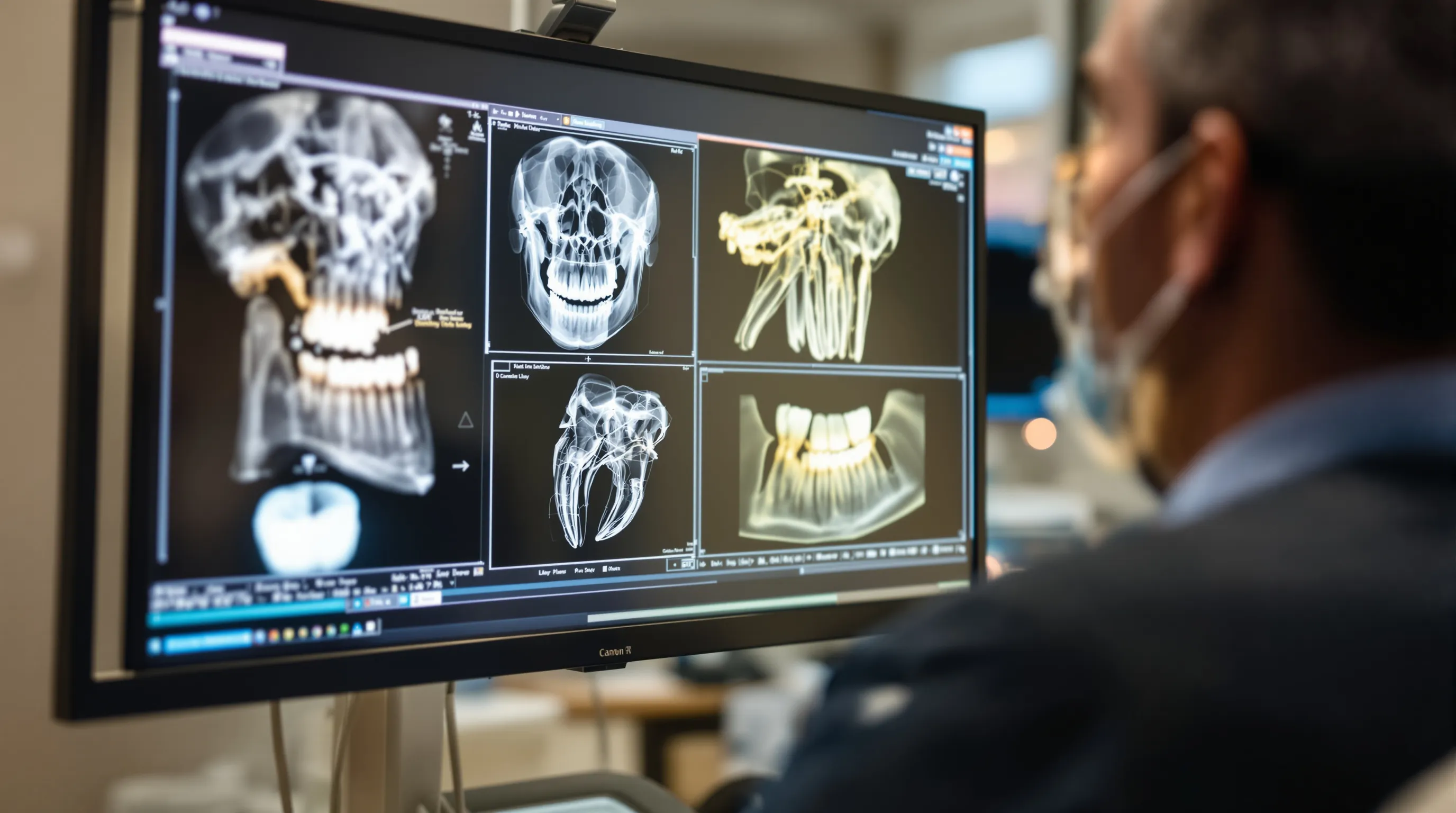
Are Dental Implants Always the Right Answer for a Missing Tooth?
Implants are often the right answer. But "often" is doing real work in that sentence, and we think patients near East Windsor deserve the full picture before they decide.
The scale of tooth loss in this country is genuinely staggering. Approximately 178 million Americans are missing at least one tooth, and 40 million are missing all of their teeth, according to the American College of Prosthodontists. The World Health Organization has documented that roughly 30% of people between ages 65 and 74 have no natural teeth remaining. Implants and their full-arch relatives, like All-on-4, have been a genuine breakthrough for this population, and we have seen that firsthand in our Lawrenceville practice for decades. The marketing around them, though, has raced ahead of the clinical data in some important ways.
According to recent joint consensus papers from the Academy of Osseointegration and the American Academy of Periodontology, non-diseased peri-implant soft-tissue deficiencies have an overall prevalence of 46.2%. The numbers worsen over time: 33% at 1 year and 64.5% at 5 years post-placement. At least half of all implants will exhibit inflammation or peri-implant disease at some point in their lifespan. The takeaway is not that implants fail. The takeaway is that implants demand lifelong, committed maintenance and a provider whose examination goes far deeper than the marketing photograph.
A common misconception is that placing an implant immediately solves the missing-tooth problem permanently. In practice, the implant is the beginning of a maintenance relationship, not the end of one. As Dr. Saul Weiss, who specializes in implant-supported restorations, has observed, patients who lost their natural teeth because they stopped caring for them sometimes repeat that pattern with implants, with similarly expensive consequences.
When Conservation Is the Smarter Path
Conservative options deserve more credit than the "teeth in a day" advertisements suggest. Conservative single-retainer resin-bonded bridges achieve approximately 98% success over 10 or more years when the bite is properly managed, according to the Dental Digest podcast series featuring dual-boarded periodontist and prosthodontist Dr. Ashley Hoders. Partial extraction therapy, which retains a compromised root rather than removing it, preserves the surrounding bone and tissue in ways that extraction followed by implant placement cannot replicate.
Frank Spear, one of the most cited voices in restorative dentistry, put it plainly: "I'm not anti-implant. I'm pro-tooth." That philosophy resonates with us. Saving natural tooth structure, when it is genuinely possible, tends to produce better long-term outcomes for the surrounding bone and the adjacent teeth. It is also reversible in a way that extraction is not.
None of this means avoiding implants. It means choosing them deliberately. The best outcomes come from a thorough evaluation of bone quality, tissue health, and bite mechanics before placement, and from a practice experienced enough to sequence the treatment correctly from the start.
Who Are the Best Cosmetic and Restorative Dentists Near Lawrenceville and East Windsor, NJ?
The best provider is one who examines your oral health thoroughly before recommending a single treatment. That principle narrows the field considerably and quickly.
Patients searching for cosmetic dental care in Lawrenceville and the surrounding East Windsor area describe strikingly similar priorities when they share their experiences. They want someone who listens, does not push procedures before understanding the full picture, and takes dental anxiety seriously without making a patient feel embarrassed about it. Those qualities are not just nice to have. They correlate directly with better outcomes, because patients who feel heard are more likely to follow through on maintenance and flag problems early.
What to Look for When Evaluating a Practice
A thoughtful patient-evaluation guide suggests organizing a provider search around several concrete factors. Here is the checklist we recommend for anyone approaching this decision near East Windsor:
- Comprehensive exam first. The first appointment should begin with a full examination, including X-rays, before any cosmetic option is discussed. An office that opens with a veneer pitch has its priorities backwards.
- Credentials and continuing education. Look for membership in the Academy of General Dentistry, post-graduate cosmetic or prosthodontic training, and a demonstrated commitment to CE courses. Cosmetic dentistry has no formal specialty board, which means the range of skill levels is wide.
- Full-spectrum services in one place. When a practice can handle whitening, veneers, crowns, implants, aligners, and full-arch restoration under one roof, treatment planning becomes more integrated. Patients do not get bounced between referrals for work that should be coordinated.
- Technology investment. CBCT 3D imaging, digital impressions, and CAD/CAM crown fabrication are not gimmicks. They reduce guesswork, improve fit, and support better long-term outcomes.
- Sedation options. For patients with dental anxiety, the availability of sedation dentistry is not a luxury. It is the difference between getting care and delaying it for another decade.
- Reviews and patterns over individual testimonials. Individual reviews are anecdotes. What patterns show up across dozens of them? Consistency in communication and comfort signals say more than any single five-star post.
One additional development worth knowing about: AI smile-simulation tools are beginning to enter cosmetic consultations in a meaningful way. According to coverage in the dental technology press, generative AI models can now analyze facial symmetry, lip curvature, and tooth proportions to produce photorealistic smile previews from a single photograph. The implication for patients is real: you do not have to commit to an irreversible procedure like veneers without first seeing a realistic representation of what the result might look like on your face specifically. We see this technology as a genuine step forward in transparent, patient-centered consultation.
The visibility gap question, "Who are the best cosmetic dentists in Lawrenceville, NJ?" is one we encounter in patient conversations regularly. Our honest answer is that the best practice is the one that earns trust through thoroughness, not the one with the most dramatic before-and-after photographs. At Imagine Advanced Dental Arts, we have been building that trust with Mercer County patients for over 40 years.
What Will Matter Most for Cosmetic and Restorative Dental Patients in the Next 12-24 Months?
Three converging shifts are reshaping what patients near East Windsor should expect: AI-assisted treatment planning, rising out-of-pocket costs, and growing caution around aggressive implant timelines.
| Signal | Weak Signal Now | Why It Matters |
|---|---|---|
| AI smile simulation becomes routine at consultations | Consumer-grade AI image tools using models like Google Gemini are already being adapted to generate smile previews from a single photograph | Patients can evaluate whether whitening, bonding, or veneers actually deliver the result they envision before any irreversible step is taken. According to coverage in dental technology publications, these tools analyze facial symmetry and tooth proportions to produce photorealistic previews that change how consultations work. |
| Self-funded demand rises as coverage tightens | The Academy of General Dentistry has formally challenged new payment policies from major insurers including Aetna and Delta Dental | With more cosmetic-adjacent procedures moving outside coverage, patients in the Lawrenceville and East Windsor area face more out-of-pocket decisions. Comparing provider skill, financing options, and long-term value becomes more important than assuming insurance will absorb the cost. |
| Patient expectations around comfort and transparency are rising | Online patient communities show strong preference for providers who explain options, do not pressure decisions, and offer sedation for anxious patients | This is not a soft trend. Practices that build reputations on thoroughness and comfort are capturing the patient referrals that aggressive upselling practices are losing. Patients talk, and the consultation experience is increasingly what drives word-of-mouth. |
What most patients miss: The biggest misconception we see at Imagine Advanced Dental Arts is that more treatment equals better results. The next 12-24 months will reward patients who take the time to understand the full range of options, including conservative ones, rather than defaulting to the most dramatic available procedure. The data on long-term outcomes increasingly favors tooth preservation over replacement, and that shifts the calculus on everything from implants to full-arch makeovers in ways that most cosmetic dental marketing does not acknowledge.
Looking Ahead: 12-24 months Forecast
Where East Windsor smile care heads next
Three scored forecasts on how cosmetic and restorative dental care near East Windsor is likely to shift over the next one to two years.
A
Forecasts for local smile and restoration care
Use these to weigh timing and treatment choices before booking a consultation in the East Windsor area.
Within 12-24 months, generative AI smile-simulation tools built on models like Google's Gemini image system will become a routine part of cosmetic consultations in the region, letting patients preview whitening, bonding, and veneer outcomes before they commit.
Implant-first 'teeth in a day' and all-on-four marketing will lose ground to function-first, tooth-preserving restoration as complication data spreads; with peri-implant soft-tissue deficiencies reported at 46.2% prevalence in AO/AAP consensus work, more patients will be guided toward conservative options before implants.
Small Clues Worth Watching Consumer-grade AI image tools are already being adapted to design and simulate smiles from a single photo. AO/AAP joint consensus papers documenting a 46.2% overall prevalence of peri-implant soft-tissue deficiencies. The Academy of General Dentistry is publicly pushing back on new Aetna and Delta Dental of California payment policies, and local buyers are actively searching for top cosmetic dentists in nearby New Jersey towns.
B
What supports and challenges each forecast
Each forecast lists both the sources that back it and the sources that cut the other way.
Self-funded demand rises as coverage tightens
92
Supporting evidence
- Academy of General Dentistry | Dental CE & Member Resources is the strongest public backing for this call. [Industry Publication]Tangential signal only: multiple AGD events on AI in dentistry (ChatGPT, "AI: Friend, Foe or Frenemy?"), indicating profession-wide interest in AI. Not connected to treatment selection.
- The case rests on Bioengineered Teeth: Unveiling the Future of Regenerative Dentistry. [Blog]Per the World Health Organization, nearly 30% of people aged 65-74 have no natural teeth. “they are living, growing teeth cultivated in a laboratory setting.”
- Who is the best cosmetic dentist in Brooklyn? points the same way. [Community / Forum]
AI smile previews enter the consult
56
Supporting evidence
- The case rests on No More Guessing: How AI Models Are Trained To Design - Medium. [Blog]"Nano Banana" is the informal name for Google's Gemini 2.5 Flash (Image), a generative AI model built for advanced image generation and editing (per Sally Derbala). “For decades, cosmetic dentistry has relied on guesswork.”
- What is the future of cosmetic dentistry and what does beauty look points the same way. [Social]The account @drpaulagould (a Verified Instagram account) posted about giving an interview for a beauty podcast, per the caption "I spoke about in my interview for a beauty podcast today.". “What is the future of cosmetic dentistry and what does beauty look like to me?”
Conservative restoration over implant-first
48
Supporting evidence
- Dental Digest Podcast with Dr. Melissa Seibert points the same way. [Podcast]Per recent AO/AAP joint consensus papers, non-diseased peri-implant soft tissue deficiencies have an overall prevalence of 46.2% (Dr. Ashley Hoders, citing AO/AAP consensus). “Show notes on positioning error: placing an anterior implant too shallow or too facial is the "kiss of death" for long-term peri-implant tissue stability.”
C
What could shift these forecasts
Scenarios in insurance, clinical data, and imaging technology that would change how these treatment trends play out.
The Fine Print
Our strongest call is 92, while 48 is the one most likely to surprise us.
- If regulators or buyers move in the opposite direction, Self-funded demand rises as coverage tightens would weaken first.
- If the source mix shifts toward stronger contrary evidence, Conservative restoration over implant-first could become the more durable forecast.
Methodology
We built these forecasts by weighing the evidence for and against each one, then being upfront about where we could be wrong.
The most important decision in cosmetic and restorative dentistry is not which procedure to choose. It is whether you have found a provider who asks the right questions before suggesting anything at all.
After more than four decades treating Mercer County patients, what we have observed at Imagine Advanced Dental Arts is this: patients who come in asking for a specific procedure often leave with a better one. Not because we talked them out of what they wanted, but because a thorough exam usually reveals a more effective path. A patient who thinks they need veneers may actually need whitening and bonding. A patient who is certain they need an implant may be a better candidate for a conservative bridge.
That principle becomes more consequential as evidence on long-term complication rates continues to accumulate. According to emerging research covered in dental technology publications, AI smile simulation tools now make it easier than ever to evaluate cosmetic outcomes before committing to irreversible procedures. Getting a true preview of your result, alongside honest clinical guidance, is what separates a good dental experience from a remarkable one. That is what we aim to deliver to every patient who walks through our door.
Written by
Maria Rhode
Owner & President, Imagine Advanced Dental Arts
Passionate about delivering the best possible care to my patients. From my days in residency to owning a beautiful hi-tech dental office, I never stop learning and advancing myself and now my practice.
Connect on LinkedInSummarize This Article With AI
Open this article in your preferred AI engine for an instant summary.
Frequently asked questions
+Does dental insurance cover cosmetic procedures?
Most dental insurance plans do not cover purely cosmetic procedures such as whitening or veneers. Coverage is more likely for work with a restorative function, like crowns that protect a damaged tooth. That said, policies vary widely, and we encourage East Windsor patients to verify their specific benefits before any treatment decision.
+Can I see what my smile will look like before committing to veneers or whitening?
Yes, and this is one of the most useful developments in modern cosmetic dentistry. According to dental technology reporting, AI-powered smile simulation tools can now generate a realistic preview of your results from a single photograph. We use these tools during consultations to help patients visualize outcomes before any irreversible procedure begins.
+How do I know whether I need a crown, a veneer, or just whitening?
The right choice depends on the underlying condition of the tooth. Whitening addresses surface staining. Veneers cover chips, cracks, or discoloration on otherwise structurally sound teeth. Crowns are necessary when a tooth has significant decay or structural damage. A thorough exam, not a consultation focused on upselling, is the only reliable way to know.
+What should I ask at a cosmetic dental consultation near Lawrenceville or East Windsor?
Ask what the exam found before any treatment is recommended. Ask whether less invasive options exist. Ask about the dentist's training in cosmetic procedures specifically, since cosmetic dentistry has no formal specialty board. And ask to see before-and-after examples from similar cases treated at that practice.
+Is professional teeth whitening safe?
Professional whitening is safe for most patients with healthy enamel and no active cavities or gum disease. Sensitivity is common but typically temporary. The concentration of whitening agents used in-office is higher than over-the-counter products, which is why the results are more predictable. We always recommend a cleaning and exam before whitening to confirm your teeth are ready for treatment.
Ready to redefine your dental experience?
Schedule a consultation with our team and discover comfortable, customized care in Lawrenceville, Jersey.