


Most people who walk into a cosmetic dentist's office want one thing, a fix for the specific thing that bothers them when they look in the mirror. What they sometimes walk out with is a quote for something much larger. In this piece, I want to explain honestly how cosmetic treatment plans can expand well beyond the presenting concern, what warning signs to look for in a proposal, and what a right-sized alternative actually looks like in practice. Whether you are researching your first cosmetic consultation or holding a large quote you are not quite sure about, this article will give you the framework to ask better questions and make a genuinely informed decision about your smile.
Questions this article answers
- How does a cosmetic treatment plan end up including teeth I never mentioned?
- What are the warning signs that a cosmetic quote includes more work than I actually need?
- What does a conservative, right-sized cosmetic plan actually look like, and how much can it save?
Quick Answer
A patient came to me last spring carrying a printed estimate for $22,000. The plan called for ten porcelain veneers across her entire upper arch, a complete smile transformation from canine to canine. Her actual complaint was two chipped front teeth and some stubborn yellowing that drugstore whitening strips had never touched. She was two days from signing. A friend suggested she get a second opinion first.
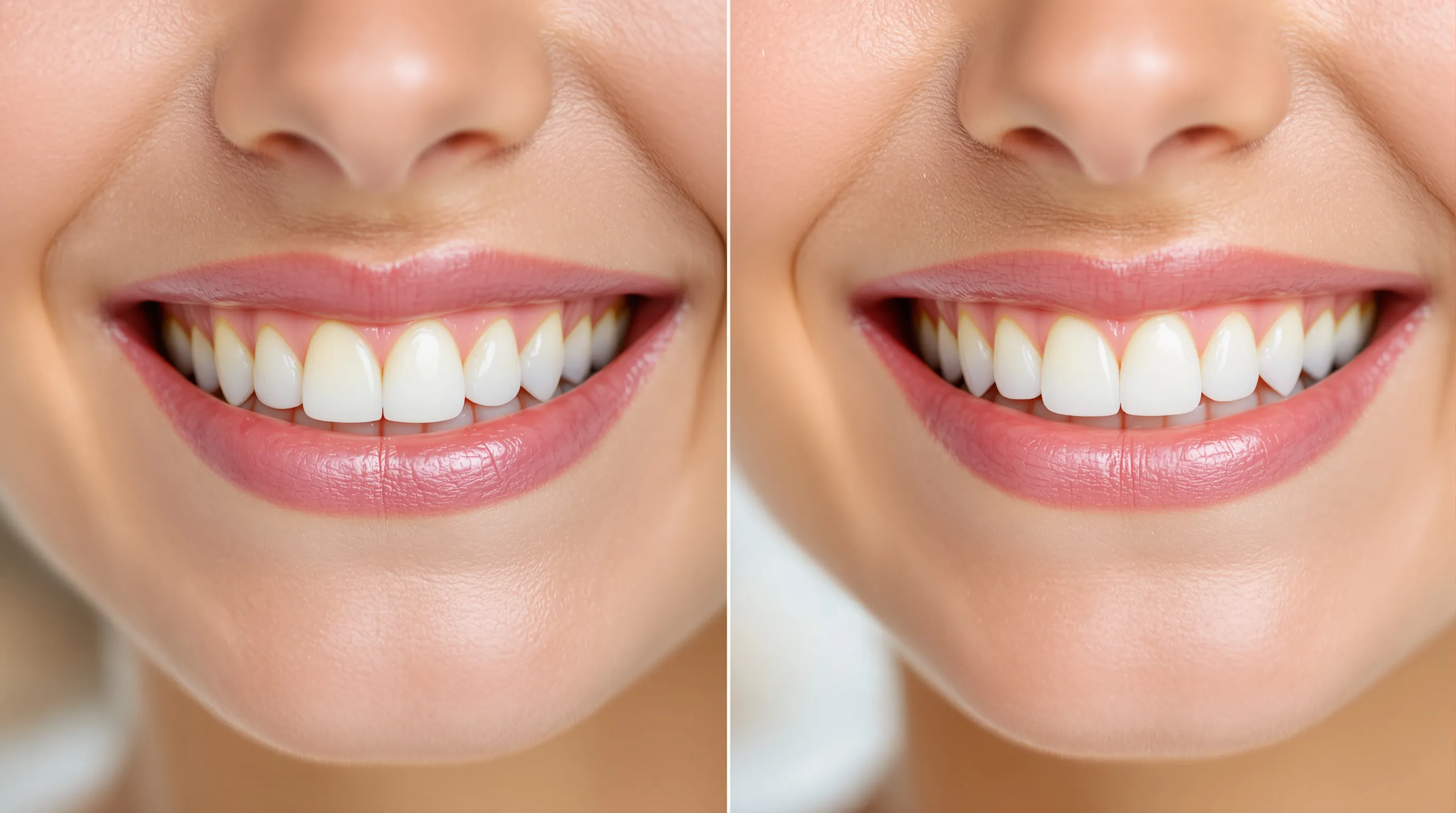
After our consultation, her treatment plan came to $1,600. Professional whitening to address the staining, two composite veneers to rebuild the chipped edges, and she walked out with exactly the smile she had described wanting. No healthy teeth were permanently altered. No irreversible enamel reduction on eight perfectly fine teeth. The result she came in asking for, at the scope the concern actually required.
I have seen this pattern more times than I can count, and I want to be honest with you about it: not to criticize colleagues, but because patients deserve to understand how these recommendations happen and what questions to ask. Cosmetic dentistry is remarkable. What it can do for a smile, for confidence, for quality of life is genuinely extraordinary! But it works best when it is scoped to the actual problem, not to an idealized version of what the entire mouth could theoretically become.
The Short Answer
Many cosmetic treatment plans include work on teeth that are perfectly healthy, because dentists are trained to see the whole smile as a unit. A conservative approach: starting with whitening, using bonding before committing to porcelain, treating only the teeth that actually bother you, often delivers an identical visible result for a fraction of the cost and with far less irreversible change to your natural tooth structure. A second opinion that scopes to the actual problem often halves the work proposed.
How Does a Cosmetic Treatment Plan End Up Including Teeth You Never Mentioned?
I want to tell you something that took me a while to articulate clearly, even to myself.
Dentists are trained to see problems. Not because we are looking for things to sell you, but because our education trains us to look at the entire oral environment and identify every deviation from ideal. That is genuinely the right instinct for diagnosing disease. But applied to a cosmetic consultation, it can take you somewhere you did not expect to go, as of .
When a patient comes in and says "my two front teeth are chipped," I see two chipped teeth. I also see that the lateral incisors are slightly rotated, that the cuspids are a touch longer than ideal, that there is a subtle gap between the centrals the patient has probably never noticed, and that the shade of the premolars behind the smile zone differs slightly from the front teeth. Every one of those observations is real. And none of those observations may be things that actually bother the patient at all!
A comprehensive cosmetic plan: the kind that produces a $20,000 estimate: addresses all of it at once, because from a pure aesthetic dentistry standpoint, a uniform, proportionate result with consistent shade across every visible tooth is the goal. It is a beautiful goal. It produces stunning results. And for patients who genuinely want that level of transformation, it is exactly right.
But for the patient whose actual goal is "my two chips bother me". That comprehensive plan is doing a great deal of irreversible work to teeth that were never part of the problem.
How the "Complete Smile" Frame Shapes What You're Offered
Patient education pages at established cosmetic practices commonly note that veneer cases "usually" involve 8 to 16 teeth covered per patient. That framing, 8 to 16 teeth as the standard, reflects a philosophy that the entire smile zone should match. If you come in with a two-tooth concern, that philosophy will expand the plan significantly.
The marketing framing around complete smile makeovers has accelerated this over the past decade. Digital smile design software lets practices show patients a simulated result of what their whole smile could look like: whitened, symmetrical, perfectly proportioned. The simulation is genuinely compelling! But it almost always involves the full arch. Once you have seen that image of your potential perfect smile, it is psychologically much harder to settle for "just fix the two chips." The expanded vision becomes the new baseline, and the conservative option starts to feel like settling.
Dr. Murtaza Mack, a cosmetic dentist with a large educational YouTube following, has been direct about this pattern: "90% of the time or 80% of the time, if we see you in the office you don't need shaving of the teeth to get veneers." His point is that most cosmetic patients can be served with minimally invasive techniques, but crowns and full-preparation veneers have been practiced for 50-plus years, so they remain the default for many practitioners.
Here is what this looks like across three common presenting scenarios:
| Patient Concern | Conservative Plan | Comprehensive Plan | Teeth Affected | Typical Cost Range |
|---|---|---|---|---|
| Two chipped front teeth + staining | Whitening + 2 composite veneers | 10 porcelain veneers (full upper arch) | 2 vs. 10 teeth | $1,200-$1,800 vs. $15,000-$25,000 |
| Slight crowding of lower front teeth | Clear aligner therapy | Lower arch veneers to mask crowding | Reversible vs. 6-8 teeth | $2,500-$4,000 vs. $8,000-$14,000 |
| One discolored tooth after a root canal | Internal bleaching + single crown | 4-6 veneers for "shade uniformity" | 1 vs. 4-6 teeth | $1,500-$2,200 vs. $6,000-$12,000 |
The right-column options are not fraudulent. They are real treatments that produce genuine results. But for the patient in each row, the comprehensive plan is addressing a scope of problem they never described having. And it is doing so by permanently altering tooth structure that was working perfectly well.
Porcelain veneer preparation permanently removes 0.3 to 0.5 millimeters of enamel from each tooth. Once that enamel is gone, that tooth will always need a restoration. For a patient with healthy, intact enamel on eight teeth that function perfectly, applying a ten-tooth porcelain plan to a two-tooth problem is a significant lifelong commitment that could have been avoided entirely.
What Are the Warning Signs That a Cosmetic Quote Includes More Than You Need?
Let me be direct with you here, because I think patients deserve honesty more than they deserve reassurance.
Some cosmetic treatment plans include more teeth than the presenting problem requires. This is not always because of bad intentions, sometimes it reflects a genuine clinical philosophy difference. But the patient communities online are full of stories that reveal the pattern clearly.
One Reddit poster shared the story of going to a new dentist and leaving with a quote for 8 root canals and 8 crowns, totaling over $20,000. A second opinion identified 6 cavities needing ordinary fillings: no root canals, no crowns, at a final cost of $700. "The dentist was honestly flabbergasted that the other dentist even tried to give me one root canal, let alone eight," the poster wrote. Another commenter on the same platform described a quote that jumped from 0 cavities to 12 after a practice changed ownership, only to be revised back to 3 upon a second opinion. These are not edge cases. They are recurring patterns.
A different Reddit thread surfaced something even more pointed: a patient who came in primarily concerned about staining and was greeted at the start of the appointment, before any examination findings, by commentary on how yellow her teeth were and immediate pitching of whitening services. As one commenter in that discussion put it plainly: "If the first thing they start talking about is tooth whitening, you should leave."
Here are the signals worth paying attention to in any cosmetic consultation:
Red Flags in a Cosmetic Treatment Proposal
- The tooth count is significantly more than the teeth you mentioned. If you came in concerned about two teeth and the plan covers eight to ten, ask specifically why each additional tooth is included. The answer should name a clinical reason: an existing restoration mismatch, a structural issue, a genuine aesthetic concern, not just "for better symmetry overall."
- No staging or sequencing is offered. A conservative approach almost always starts with the least invasive option first: whitening before veneers, bonding before porcelain, alignment correction before any cosmetic overlay. If the plan skips straight to the highest-intervention option without discussing what could reasonably be tried first, that is worth probing.
- Reversibility is never mentioned. Porcelain veneers and crowns require permanent enamel removal. Composite bonding does not. A thoughtful dentist will tell you which parts of the proposed plan are reversible and which are permanent, before you make a decision.
- The consultation has a closing feel to it. Questions directed toward confirming your commitment rather than clarifying your goals, same-day discounts, time-limited pricing, or attempts to open a payment account during your first visit are sales dynamics, not clinical ones. A second visit to ask more questions should feel welcome, not like an obstacle.
- The plan addresses concerns you did not have until this appointment. As one commenter on r/porcelainveneerstruth observed, "many dentists and social media create problems or insecurities that were never there to begin with, leading people down a rabbit hole of unnecessary treatment, dental work, and a lifetime of issues." You get to decide whether something bothers you, not the dentist.
Questions Worth Asking Before You Sign
In my practice, I actively encourage patients to ask these questions at any consultation, including mine. A dentist who is confident in their recommendation will welcome them:
- "Which of these teeth have a clinical problem that needs addressing, and which are included for aesthetic consistency?"
- "What is the least invasive option that would address my primary concern?"
- "Are there reversible options: whitening, bonding, clear aligners. We should try before committing to porcelain?"
- "If I only address the most important part of this plan now, can I stage the rest later?"
- "How much tooth structure will be permanently removed from each tooth in this plan?"
A right-sized plan can always be explained tooth by tooth. If that explanation is not forthcoming, ask for it in writing. And know this: second opinions in cosmetic dentistry are completely appropriate and increasingly common. From what I have seen in my practice, patients who come in for second opinions on large cosmetic quotes leave with a meaningfully revised scope more often than not.
What Does a Conservative Cosmetic Sequence Actually Look Like?
I want to show you what it looks like when a practice deliberately sequences treatment from least invasive to most invasive, because the visual is more useful than the principle alone.
In my experience, roughly 60% of patients who come in for cosmetic consultations have a concern that can be fully addressed with whitening and bonding alone. Another 25% have something that warrants porcelain veneers, but only on the two to four teeth that are genuinely the problem. The remaining 15% genuinely need comprehensive treatment because the concern is aesthetic, structural, or both across the full arch.
That does not mean three-quarters of people receiving comprehensive plans are being overtreated. It means a consultation framework that starts from the minimum necessary usually arrives at a different landing point than one that starts from the maximum possible. The starting question matters enormously.
The Four-Step Conservative Approach I Use at Imagine Advanced Dental Arts
Step 1: Understand the actual complaint in the patient's own words, precisely. "What bothers you when you look in the mirror?" anchors to the specific problem. "What would you change about your smile?" opens the door to aspirational redesign. Both questions are legitimate starting points: but they tend to produce very different treatment plans, and I consistently prefer the first one.
Step 2: Assess whether the complaint can be addressed without irreversible treatment first. Staining? Professional whitening always comes before veneers, always. Slight crowding or overlap? We evaluate clear aligner options before any cosmetic overlay. A chip that affects shape but not structure? Composite bonding is faster, less expensive, and completely reversible if you change your mind six months from now. The irreversible options are not going anywhere. They remain available if the reversible options do not fully satisfy your concern.
Step 3: Scope any porcelain work to the teeth that genuinely need it. If two teeth are chipped and the rest of the smile is healthy, two veneers is the right plan. If adjacent teeth have existing restorations, significant shade mismatches, or structural concerns, the scope may expand, but that expansion has a tooth-by-tooth clinical rationale I can explain to you in plain language before you agree to anything.
Step 4: Stage any additional work for a later visit if more transformation is wanted. Patients often start with a conservative fix and return several months later wanting to continue. That is completely reasonable, and the conservative starting point does not close off the path to a more comprehensive result. It just means we earn each additional step through your informed decision, not through an all-at-once presentation.
Conservative and Comprehensive Plans Compared
| Factor | Conservative Sequence | Comprehensive Plan |
|---|---|---|
| Starting question | "What bothers you most right now?" | "What would your ideal smile look like?" |
| Teeth in scope | 2-4 teeth (concern-driven) | 8-10 teeth (full smile zone) |
| Enamel removed | None (bonding) to minimal (2-4 teeth) | 0.3-0.5mm per tooth on 8-10 teeth |
| Reversibility | High, bonding and whitening phases are reversible | Low, porcelain prep is permanent |
| Typical cost | $800, $6,000 | $15,000, $28,000 |
| Visit count | 2-6 visits | 8-14 visits |
| Primary concern addressed? | Yes | Yes (plus much more) |
That last row is the one I want you to look at carefully. Both approaches fully address the primary concern you walked in with. The difference is everything layered around it. For the patient who genuinely wants the complete transformation, the comprehensive plan is worth every dollar. For the patient who just wanted the chips fixed. The additional scope represents tens of thousands of dollars spent on a result they did not request and may not have needed.
Knowing which patient you are, and finding a dentist who will help you figure that out rather than assuming the answer on your behalf, is what a genuinely good cosmetic consultation should accomplish. If you are in the Lawrenceville, Princeton, or Mercer County area and want that kind of honest scoping conversation, we would genuinely love to have it with you!
What Changes Are Coming to Cosmetic Dentistry That Patients Should Know About?
The conversation around treatment scope in cosmetic dentistry is getting louder, and I think that is genuinely good news for patients. Several converging trends suggest that getting right-sized cosmetic care will become more accessible over the next year or two, and understanding them puts patients in a stronger position right now.
Digital smile design is becoming a comparison tool, not just a selling tool. Early digital smile software was used primarily to show patients the finished result of a comprehensive plan, which had the psychological effect of anchoring them to full-arch treatment. Newer applications allow practitioners to show simulated results at different scopes side by side, "here is what two veneers look like, here is what six look like, here is what ten look like." Patients who can see staged options before committing are making more genuinely informed choices, and that structural shift in the consultation experience is a real improvement.
The biomimetic dentistry movement is gaining mainstream traction. Biomimetic dentistry, a philosophy centered on preserving natural tooth structure as much as possible, was a niche clinical position five or six years ago. Today it appears as a marketing message at an increasing number of practices, because patients are actively searching for it. That market signal will continue shifting how cosmetic treatment is framed and proposed. As a board-certified dentist, I have always believed that preserving healthy tooth structure is not a niche preference. It is the foundation of good dentistry.
Patient review culture is including treatment scope. Five years ago, cosmetic dental reviews focused primarily on outcomes and chair-side experience. Increasingly, reviews specifically note whether a practice "recommended what I actually needed" or "tried to sell me more than I came in for." This new dimension of accountability is shaping practice behavior in ways that professional guidelines alone do not.
Corporate consolidation in dentistry is creating new incentive dynamics. Dr. Holli Careswell, a board-certified cosmetic dentist and Forbes Health Advisory Board member, has publicly noted that corporate buyouts of independent dental practices are "becoming more and more common in dentistry," and that corporate structures can limit a new dentist's ability to choose the materials and approaches they feel are clinically appropriate. When a dentist's treatment recommendations are shaped by a corporate production quota rather than clinical judgment alone, patients benefit from understanding that dynamic exists.
Second opinion culture is normalizing. What was once seen as patient distrust is now recognized as sound consumer behavior in healthcare broadly. Dental patient communities online, from Reddit threads to patient advocacy groups, have created a growing body of first-person testimony about the value of independent review before agreeing to major cosmetic work. The patients who come to me for second opinions are not skeptical of dentistry. They are thoughtful consumers who understand that a large, irreversible investment deserves careful scoping. Well, that is exactly right!
Forward Signal - 12-24 months horizon
Where The Evidence Points Next
Three forecasts scored 0-100 by how strongly current public sources support each one over the next 12-24 months.
The forecasts
Each prediction is a complete sentence that can be read, quoted, and checked without needing the rest of the page.
Over the next 12-24 months, patients who obtain a second opinion before committing to major restorative or cosmetic work will continue to find materially smaller treatment plans and lower costs than the first proposal, reinforcing second-opinion-seeking as a standard step before big-ticket dental procedures.
Over the next 12-24 months, more restorative and cosmetic dentists will publicly promote enamel-preserving veneers and pulp-capping as alternatives to full crowns and root canals, giving patients a clinical basis to ask about less invasive options before agreeing to more aggressive default treatments.
Membership and accreditation through cosmetic dentistry organizations will continue correlating with substantially higher per-practice revenue over the next two years, so the financial structure behind these credentials is unlikely by itself to reduce the volume of procedures recommended to patients.
Weak signals watched: Documented cases show a first dentist recommending 8 root canals and 8 crowns quoted at over $20,000, with a second dentist finding zero root canals and zero crowns needed and total actual cost of $700; a separate case had 8 fillings recommended by one dentist reduced to 2 by another. An industry survey found accredited-organization member dentists generate 25% more practice production and earn 46% more annually on average, while Accredited professionals specifically earn 79% more than the comparison group. Practitioners report veneers bonded to enamel showing 20-25 years of clinical success versus crowns that remove enamel and raise long-term decay and root-canal risk, and one practice reports a 95-96% pulp-capping success rate that avoids root canals in the large majority of crown and bridge cases.
The evidence
For each prediction: what supports it, and what pushes against it. Both sides are shown for every forecast.
- Get A Second Opinion on Dental Work supports this forecast. [Community / Forum]
- Always ask for a second opinion when it comes to anything supports this forecast. [Community / Forum]
- Dental Professionals: How can I tell if my dentist is ripping me off? supports this forecast. [Community / Forum]
- I'm a Board-Certified General and Cosmetic Dentist: Ask Me is the clearest counter-signal. [Community / Forum]
- Why You Should Not Get Dental Crowns? The Unfortunate Truth supports this forecast. [Video]
- Crown Without Root Canal? Dentists Don't Tell You This supports this forecast. [Video]
- AACD | Home supports this forecast. [Industry Publication]
- Why You Should Not Get Dental Crowns? The Unfortunate Truth is the clearest counter-signal. [Video]
- Crown Without Root Canal? Dentists Don't Tell You This is the clearest counter-signal. [Video]
Where we could be wrong
These forecasts assume current trends continue. The scenarios below would meaningfully change them.
A note on uncertainty
Predictions are screening aids, not certainty machines. The strongest signal here (71/100) still has counter-evidence, and the contrarian signal (48/100) reflects real disagreement among sources.
- If regulators or buyers move in the opposite direction, Second opinions keep exposing gaps between recommended and actual work needed would weaken first.
- If the source mix shifts toward stronger contrary evidence, Cosmetic accreditation keeps tracking with higher revenue, not fewer recommended procedures could become the more durable forecast.
I became a dentist because I genuinely love what dentistry can do for people: the confidence it builds, the discomfort it relieves, the life-changing results I still find remarkable after all these years in practice. I believe in cosmetic dentistry deeply! What I believe equally strongly is that great cosmetic dentistry starts with listening to what the patient actually came in wanting, and scoping the plan from there.
If you have received a large cosmetic treatment quote and something feels off about the scope, trust that feeling. It is worth a second conversation: either at the same practice with more targeted questions, or with a different dentist who can give you an independent perspective. The right plan for your smile is the one that addresses your actual concern, preserves as much natural tooth structure as possible, and earns each additional step through your informed consent, not through an all-or-nothing presentation designed to maximize the transformation.
As you can see, the gap between what some patients are quoted and what they actually need can be quite wide. Patients who ask the right questions are getting better outcomes because of it. At Imagine Advanced Dental Arts in Lawrence Township, we love having this conversation: and we would be honored to be your second opinion, or your first.
Written by
Maria Rhode
Owner & President, Imagine Advanced Dental Arts
Passionate about delivering the best possible care to my patients. From my days in residency to owning a beautiful hi-tech dental office, I never stop learning and advancing myself and now my practice.
Connect on LinkedInGet a Second Opinion on Your Cosmetic Plan
If you have received a cosmetic treatment quote that feels larger than your concern, a Smile Analysis at Imagine Advanced Dental Arts will give you a clear, conservative assessment of what your specific concern actually requires: tooth by tooth, step by step. We serve patients throughout Lawrenceville, Princeton, and Mercer County, NJ.
Schedule Your Smile AnalysisSummarize This Article With AI
Open this article in your preferred AI engine for an instant summary.
Frequently Asked Questions
Is it common for cosmetic treatment plans to include more teeth than necessary?
It happens more often than most patients realize. Dentists are trained to view the smile as a complete unit, and a plan that addresses every deviation from ideal can be genuinely appropriate for patients who want full transformation. The issue arises when the comprehensive scope is presented as the only option for patients whose concern involves only one or two teeth. Asking for a staged or minimum-viable alternative is always reasonable.
Should I get a second opinion before agreeing to a large cosmetic plan?
Yes, and a good dentist will encourage it. Second opinions on cosmetic dentistry are completely appropriate and increasingly common. If seeking a second opinion is discouraged or framed as unnecessary friction, that is itself useful information. Patient communities online document numerous cases where second opinions dramatically changed both the scope and cost of recommended cosmetic work.
Is composite bonding as good as porcelain veneers?
Composite bonding is an excellent, reversible, less expensive option for chipping and minor shape or contour concerns. It typically lasts 5 to 7 years before needing a touch-up or replacement, compared to 10 to 15 years for porcelain. For concerns involving one or two teeth, bonding is often the right first step rather than a lesser alternative to porcelain.
Can I do part of a cosmetic plan now and the rest later?
In most cases, yes. Staged treatment is a completely reasonable approach: address whitening and the highest-priority concern first, see how it looks and feels, then decide whether to continue. Ask specifically about phased options if the dentist presents only an all-at-once plan. A well-designed conservative plan does not close off the path to a more comprehensive result later.
How do I know if a dentist is recommending more work than I need?
The clearest signal is when the treatment plan includes teeth you are not concerned about and no tooth-by-tooth clinical rationale is offered. Ask for a breakdown of why each tooth is included, and ask whether a less invasive option could address your primary concern before any permanent tooth reduction. A dentist confident in their recommendation will welcome these questions.
What is the best cosmetic dental option for a chipped front tooth?
For most chipped front teeth, composite bonding is the right first option: it adds material back to the tooth without removing healthy enamel, can be completed in a single visit, costs $200-$600 per tooth, and is completely reversible. Porcelain veneers are appropriate when the chip is severe, when the tooth has existing discoloration or damage, or when multiple adjacent teeth are involved.
Where can I find a conservative cosmetic dentist in the Princeton, NJ area?
Imagine Advanced Dental Arts in Lawrence Township serves patients throughout the Princeton, Lawrenceville, and Mercer County, NJ area with a conservative, sequenced approach to cosmetic dentistry. We offer Smile Analysis consultations that scope treatment to your actual concern and present staged options before any permanent work is recommended.