


Questions This Article Answers
- Are dental implants worth it after 70?
- What is the success rate of dental implants in patients over 70?
- What health conditions affect implant candidacy in older adults?
- How do implants compare to dentures for seniors?
What Will Likely Change About Dental Implants for Older Adults in the Next 12-24 Months?
The landscape for implant dentistry in older adults is moving fast, and in a very encouraging direction. Here are the developments I am watching most closely as a practitioner who cares deeply about this patient population.
CBCT Imaging and AI-Assisted Surgical Planning
Cone beam CT imaging has already transformed how we evaluate bone density and anatomy before implant placement, and artificial intelligence tools that analyze CBCT data to flag bone volume concerns and optimize implant positioning are becoming more widely adopted. For older adults who may have more complex anatomy, this means better precision, fewer complications, and surgical plans that account for individual risk factors before a single incision is made. Within 12-24 months, AI-assisted implant planning is likely to become a standard rather than a specialty offering.
Bone Regeneration Advances
One of the most common reasons older patients hear "you may not be a candidate" is insufficient bone density, the result of years of bone resorption after tooth loss. Guided bone regeneration techniques and bone grafting materials are improving rapidly. Synthetic bone substitutes with better integration properties, growth factor protocols, and even early-stage clinical work on stem-cell-assisted bone regeneration suggest that the pool of older adults who qualify for implants will continue to expand. Patients who were told a decade ago that they lacked sufficient bone for implants may find the answer different today.
Refinements in All-on-4 and Implant-Supported Overdentures
The All-on-4 protocol, which uses four strategically angled implants to support a full arch of teeth, has been a game-changer for adults with severe bone loss who need full-mouth restoration. Ongoing refinements in angled implant design, prosthetic materials, and digital workflows for fabricating the final prosthesis are making this option more predictable and more affordable. For older patients who need comprehensive tooth replacement, All-on-4 continues to represent one of the most exciting options in the field.
Medicare Dental Coverage Advocacy
The most significant non-clinical development to watch is the ongoing advocacy push to add dental benefits to traditional Medicare. Proposals have moved through Congress in various forms, and the political pressure from an aging population with significant unmet dental needs is growing. Even partial coverage: reimbursing implant consultations, bone grafts, or implant placement for medically necessary cases, could dramatically expand access for older adults currently priced out of treatment. If any dental Medicare benefit passes in the 2025-2026 legislative cycle, the impact on older adult implant uptake will be immediate and substantial.
Longevity Science and the Age 70 Calculus
Perhaps the most profound shift in framing: longevity science is changing what "life expectancy at 70" means. As healthspan research advances and the gap between lifespan and healthspan shrinks, a healthy 70-year-old today may be looking at 20-25 active years ahead. That changes the cost-benefit math on dental implants significantly. An investment that seems marginal when you project ten years starts looking very smart when you project twenty. I expect to see this framing become much more common in patient conversations over the next several years, and I believe it should.
Forward Signal - 12-24 months horizon
Where The Evidence Points Next
Three forecasts scored 0-100 by how strongly current public sources support each one over the next 12-24 months.
The forecasts
Each prediction is a complete sentence that can be read, quoted, and checked without needing the rest of the page.
The wave of adults reaching 65+ by 2030, carrying high rates of untreated decay and periodontal disease, expands the pool of full-arch candidates over the next 12-24 months, but the persistent $25,000-$30,000 full-mouth cost keeps hybrid implant-denture packages as the highest-volume choice for the 70+ market.
As complication stories spread, the oldest and medically fragile patients increasingly choose traditional or partially implant-supported dentures over full implants; the growth segment for the frail 75+ is a small number of implants anchoring a lower denture, not full-mouth surgery.
Within 12-24 months, techniques that avoid large bone grafts - All-on-4, All-on-6, zygomatic and pterygoid implants - become the default offer for patients in their 70s and 80s with bone loss, as practices already report treating patients into their 90s with high success when overall health, bone density, medication profile and motivation line up rather than age.
Weak signals watched: Clinicians describing candidacy by four health factors (not age) and citing advanced graft-avoiding implant types for minimal-bone patients, alongside the claim that a healthy 95-year-old with sufficient bone beats a 40-year-old with complicating conditions. Caregivers weighing a 75-year-old with strokes and diabetes toward traditional dentures first, an 80-year-old with dementia and diabetes counseled against invasive work, and a report of death shortly after a two-day full-arch procedure in a thin, nearly-80-year-old patient. Patient-reported full-mouth pricing clustering at $25,000-$30,000, set against CDC/WHO figures showing every Baby Boomer reaching 65+ by 2030 and roughly two-thirds of over-65s with periodontal disease.
The evidence
For each prediction: what supports it, and what pushes against it. Both sides are shown for every forecast.
- Mobile Dental Certification and the Future of Community-Based Oral supports this forecast. [Blog]
- I'm considering looking into dental implants. What have people paid supports this forecast. [Community / Forum]
- How come I see more senior citizens with dentures than with dental supports this forecast. [Community / Forum]
- Am I Too Old For Dental Implants? Dental Implant For Seniors at is the clearest counter-signal. [Video]
- Death shortly after implants supports this forecast. [Community / Forum]
- Implants or not for 75 yo female whose health is not stellar supports this forecast. [Community / Forum]
- Implants vs dentures for an 81 yr old man with dementia supports this forecast. [Community / Forum]
- Am I Too Old For Dental Implants? Dental Implant For Seniors at is the clearest counter-signal. [Video]
- Is There an Age Limit for Dental Implants? Let's Talk Truth is the clearest counter-signal. [Video]
- Am I Too Old For Dental Implants? Dental Implant For Seniors at supports this forecast. [Video]
- Is There an Age Limit for Dental Implants? Let's Talk Truth supports this forecast. [Video]
- Death shortly after implants is the clearest counter-signal. [Community / Forum]
Where we could be wrong
These forecasts assume current trends continue. The scenarios below would meaningfully change them.
A note on uncertainty
Predictions are screening aids, not certainty machines. The strongest signal here (83/100) still has counter-evidence, and the contrarian signal (78/100) reflects real disagreement among sources.
- If regulators or buyers move in the opposite direction, Boomer demographics collide with a $25K-$30K price wall would weaken first.
- If the source mix shifts toward stronger contrary evidence, Frailty screening, not age, becomes the real gatekeeper could become the more durable forecast.
Quick Answer
The Short Answer
Yes: for most healthy adults over 70, dental implants are absolutely worth it. The "lifetime solution" framing is aimed at younger patients and is the wrong yardstick for this decision. For adults over 70, the right metric is the next 10 to 15 years: restored chewing function, preserved jawbone density, and dramatically improved quality of life. Age alone is not a contraindication. Overall health, bone density, and cognitive capacity are what matter.
Patient Story: From Struggling to Thriving at 74
Before: A 74-year-old retired teacher came to Imagine Advanced Dental Arts having worn ill-fitting lower dentures for six years. She had quietly given up on salads, apples, grilled chicken, and most proteins: not because she did not love them, but because chewing had become painful and embarrassing. She had assumed, as so many patients do, that implants were "not for someone her age."
After: Following a thorough evaluation that confirmed adequate bone density and excellent systemic health, she received two implant-supported lower restorations. Eight months later, she described eating a full Thanksgiving dinner, including turkey and roasted vegetables, for the first time in years. "I feel like myself again," she told us at her six-month check-up. That is the outcome that matters. Not whether the implants outlast her. Whether they gave her herself back. And they absolutely did!
Quick Eligibility Snapshot: Dental Implants After Age 70
| Health Factor | Typically Good to Go | Needs Individual Evaluation | May Require Prep Work First |
|---|---|---|---|
| Bone density | Adequate at site | Mild age-related thinning | Significant loss, bone graft needed |
| Diabetes | Well-controlled (HbA1c < 7) | Borderline HbA1c 7-8 | Poorly controlled or unmanaged |
| Smoking status | Non-smoker | Light occasional smoker | Active regular smoker |
| Bisphosphonates | No history | Oral bisphosphonates, short course | IV bisphosphonates or long-term use |
| Gum health | Healthy or stable | Treated/controlled periodontitis | Active gum disease, treat first |
| Cognitive health | Alert and independent | Mild memory concerns with support | Dementia affecting self-care ability |
If you are over 70 and missing teeth, you have probably heard that dental implants are "a lifetime investment." But what does that pitch actually mean for you: right now, at your age? The way this conversation is usually framed can inadvertently lead older adults to opt out of a treatment that would genuinely improve their health and quality of life for the next decade or more. In this article, I want to challenge that framing and give you the information that actually helps you decide: because for most healthy adults over 70, implants are worth it. Just not for the reason most people lead with.
Questions This Article Answers
- Are dental implants safe and effective for adults over 70?
- Will implants last long enough at my age to justify the cost?
- What health factors determine whether I am a good candidate after age 70?
- How do implants compare to dentures and bridges specifically for older adults?
Quick Answer
I want to tell you about a patient of mine, let us call her Margaret, who walked into my Lawrenceville office at age 73 and said something that stopped me cold. "I've been told implants last a lifetime," she said, "but at my age, is that even relevant?" Margaret had lost three back teeth and was struggling to eat the foods she loved. Her question was one of the most honest I have ever heard in a consultation, and she deserved an equally honest answer.
Here is what I told Margaret, and what I want to share with every patient who has ever wondered the same thing: the "implants last a lifetime" pitch is written for 40-year-olds, not 73-year-olds. For adults over 70, the right question is not whether implants will outlast you: it is whether they will give you ten or fifteen years of better chewing, better nutrition, and a healthier jawbone. And the answer to that question, for most healthy patients over 70, is a resounding yes!
In this article, I want to challenge the framing that has led too many older adults to turn away from a solution that could genuinely transform their quality of life. Because the lifetime metric and the quality-of-life-over-the-next-decade metric are, for this age group, exactly the same thing, and both point in the same direction.
Why "Will They Last a Lifetime?" Is the Wrong Benchmark After Age 70
There is a phrase floating around the internet, I have even seen it in forums where older adults are discussing implants among themselves. That really gets under my skin.
Someone in an r/AskOldPeople thread put it this way: "You don't put a $5,000 grill on a 70-year-old car." The sentiment is meant to be practical, even kind. And I understand it. But it is built on an assumption that I think deserves a serious challenge, because that assumption is leading people to make the wrong decision about their own health, as of .
The "implants last a lifetime" message dominates every dental website, every consultation room, every comparison article. And it is true! Clinical data consistently shows that well-placed, well-maintained implants have 15- to 20-year survival rates exceeding 90%. That is genuinely remarkable technology. But here is the thing: when that framing is aimed at a patient who is already 71 or 74, it can inadvertently send the message that implants are a young person's investment, and that could not be further from the truth.
Let us actually look at what the life expectancy data says. A 70-year-old in the United States has an average remaining life expectancy of approximately 15 additional years. A 75-year-old has about 12 more years ahead. So when we talk about a dental solution that delivers meaningful function for a decade or more, we are describing an outcome that serves most over-70 patients for the rest of their natural lives! The "lifetime benchmark" and the "10-to-15-year quality-of-life benchmark" are, for this age group, essentially the same calculation.
The distinction matters enormously because the framing of a question determines how we answer it. If you have absorbed the idea that implants are a "lifetime investment" aimed at maximizing multi-decade return, you may feel your timeline doesn't qualify you. If instead you ask, "Will these give me a decade or more of better chewing, stronger bone, and a smile I'm proud of?", the answer looks completely different for most healthy patients over 70.
In my experience treating patients across a wide range of ages at Imagine Advanced Dental Arts in Lawrenceville, NJ, the patients who struggle most with the implant decision after 70 are almost always the ones who have been handed the wrong yardstick. They measured themselves against marketing copy written for someone 30 years younger. For adults over 70, the questions that actually matter are: Will implants restore chewing function? Will they preserve the jawbone? Will they improve quality of life over the next decade or more? All three answers, for most healthy patients over 70, are a clear and emphatic yes. The sections that follow will show you exactly why.
What Does the Research Actually Show About Implant Success in Patients Over 70?
I love this question because the research tells a story that surprises most people, and surprises them in the best possible way.
For years the assumption drifting through conversations about older adults and implants was that older bone simply does not integrate as reliably with titanium. That concern has been studied and studied again, and what the evidence consistently shows is genuinely exciting!
Multiple peer-reviewed studies have found that dental implant success rates in patients aged 65 to 80 are comparable to those seen in younger adult cohorts, typically ranging from 93 to 97 percent at five years. A meta-analysis in the International Journal of Oral and Maxillofacial Implants reviewed outcomes across thousands of patients and found that age alone was not a statistically significant predictor of implant failure. What did predict failure? Smoking, uncontrolled diabetes, and insufficient bone volume: factors that exist at any age, in any decade.
The clinical community's position on this is clear. As Dr. Saurin Poppy of Smile Now Dental Group has put it publicly: "The truth is, implants aren't about how old you are. They're about your overall health, your bone quality, and your motivation to improve your function, appearance, and confidence. We have patients in their 70s, 80s, and even 90s who have gotten dental implants with fantastic success." That matches exactly what I have seen at Imagine Advanced Dental Arts.
Dr. Brett Langston of Dental Implant Aesthetic Specialist in Georgia, with more than 20 years of experience, puts it even more starkly: "I would much rather have a 95-year-old patient with plenty of bone and good health. They're going to have a much more successful outcome than somebody who's in their 40s with uncontrolled diabetes." In his practice, the oldest patient to receive implants was 97 years old: two implants, successful outcome, and that patient was frustrated they had waited so long. There is no published upper age limit for dental implants.
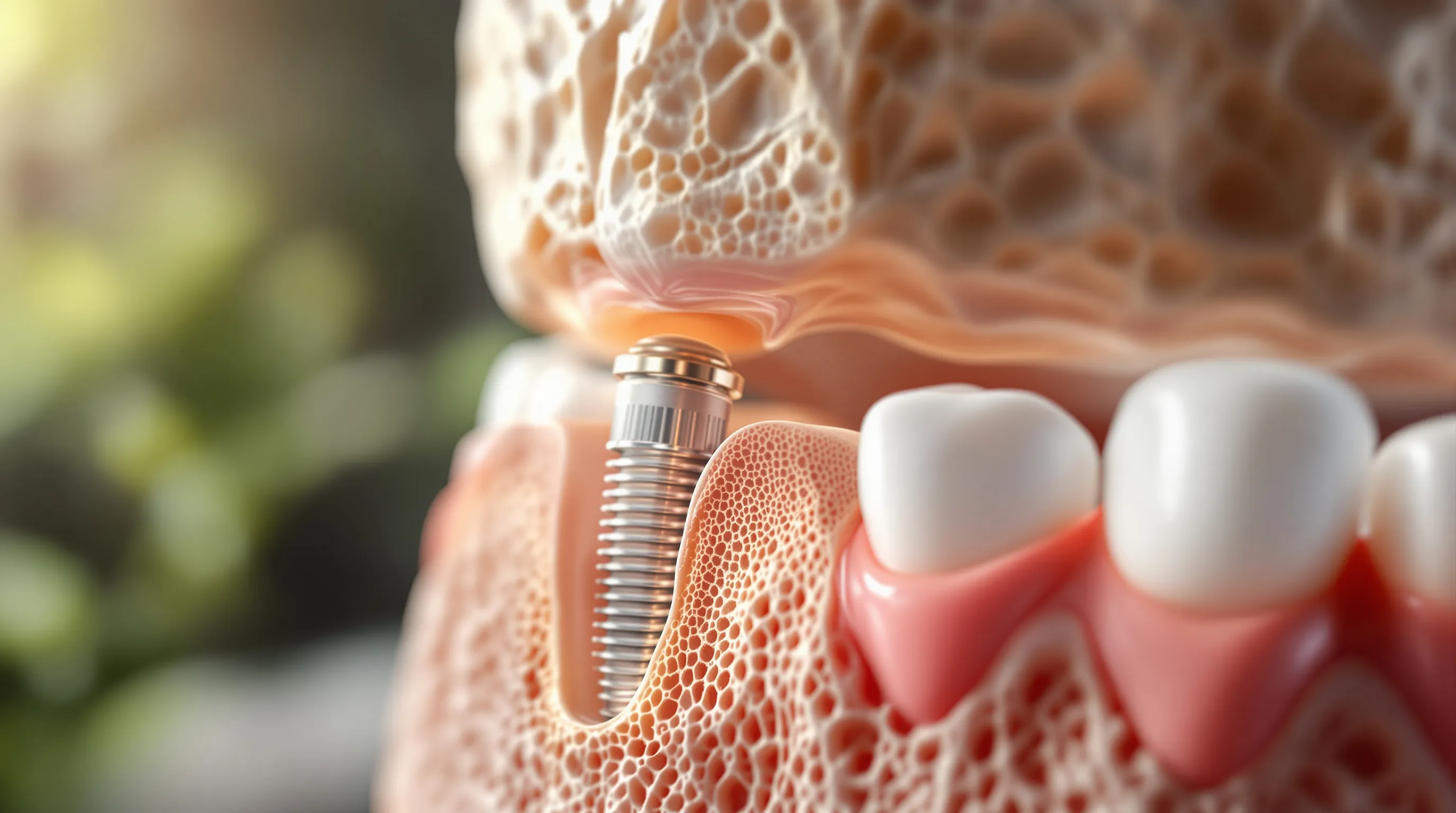
Osseointegration, the process by which the titanium post fuses with living bone: occurs successfully in older patients, though it may take slightly longer: typically 4 to 6 months in older adults versus 3 to 4 months in younger patients. That modest difference in timeline does not affect the final outcome. The bone fuses. The implant holds. The function is restored.
What the data consistently demonstrates is this: older patients who complete implant treatment report high satisfaction rates and meaningful improvements in chewing ability, comfort, and confidence. Those outcomes do not diminish with age. The patients who feel them most deeply are often older adults who have spent years struggling with missing teeth or ill-fitting dentures: they know exactly what they had been missing, and they feel the difference every single meal.
Who Makes a Good Candidate for Dental Implants After Age 70?
Let me be direct, because you deserve a straight answer rather than a list of caveats designed to avoid commitment: most healthy adults over 70 are excellent candidates for dental implants. The word "healthy" is doing real work in that sentence, and I want to unpack what it actually means, because your overall health profile matters far more than your birth year.
When I evaluate a patient over 70 for implants at Imagine Advanced Dental Arts, the conversation centers on several specific factors:
- Bone density at the implant site. The titanium post needs adequate bone to fuse with. Many older adults have experienced some degree of bone loss following tooth extraction. The bone begins resorbing almost immediately after a tooth is removed. But reduced bone density does not automatically disqualify a patient. Bone grafting procedures can rebuild the site when needed, typically adding 4 to 6 months to the overall timeline but restoring candidacy for the majority of patients who need it.
- Systemic health and medications. Well-controlled Type 2 diabetes does not disqualify a patient, but uncontrolled diabetes raises infection risk and slows healing significantly. Bisphosphonate medications, commonly prescribed for osteoporosis, require careful evaluation. Cardiac conditions are assessed, though implant placement is a minor procedure typically performed under local anesthesia, not general anesthesia.
- Smoking status. This is a significant risk factor at any age. Smokers experience implant failure rates two to three times higher than non-smokers. I always have an honest, unhurried conversation with patients about this before treatment planning moves forward.
- Cognitive health and self-care capacity. This is a factor I want to address honestly, because the online conversations about implants and older adults often confuse two very different situations. Implants require brushing and maintenance similar to natural teeth. A patient with dementia or significant cognitive decline who cannot consistently manage oral hygiene is a different situation entirely from a mentally sharp, engaged 72-year-old who is highly motivated to care for their new teeth. Cognitive health is a real part of the candidacy evaluation: not because of age, but because of what post-treatment maintenance requires.
- Gum health. Existing periodontal disease must be treated before implant placement. A history of gum disease does not prevent someone from getting implants; active gum disease does, until brought under control.
What does not disqualify someone? Being over 70. There is no upper age limit for dental implants. The evaluation exists not to screen people out, but to identify what preparation steps, if any, are needed to set each patient up for the best possible outcome. A healthy, mentally sharp, non-smoking 74-year-old with good bone density and a strong motivation to eat well and feel confident is often a near-ideal candidate. That person deserves to know it.
What Are the Real Benefits of Dental Implants for Adults Over 70?
When I sit down with patients over 70 to talk through why implants make sense specifically for them, I focus on three benefits that get consistently undersold in the generic "pros and cons" conversation: bone preservation, chewing function, and the downstream effects on nutrition and overall health. These benefits do not diminish with age. In some important ways, they matter even more as you get older.
Bone Preservation: The Invisible Crisis Nobody Warns You About
Here is something most patients do not know until long after the damage is done: when a tooth is lost, the jawbone beneath it begins to resorb, to literally shrink away, within weeks of the extraction. Studies have documented that up to 25% of bone volume at the site can be lost in the first year alone. Over time, this progressive bone loss reshapes the face, weakens adjacent teeth, and makes future dental treatment increasingly complex and expensive.
Dental implants are the only tooth-replacement option that stops this process. Because the titanium post integrates with the bone and provides the same mechanical stimulation a natural tooth root would, it signals the bone to maintain its density and architecture. As one commenter in a detailed r/dentures discussion accurately noted: "Teeth roots constantly stimulate the jaw bones and keep the bone stable and producing more bone. Without the tooth roots to stimulate the bone, it will begin to decrease over time. This is a big reason that dentists prefer implants, those implants also stimulate the bone." Bridges and conventional dentures do not preserve bone. They sit on top of the gum tissue while the bone gradually disappears underneath.
For an older adult, preventing that progressive bone loss is not a cosmetic concern. It is a long-term structural and health concern that compounds over time.
Chewing Function and Nutrition: Where Quality of Life Lives
Dental implants restore up to 90 to 95% of natural bite force, compared with approximately 20 to 25% for conventional dentures. That is not a small statistical difference. It is the difference between being able to eat raw vegetables, lean proteins, whole fruits, and fibrous foods, the dietary building blocks of healthy aging: versus being limited to soft, processed, easily-chewed foods.
The nutritional stakes for older adults are genuinely significant. Research has linked poor chewing function in older adults to reduced dietary variety and increased risk of nutritional deficiencies. For a patient over 70, maintaining the ability to eat a nutritionally complete and varied diet is not a quality-of-life luxury. It is a health outcome.
| Replacement Option | Bone Preservation | Bite Force Restored | Daily Maintenance | Expected Longevity |
|---|---|---|---|---|
| Dental Implant | Yes, prevents resorption | 90-95% | Brush and floss like natural teeth | 15-20+ years |
| Fixed Bridge | No | 70-80% | Special flossing tools required | 10-15 years |
| Conventional Denture | No, accelerates bone loss | 20-25% | Daily removal, adhesives, relines | 5-8 years |
When I walk patients through that comparison, the value proposition becomes very clear. And for adults over 70 who have spent years compensating for missing teeth or struggling with dentures that slip and shift, the improvement that implants deliver can feel genuinely transformative. As Dr. Saurin Poppy's team put it: "We've watched patients go from quiet and withdrawn to confident and full of life again, all because of dental implants." That is not marketing language. It is what I see in my own practice when patients get their full function back.
How Do Cost, Healing Time, and Surgical Risk Factor In After Age 70?
These are the real concerns I hear most often from patients over 70, and from their adult children who come to consultations alongside them.
They are completely fair concerns, and they deserve honest, specific answers rather than generic reassurance.
The Cost Reality
A single dental implant in New Jersey typically ranges from $3,000 to $5,000, including the titanium post, abutment, and porcelain crown. For multiple missing teeth, the total cost is higher, though full-arch solutions like All-on-4 can distribute that investment more efficiently. Full-mouth implant cases reported by real patients in the r/over60 community ranged from around $25,000 to $45,000 depending on case complexity, geographic market, and provider. Traditional Medicare currently does not cover dental implants: this is a real and frustrating gap that affects many older adults, and knowing it upfront is better than discovering it at the end of a treatment plan.
That said, the cost calculation shifts when you look at the full horizon. Conventional dentures may cost less upfront, but they require relines, periodic replacements every 5 to 8 years, daily adhesives, and: critically: they do not stop bone loss, which creates compounding structural costs over time. When spread across a 10-to-15-year horizon, implants often represent comparable or better value than cumulative denture costs, while delivering significantly better function throughout. At Imagine Advanced Dental Arts, we discuss financing options with every patient so that the upfront cost does not become the barrier preventing someone from choosing their best long-term outcome.
Healing Time After 70
I want to be completely transparent here: osseointegration: the bone-fusion process: takes slightly longer in older adults, typically 4 to 6 months versus 3 to 4 months in younger patients. Bone metabolism naturally slows with age, and this is reflected in the healing timeline. The process itself is not more painful or more complicated, it simply requires a bit more patience. Patients who understand this upfront navigate the timeline with much greater ease than those who were told "a few months" and found themselves surprised.
During the healing phase, we can often provide temporary restorations so you are not without teeth while waiting for integration to complete. The specifics depend on which teeth are being replaced and your individual situation, and we discuss all of this in detail before any treatment begins.
Surgical Risk After 70
Implant placement is a minor oral surgical procedure, almost always performed under local anesthesia in the dental office. It is not comparable to a hospital surgery under general anesthesia. That said, for patients over 70 we always take a thorough medical history, review current medications, check blood pressure, and where a patient's history warrants it, we coordinate directly with their physician before proceeding. The cautionary stories you may have read online, and I know they are out there, typically involve patients who were not appropriate candidates to begin with: severely frail individuals, patients with serious uncontrolled conditions, or cases where important pre-surgical screening steps were skipped.
For medically stable patients over 70, the surgical risk of implant placement is low. At Imagine Advanced Dental Arts, we never approach an older patient as a demographic to be cautiously managed: we approach each one as an individual with a unique health profile, timeline, and set of goals. Schedule a consultation with us to learn what your specific picture looks like and what a realistic treatment plan would involve for you.
Frequently Asked Questions About Dental Implants After Age 70
Is there an age limit for dental implants?
There is no upper age limit for dental implants. The American Academy of Implant Dentistry confirms that implants can be placed in patients in their 80s and 90s. What matters is your bone density, overall health, and whether you are a good surgical candidate, not your age. I have seen fantastic outcomes in patients well into their 80s, and I never rule someone out based on a number!
How long will dental implants last if I get them at 75?
Clinical studies show implant success rates of 93-97% at five years in patients over 65, with many implants functioning well beyond that. If you receive implants at 75 and they serve you well for the next 15-20 years, that is a profound improvement in your quality of life by any measure. The "lifetime" framing matters less than the decade-plus of better chewing, better nutrition, and preserved bone structure you gain.
Does Medicare cover dental implants for seniors?
Traditional Medicare (Parts A and B) does not cover dental implants. Some Medicare Advantage plans offer partial dental benefits, but coverage for implants is limited and varies by plan. In New Jersey, a single implant typically costs $3,000-$5,000; full-mouth restorations range from $25,000-$45,000. We discuss financing and phased treatment options during your consultation to help make the investment workable for your situation.
Can I get dental implants if I have diabetes or take blood thinners?
Controlled diabetes is not a disqualifier for implants: well-managed blood sugar is what matters, and many of my patients with type 2 diabetes have healed beautifully. Blood thinners require coordination with your prescribing physician, since we may adjust dosing temporarily around the surgical procedure. The key phrase in both cases is evaluation, a thorough review of your health history helps us plan safely for your specific situation.
What is the recovery like for someone over 70 getting dental implants?
Healing takes slightly longer in older adults, typically 4 to 6 months for osseointegration compared to 3 to 4 months in younger patients. Surgical discomfort is manageable with over-the-counter pain relief in most cases. The first few days require soft foods and rest, but most patients over 70 resume normal routines within a week or two. The extended healing period does not mean worse outcomes. It just means we plan the timeline accordingly.
Is the surgery riskier for older patients?
The surgical risk of implant placement is generally low for healthy older adults. Risk increases with serious systemic conditions like uncontrolled heart disease, severe osteoporosis treated with high-dose bisphosphonates, or significant immunosuppression. For appropriately screened patients, the procedure is well-tolerated. We obtain medical clearance when indicated and coordinate with your physician to ensure the safest possible experience.
Key Takeaways
- The right metric for adults over 70 is quality of life over the next 10-15 years, not whether implants will outlast you, and that metric strongly supports implants for most healthy older adults.
- Success rates for implants in patients over 70 range from 93% to 97% at five years, comparable to rates in younger adults, according to multiple clinical reviews.
- Age alone is not a contraindication: bone density, systemic health, medication history, and smoking status matter far more than your birth year.
- Implants are the only tooth replacement that stops jawbone loss, preserving facial structure and preventing the bone resorption that dentures accelerate over time.
- A thorough pre-treatment evaluation: including CBCT imaging, medical history review, and a conversation about your real goals, is the essential first step for any patient over 70 considering implants.
When Margaret left my office that afternoon, she walked out with something she had not expected: a real plan. Not a generic plan written for a nameless patient half her age, but a plan built specifically around her bone density, her health history, her timeline, and her goals for this chapter of her life. She had her implants placed several months later and has been chewing, smiling, and telling everyone she knows about the experience ever since!
The "are implants worth it after 70" question deserves a direct, honest answer, so here it is: for most healthy adults in their 70s, the answer is yes: not because implants will outlast you, but because they will significantly improve the years you have. Better chewing. Better nutrition. A preserved jawbone. A smile you are proud of. And when you do that math against the average life expectancy of a healthy 70-year-old, fifteen or more years ahead. There is no longer any question at all. As you can see, this is not a young person's decision. It is a great person's decision. And it is one you deserve to make with accurate information.
Sources & Further Reading
References
- American Academy of Implant Dentistry (AAID), Implant candidacy guidelines and age-related research summaries
- American Dental Association (ADA), Clinical guidance on dental implants and systemic health considerations
- CDC National Center for Health Statistics, Life expectancy data, United States (2024)
- PubMed / National Library of Medicine, Peer-reviewed clinical studies on implant osseointegration and success rates in older adult populations
- Medicare.gov, Medicare dental coverage information: what is and is not covered under Parts A, B, and Advantage plans
- Journal of Oral Implantology, "Dental Implants in Geriatric Patients: A Systematic Review", success and survival rates in patients over 65
- National Institute of Dental and Craniofacial Research (NIDCR), Oral health in older Americans: statistics and treatment guidelines
- Osstem Implant / ITI (International Team for Implantology), Clinical data on implant success across age cohorts
Related Articles
- How to Properly Clean All-on-Four Dental Implants | Imagine Advanced Dental Arts - Explains a related workflow for readers exploring Are Dental Implants Worth It After Age 70?.
- Dental Implants and All On X: Restore Your Smile with Confidence | Imagine Advanced Dental Arts - Explains a related workflow for readers exploring Are Dental Implants Worth It After Age 70?.
- Dental Bridges | Imagine Advanced Dental Arts - Explains a related workflow for readers exploring Are Dental Implants Worth It After Age 70?.
Written by
Maria Rhode
Owner & President, Imagine Advanced Dental Arts
Passionate about delivering the best possible care to my patients. From my days in residency to owning a beautiful hi-tech dental office, I never stop learning and advancing myself and now my practice.
Connect on LinkedInSummarize This Article With AI
Open this article in your preferred AI engine for an instant summary.