

Quick Answer
The top risk of All-on-4 dental implants is damage to the bridge, not loss of the implants: the replacement teeth wear, chip or fracture more often than an implant fails.
Implant success stays high in long-term research. The bridge is another story: the most frequent major complications are wear of the prosthetic material (5.85% per year) and framework fracture (1.69% per year). Teeth grinding raises that mechanical risk sharply. Before treatment, ask what the bridge is made of, who maintains it, and how a repair gets handled.
Key Points
- A November 2025 review in Decisions in Dentistry put long-term All-on-4 success at 91.9% to 99.6% , yet reported mechanical complications in 7.3% to 36.7% of cases.
- The American College of Prosthodontists recommends maintenance for fixed full-arch prostheses every 2 to 6 months , based on the patient's risk profile.
- A December 2024 review in the National Institutes of Health's PMC archive noted studies dating back to 1991 suggesting that framework misfits exceeding 150 microns increase the risk of complications.
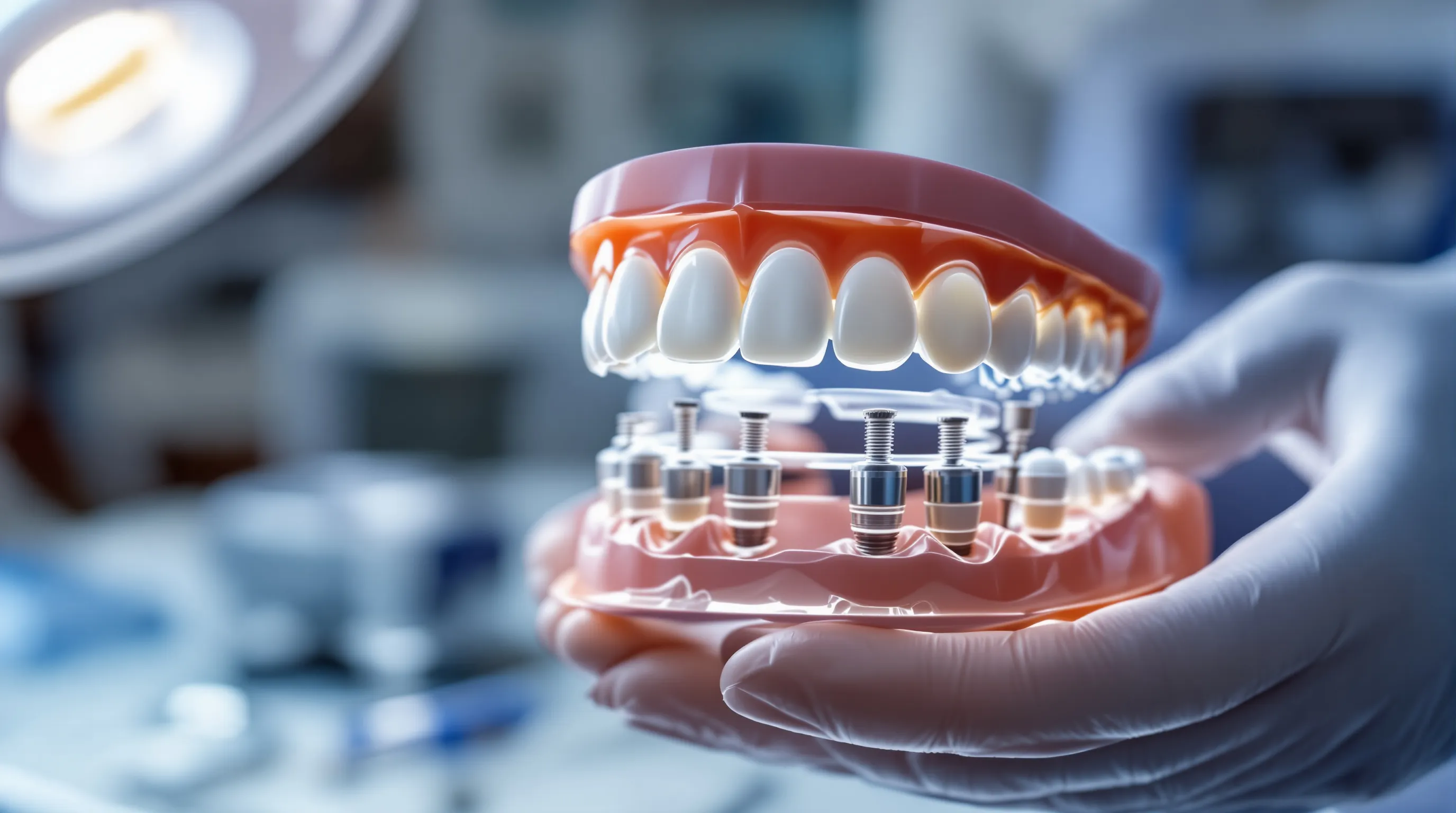
The bridge that rides on the implants is the part of an All-on-4 restoration most likely to need attention over the years.
Picture a dental laboratory decades ago: molten metal poured into a mold, one hand-made step after another, each step a fresh chance for human error. Now look at the present. In 2024, a review of fixed full-arch implant restorations reported milled titanium frameworks for three-unit bridges fitting to within 3.91 to 6.91 micrometers. Amazing!
Though the engineering has become that exact, the teeth on top still wear, chip and crack, and that is the surprise at the heart of this article. All-on-4 places four implants to support a fixed full-arch prosthesis (the bridge of replacement teeth). The same 2024 review noted that fixed full-arch restorations shared the use of three or more implants, while a removable overdenture needed only one or two. So the implants are few, and each one matters. The record of exactly where they sit matters as well: that review reported photogrammetry (measurement taken from photographs) to be more accurate than intraoral scanning at capturing implant positions for all-on-X restorations, so ask how yours will be recorded.
What follows ranks the risks by how often they happen, not by how frightening they sound. You will see which problems lead the list, why a tougher material does not end breakage, and how one habit, teeth grinding (bruxism), changes the odds. There is a practical side as well. Whether a search began with All-on-4 risks or with a question like who the best cosmetic dentists in Lawrenceville, NJ are, the same test applies to any provider: can they explain what the bridge is made of and how it gets repaired? First, though, a little history.
Before weighing any All-on-4 plan, ask one plain question: are the teeth fixed in place on surgery day the final set, or a first set to be replaced once healing is done?
Picture the old routine. Implants went in, and then came the wait: in 2024, a review in the National Institutes of Health's PMC archive described 3 to 6 months as the time typically allowed for bone to fuse before the teeth were finished. What a difference a generation makes! Tilted implants are now placed in native bone so that grafting and sinus surgery can be avoided, and the rigid arch lets a fixed set of teeth be loaded right away.
Though that progress is worth celebrating, it has quietly moved the risk. Even the older protocol, that 2024 review noted, had many parts in both its surgical and prosthetic phases. So ask for a list of yours, from screws to teeth! Researchers now argue that success should be judged on more than implant survival: on the absence of prosthetic complications, stable gum tissue, esthetic results and how patients say they feel. Is your treatment plan built around that fuller measure? One implant practice's own website offered a blunt test back in 2018, claiming (as a seller, not a researcher) that anything "same-day" or made by an in-house lab was acrylic plastic, and urging patients, "Make sure you know what you are paying for."
Why Do All-on-4 Risks Deserve a Second Look Right Now?
All-on-4 risk deserves a fresh look because the treatment is irreversible and upkeep lasts a lifetime. With a 4.9 average rating from 587 Google reviews, we owe patients the whole story.
Start with three questions, in this order:
- What is the bridge made of, and how is it repaired when a tooth chips or wears down?
- How many implants will hold it, and what is the plan if one is lost?
- Who looks after it for the long haul, and how often will they see you?
Picture the idea as it first arrived: four implants set into a lower jaw with no teeth left, and a full fixed arch riding on top. That was the whole concept! Spear Education's clinical restorative guide, written by Kimberly Schlam and published on April 14, 2026, traces the treatment back to exactly that, a four-implant protocol for the toothless lower jaw. Dentistry has come a long way since. The same guide now defines All-on-X as four or more implants supporting a fixed full-arch prosthesis, and it reports that most clinicians place more than four implants in many cases.
The common assumption is that the great danger is an implant that never fuses with the jawbone. Well, the record is kinder than that! The guide reports long-term survival above 95% for full arch implant restorations. That is a remarkable number. It is also only half the picture, because its author insists patients understand the treatment is irreversible and expensive, both at the start and over a lifetime of maintenance. There is even a phrase for the rare bad day, quoted in the guide as "All-on-4, but none-on-3": lose one implant from a set of four and additional surgery is typically required, with a new prosthesis to be fabricated.
What does that mean for you? The surgery is one day. The maintenance is every year after it. The guide's author describes these cases as shared work, with an oral surgeon placing the implants, a technician fabricating the prosthesis and the author handling treatment planning and long-term maintenance, so ask who will fill each of those roles for you.
This is where training shows. Our credentials include a DMD and residency, with honors in prosthodontics and oral reconstruction, which is the rebuilding side of this work. And because the guide counts facially generated treatment planning among the most dramatic recent changes, our certification in BOTOX® Cosmetic and dermal fillers belongs in the same conversation.
Of the 4 pieces of evidence behind this section, one is a clinical guide and the others describe who keeps the result working, which says a great deal about where the risk lives. You can read how that care feels from the other side of the chair in our patient testimonials. Which leaves the question a survival figure cannot answer: if the implants hold this well, what exactly ends up needing repair?
Which All-on-4 Problems Are You Most Likely to Face?
A 2025 review of All-on-4 research puts two sets of numbers side by side. On a quick read they seem to describe two different treatments, and only one of them sounds reassuring.
Hsin-Chiang Lee and Ryosuke Murai, both DDS, MSD, wrote the review for Decisions in Dentistry, a peer-reviewed journal for practicing dentists, gathering what the literature reports about All-on-4 over the long term. Success rates for the implants and the prosthesis ranged from 91.9% to 99.6%. The same article reported biologic complications, the trouble that affects gums and tissue around implants, in 18.9% to 25.5% of cases, and mechanical complications in 7.3% to 36.7%.
The two figures answer different questions. A success figure asks whether the implants and the bridge are still doing their job. A complication figure asks how often something needed attention along the way. The authors want both counted. Success, they write, "should not be based solely on implant survival rate," and they add plainly that complications in All-on-4 treatment "are not rare."
Lee and Murai also looked at which patients run into mechanical trouble. Grinding and clenching, known as bruxism, has the most evidence behind it.
15 times
How much more likely patients with bruxism are to have mechanical complications with All-on-4, according to the evidence Lee and Murai reviewed.
Dentists who place these bridges describe the same force from the chair. A South Florida implant practice writes that heavy grinding "puts lateral forces on the implant bridge that can fracture the prosthesis and compromise implant posts." Practices draw the line in different places. The Florida practice says patients whose grinding can be managed with a night guard may still qualify, and that severe, unmanaged grinding needs evaluation first. A Texas practice lists severe bruxism among its reasons not to treat. A CareCredit patient guide notes that grinders may be advised to wear a night guard.
Other factors count too. The review lists gender, how long the prosthesis has been in place, what kind of teeth are in the opposing jaw, and how the bite is arranged. One laboratory study linked a bite arrangement called canine guidance with more major chipping than an arrangement called group function. Metal-acrylic bridges tend to wear over time, so the authors advise checking group function at every recare visit. They also admit that the best bite scheme for a full-arch bridge "is still controversial."
Implant loss sits at the other end of the scale: less frequent, much harder to undo. Published figures vary by source. Spear Education, which trains dentists, cites long-term survival above 95% for full-arch implant restorations. The Florida practice puts implant failure at roughly 5 to 10 percent of cases and says it is more common in smokers, people with uncontrolled diabetes, people with active infections at the time of surgery, and people who keep up poor hygiene afterward.
Kimberly Schlam, a surgically trained clinician, explained in an April 2026 guide for Spear why one lost implant weighs so much. She cites a familiar phrase: "All-on-4, but none-on-3." When one of four implants fails, more surgery usually follows and a new prosthesis has to be made, because three implants cannot safely carry a fixed full arch. If more implants cannot be placed, the case may become a removable prosthesis. Full-arch surgery also often removes bone, which leaves less room for a second attempt.
"If failure occurs, there may not be enough anatomy remaining to support a future denture, let alone new implants."
Kimberly Schlam, clinician and Spear Education author, 2026
Schlam adds that the number of implants "directly influences load distribution, failure management options, and long-term restorative predictability."
Line the risks up by how often they happen and how hard they are to fix, and a clear order appears. The frequent problems sit in the bridge and the bite. A dentist can check them at every visit, and grinding multiplies them. The rare problem sits in the bone, and it decides whether the whole arch has to be redone. A treatment plan that answers only the survival question says little about either one.
Before you agree to treatment, with us or anyone else, bring these questions:
- Ask how the practice judges success in its own follow-up, and how often its full-arch bridges have needed repair, alongside how many implants survived.
- Tell the dentist if you grind or clench, or ask to be checked for it. Then ask whether a night guard is part of your plan and at what severity grinding would change the plan.
- Ask how your bite will be set up, how it will be checked at recall visits, and whether the bridge will be removed for a full evaluation.
- Ask how many implants are planned for your arch and what happens if one fails: more surgery, a new bridge, or a removable fallback.
- If you smoke or have diabetes, ask how either one changes your implant risk before any surgery is scheduled.
How we checked this
We used a review article in a peer-reviewed dental journal, a clinical guide from a company that trains dentists, a patient guide from a dental financing company, and patient pages from implant practices in Florida and Texas. None of the figures here come from our own patients. The review reports ranges pooled from studies whose follow-up and definitions differ, and we did not check the original study behind the 15 times figure. The finding on bite arrangement comes from a laboratory study. The Florida practice's failure estimate and Spear's survival figure do not name their underlying studies. We place full-arch implant bridges, the two practices sell the same treatment, and CareCredit finances it, so every one of us has a commercial stake. Still unknown: how much a night guard lowers the risk for grinders. None of our sources measured it.
- Hsin-Chiang Lee, DDS, MSD, and Ryosuke Murai, DDS, MSD, Decisions in Dentistry, review of All-on-4 success beyond survival rates, November 7, 2025.
- Kimberly Schlam, Spear Education, clinical and restorative guide to All-on-X implants, April 14, 2026.
- Wilton Manors Dental, practice article on All-on-4 pros and cons, April 28, 2026.
- Dallas Dentistry & Dental Implants, practice page on All-on-4 costs and candidacy, November 20, 2024.
- CareCredit, patient guide to All-on-4 dental implants, April 24, 2026.
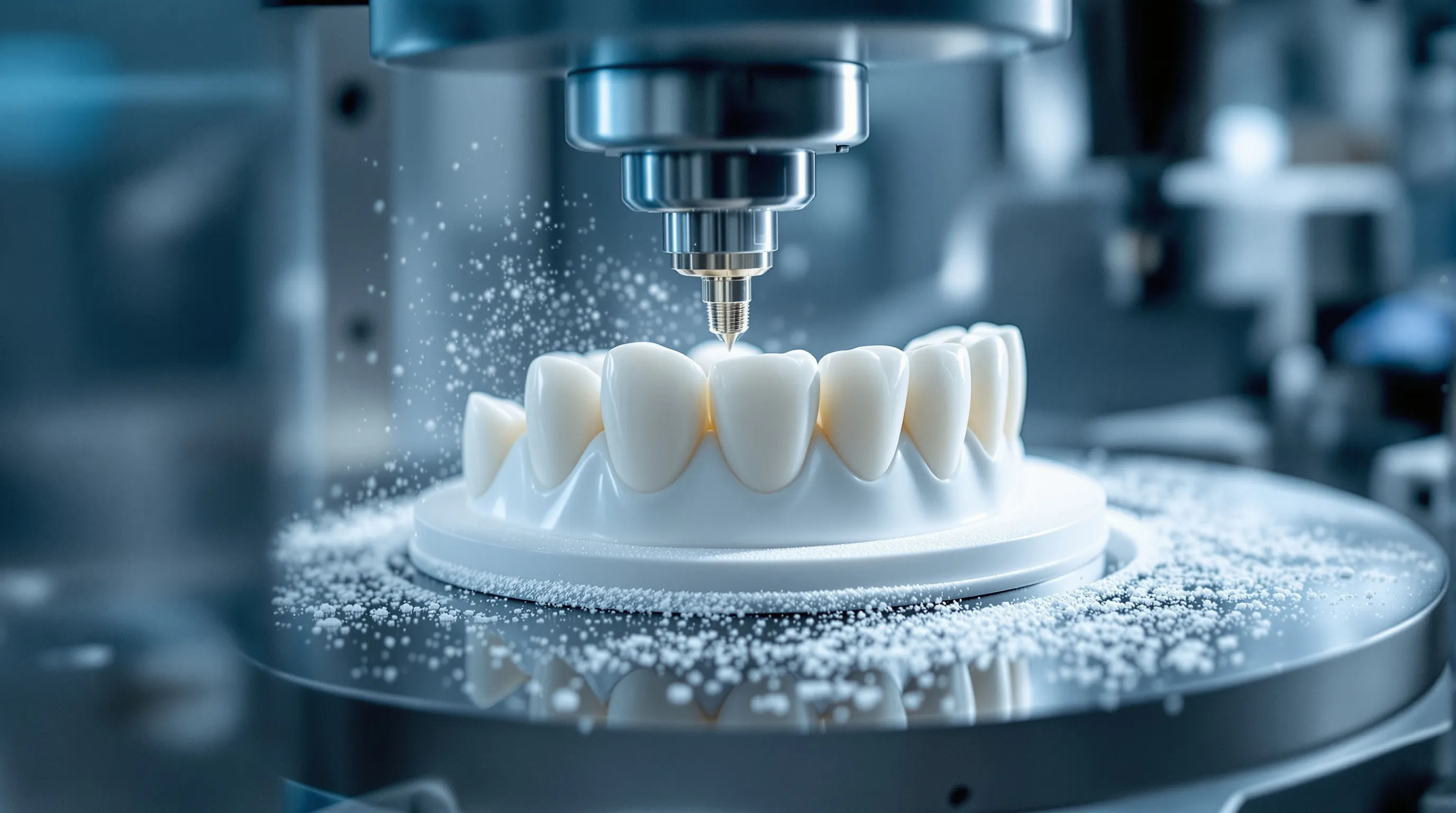
If the Implants Hold, What Actually Goes Wrong With All-on-4?
Usually the bridge: its teeth wear and its framework can fracture while the implants hold. Forty-two years in the same Lawrenceville office means most cases finish here rather than moving between specialists.
Did you know All-on-4 has been gaining popularity since 2000? That is long enough to see how the work ages, and the picture is a proud one. In a clinical report published on November 7, 2025, the journal Decisions in Dentistry put the long-term implant success rate and prosthetic success rate at 91.9% to 99.6%. Amazing! Though those figures deserve every bit of the applause, the authors, Hsin-Chiang Lee, DDS, MSD and Ryosuke Murai, DDS, MSD, would not let them stand alone. Their report sets a mechanical complication rate of 7.3% to 36.7% and a biologic complication rate of 18.9% to 25.5% right beside them, and says plainly that complications are "not rare."
| What the report measured | Where it happens | Reported figure |
|---|---|---|
| Long-term implant and prosthetic success | Whole restoration | 91.9% to 99.6% |
| Mechanical complications overall | Bridge and its hardware | 7.3% to 36.7% |
| Biologic complications overall | Gum and bone around the implants | 18.9% to 25.5% |
| Wear of prosthetic material | Teeth on the bridge | 5.85% per year |
| Framework fracture | Structure under the teeth | 1.69% per year |
| Loss of screw access hole material | Small filled openings over the screws | Among the most common minor complications (no rate given) |
A success rate counts what is still in your mouth. A complication rate counts what had to be fixed along the way. And some fixes are small: an angled connector (a multiunit abutment), the report notes, is used to correct where a screw hole opens!
Contrary to what you might expect, even the right bite for a fixed full-arch bridge is, in the authors' words, "still controversial." The report names wear of prosthetic material and framework fracture as the most frequent major complications, with loss of the material that plugs the screw access holes among the most common minor ones. Not every source ranks it this way. One implant practice's own patient guide still leads with implant failure, which it puts at "roughly 5-10% of cases," though even that guide warns that heavy grinding can fracture the prosthesis. So the friction is real, and the mechanical range is wide enough that two careful dentists could quote you very different odds.
What moves a patient from one end of that range to the other? Bite force, above all. Bruxism (grinding and clenching) is described as the most evidence-supported risk indicator, and bruxism patients are 15 times more likely to experience mechanical complications. Fifteen times! The other indicators on the list are gender, canine guidance (a bite set up so the canine teeth steer side-to-side movement), how long the prosthesis has been in place, and the type of teeth it bites against. Grinding is often a night-time habit, which is why our Diplomate (ABDSM), board certified in dental sleep medicine, belongs in a conversation about implants.
The remedy the evidence points to is unglamorous. Regular looks! The American College of Prosthodontists recommends maintenance for fixed full-arch prostheses every 2 to 6 months, based on the patient's risk profile. Metal-acrylic bridges tend to wear over time, so the way the teeth meet should be checked at every recare appointment, and the authors advise that the prosthesis be removed during a comprehensive evaluation for better access and visibility. That is a different rhythm of care from the one many patients know from a traditional dental bridge. In practice, the bridge is a part you service, not a part you forget.
If wear leads the list and bite force drives it, the tempting fix is simply a tougher material. Is it really that simple?
Does a Stronger Bridge Material Solve the All-on-4 Breakage Problem?
No single material ends breakage; each trades one strength for another. Imagine Advanced Dental Arts, awarded "Practice of the Year," wants you to hear that first.
Did you know the full-arch idea has a family tree more than 50 years long? A review of fixed full-arch implant restorations, published in December 2024 in the National Institutes of Health's PMC archive, described the Brånemark Novum protocol as in use for over 50 years, its frameworks evolving from cast cobalt-chrome to precious alloys and then to milled titanium. Each step chased a better fit. And each brought a new compromise along with it!
Conventional wisdom says the cure for a chipped bridge is a pricier, harder one. Well, it is not that tidy! The same review reported that full-arch zirconia fixed prostheses tolerate less stress, which is why the design its authors proposed puts milled titanium between the zirconia and the implants. It also recorded a 2019 study of 116 prosthodontists from 33 countries, which found considerable variety in how a lower full-arch restoration was delivered. No single recipe had won.
| Bridge build | What the 2024 review noted | The trade-off to ask about |
|---|---|---|
| Milled titanium framework with acrylic or porcelain teeth | Titanium is where framework metals arrived after cast cobalt-chrome and precious alloys | Acrylic is lighter, yet durable and attractive polymer options for a final restoration were described as lacking |
| Milled chrome-cobalt framework with acrylic teeth or ceramic veneers | Milled frameworks were credited with a better fit than traditional casting | Which tooth layer goes on top, acrylic or ceramic |
| Monolithic zirconia | Reported to tolerate less stress across a full arch | Made in segments because of milling disc size limits |
| Fiber-reinforced composite framework | Listed among the builds prosthodontists reported using | No durability finding was given |
| Zirconia over a milled titanium bar | The design the authors proposed, with titanium meeting the implants | The added joint may influence plaque retention |
A quick aside, because it is the trade-off we find most telling. Making a bridge lighter sounds like pure good news, yet the review warned that weight-saving steps risk thinner components and weak points in the design. Lighter is not automatically safer.
Patient-facing guides tend to sound more certain. One healthcare financing company's guide claims a fractured bridge is less likely with zirconia, while conceding that zirconia is more rigid and so needs more precision when it is fixed in place. Precision is the word to hold on to. In 2024 the review noted that studies dating back to 1991 suggested misfits exceeding 150 microns increase the risk of complications, and that a framework resting passively on its implants is crucial for both the longevity of the restoration and the health of the implants beneath it. Fit matters as much as the name of the material.
The same argument is playing out below the gumline. On a May 2026 episode of the Wellness Dentistry podcast, host Dr. Katie To and her guest Dr. Rosalie, a periodontist, weighed titanium implant posts against zirconia ones. The guest recalled being taught that titanium is "the longest studied material," with "a 97% success rate if you do X, Y, Z," and that zirconia posts carry "a high fracture rate." Though that sounds like a verdict, she would not hand one down: neither material can be called bad, she said, because each "might be the only option for some people."
So what should you trust? Trust the fit, the bite and the follow-up before the brochure. A material is only as good as the mouth it goes into. Because what happens at night matters so much to a bridge, tell your dentist anything you already know about how you sleep; our page on snoring and sleep apnea dentistry shows where that conversation can lead.
Dr. Rosalie has a line for the urge to hurry: "A lot of the times I think people are just in such a rush to get nowhere." Take it to heart at the quote stage. Ask for the framework, the tooth material and the repair plan in writing, and ask before the first implant goes in.
What Should All-on-4 Patients Plan For in the Years Ahead?
Plan for the bridge. Ask for a recheck in the first weeks after the teeth go in, because a bite can settle and the center line of the smile can shift.
For years the big All-on-4 question was whether the titanium would take. We have come a long way! The International Team for Implantology, cited in a 2026 clinical guide for dentists, holds that careful treatment planning and maintenance protocols are critical to long-term success, which shifts attention to the weeks and months after surgery.
A full-arch clinician put a number on that shift on The Fixed Podcast in January 2026, reporting that "probably 30% of people, 25% of people come back in six weeks for a wellness check with a midline shifted." The midline is the center line of the smile, and the clinician's explanation was that the teeth fit their best on day one and everything relaxes afterward. Six weeks! Of the younger patients now arriving for full-arch work, the same clinician said, "They don't have a disease of the bone, they have a disease of the teeth." We would borrow that line for the treatment itself.
Here is our forecast. In the next few years, we expect the best All-on-4 consultations to spend as much time on the bridge as on the surgery: what it is made of, who checks it, and what happens when a tooth chips. Though surgery day is the part everyone circles on the calendar, the clinician quoted above counted promises like "we'll give you final teeth in two days" among the biggest problems in how full-arch work is taught. So start with the other part. Before you agree to anything, ask who will check your bite at each follow-up visit, and ask to see that schedule on paper.
Summarize This Article With AI
Open this article in your preferred AI engine for an instant summary.
Frequently Asked Questions
What Else Do People Ask About All-on-4 Dental Implant Risks?
Most remaining questions are about living with the bridge: how speech adapts, whether gums stay healthy, and what one failed implant means.
Will All-on-4 teeth change the way I speak?
For a while, they can. A clinical report in Decisions in Dentistry found that wearers had trouble with the S sound first, followed by Z, T and D, with significant distortions at 1, 3 and 6 months after delivery. The happy part? Speech returned to the normal range on its own after 1 to 3 years, so the report's authors advise waiting at least 1 year before a bridge is remade over speech.
Do tilted implants cause more bone loss?
No. Tilted implants are not a risk factor for marginal bone loss, which is the shrinking of bone at the neck of an implant. Historically, 1.5 mm of that loss was considered normal, back when most implants used an external connection design. The tilt is there for a good reason: it lets the implants sit in native bone without grafting.
Can gum disease develop around All-on-4 implants?
Yes, and it deserves more attention than it gets. Peri-implant disease is inflammation of the gum and bone around an implant. In 2024, a published review of fixed full-arch restorations reported a 2022 meta-analysis in which its prevalence ranged from 10% to 50% in the fixed prosthesis group, a spread so wide that nobody should assume they are safe. Gum quality helps: a band of firm, attached tissue more than 2 mm wide helps stabilize the bone level and can reduce susceptibility to the disease.
What happens if one of the four implants fails?
Usually more surgery and a new bridge, because a fixed full-arch bridge is not considered sound on three implants. If more implants cannot be placed, the case may be converted to an implant-assisted removable prosthesis, a denture that the remaining implants help hold in place and that comes out for cleaning. There is a harder truth, too. Full-arch surgery often includes bone reduction, so there may not be enough anatomy left to support an ordinary denture later.
Who should think twice before choosing All-on-4?
Clinical guidance lists several relative contraindications, meaning conditions that raise the risk without ruling treatment out:
- Uncontrolled diabetes
- Autoimmune disorders
- Tobacco use
- Alcoholism
- Titanium allergy
- Conditions affecting circulation
None of these is an automatic no. Each one is a reason for a longer conversation before surgery, not after.
Does the way the bite is set up affect chipping?
It seems to. One in vitro (laboratory) study found that canine guidance, a bite in which the canine teeth alone steer side-to-side movement, was linked with more major chipping than group function, where several teeth share that work. Though the finding is useful, the right bite scheme for a fixed full-arch bridge is still debated among clinicians. So ask which scheme is planned for you, and why.
Can a full-arch bridge be remade if I dislike how it looks?
Yes. Published clinical guidance says a remake should be considered when the esthetic outcome cannot meet the patient's expectations. Looks count as part of success, right beside function!
How do I book an All-on-4 consultation with Imagine Advanced Dental Arts?
Reach us through our contact page. We serve patients across New Jersey, and four credentialed dentists work in our practice. Bring every question you have about the bridge.
Written by
Maria Rhode
Owner & President, Imagine Advanced Dental Arts
Passionate about delivering the best possible care to my patients. From my days in residency to owning a beautiful hi-tech dental office, I never stop learning and advancing myself and now my practice.
Connect on LinkedIn