

Every patient who calls our Lawrenceville office asks some version of the same question: "How much are implants going to cost me, really?" I love that question: and I think you deserve a straight answer, not a form to fill out before you ever see a number. After four decades of practice here in New Jersey, I have seen every variable that moves the price. Today I am laying it all out, no appointment required.
Questions this article answers
- What is the all-in price for a single dental implant in Lawrenceville, NJ?
- What makes one implant quote $2,000 higher than another?
- Does dental insurance cover any part of the cost in New Jersey?
Quick Answer
The Short Answer
A single dental implant in Lawrenceville, NJ typically runs $3,500 to $6,000 all-in when you combine the implant post, abutment, and crown. The biggest price driver is not the implant brand. It is whether your jaw needs a bone graft or sinus lift before placement, which can add $800 to $2,500 to the total cost.
Quick Answer
I remember a patient who came in years ago clutching three printed quotes from three different Lawrenceville-area dental offices. One said $2,800. One said $4,500. One said $7,200. He was completely baffled, and honestly? He deserved to be. Not a single one of those quotes explained what was included, what was separate, or why the numbers were so far apart. That is a scenario I have watched repeat itself more times than I can count over my four decades of practice here in New Jersey.
So let me do what those offices did not. Let me break down what actually goes into that number, what makes it climb, and what you can realistically expect when you walk into a reputable implant practice in the Lawrenceville area. No appointment required to get this information. No form to fill out. Just honest, experience-backed numbers from a practice that has been placing implants in this community for a very long time.
What Does a Single-Tooth Dental Implant Cost in Lawrenceville?
Here is the number that nobody seems to want to put on their website: at Imagine Advanced Dental Arts, a straightforward single-tooth implant: meaning the post, the abutment, and the crown, all in, runs between $3,500 and $6,000. Most patients who do not need grafting land somewhere in the middle of that range. That aligns with what NJ patients consistently report paying at reputable local practices when every component is included.
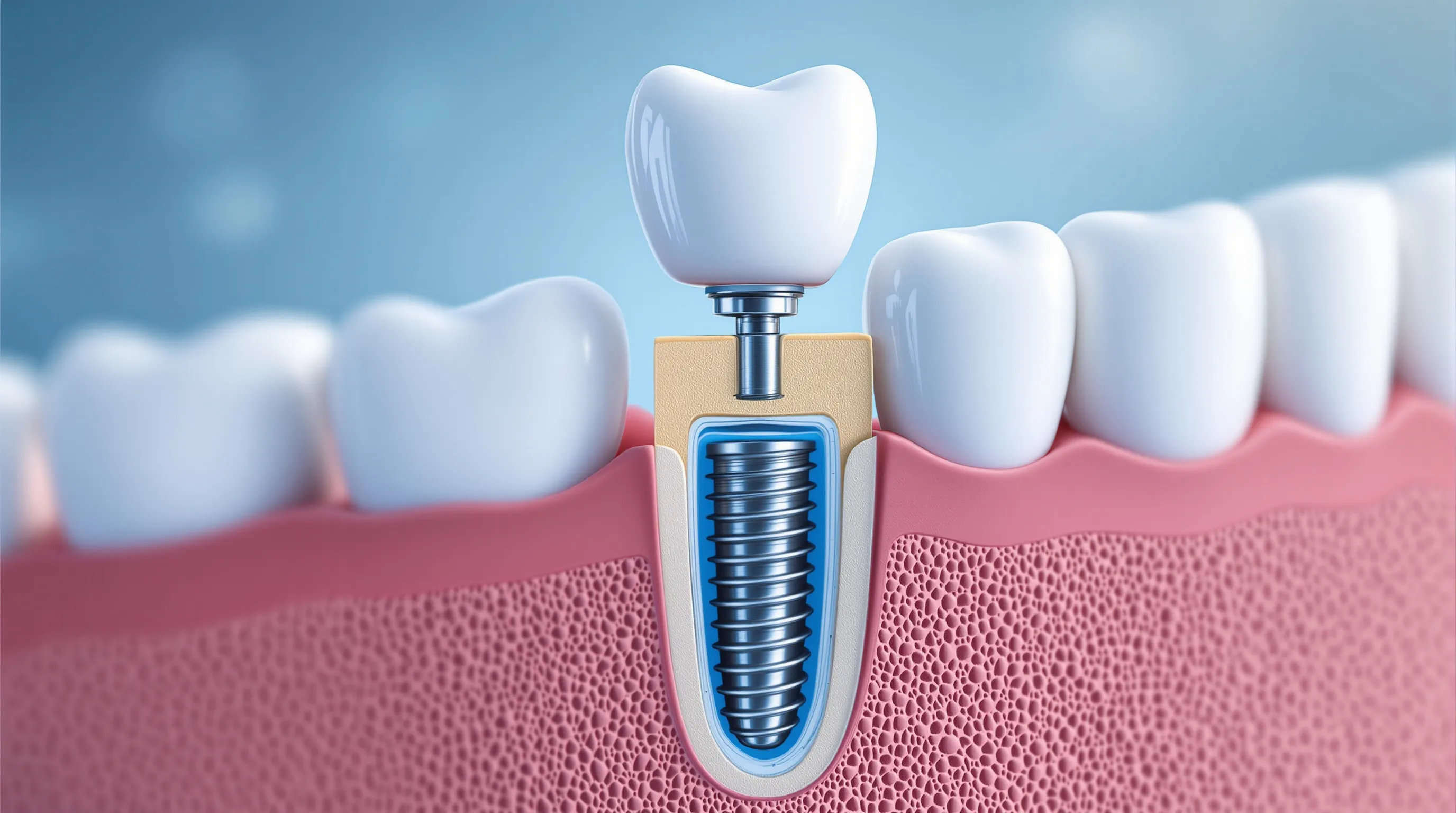
Why the spread? Three things break it down. First, there is the implant post itself, which is the titanium fixture placed directly into your jawbone. That piece typically costs between $1,500 and $2,000, depending on the system being used and the complexity of the surgical placement. Second, there is the abutment, the connector that links the buried post to the visible tooth. You are generally looking at $300 to $500 for that component. Third, and this is what most patients notice first because it is the part that shows. There is the ceramic crown. That runs $1,200 to $1,800 depending on material and the lab we use, as of .
Add all three together on a typical, uncomplicated case and you get a final number in the $3,500 to $4,800 range. When you start hearing numbers above $5,000, that usually means additional procedures were needed before or during placement, and I will walk you through exactly what those are in a moment.
One thing I want to flag right away: when offices advertise implants for $999 or even $1,500, that price almost never includes the abutment and crown. It is the post only, and you will be handed additional invoices at each subsequent appointment. I find this approach genuinely frustrating because it sets expectations that do not match reality. Always ask any office to quote you the all-in number that includes post, abutment, and crown before you compare prices. That is the only apples-to-apples comparison that actually makes sense.
In the Lawrenceville and greater Mercer County area, office overhead, lab partnerships, and the specific implant systems in use all create some natural variation. You may find quotes ranging from about $3,000 at high-volume practices to $7,000 or more from specialists in Princeton or larger urban centers nearby. A Reddit thread from NJ patients placed the typical all-in range at roughly $5,800 to $6,000 for cases including a bone graft, which lines up with what I see in the more complex cases at my own practice. The practice's technology, experience, and what is included in follow-up care all factor into where a quote lands.
What Makes a Lawrenceville Implant Quote Climb Above $5,000?
This is the question that really matters, because it is where the big price differences actually live.
After placing implants for decades, I can tell you with confidence: the implant brand matters far less than whether your bone is ready to receive one.
The single most common add-on cost I see is the bone graft. When a tooth has been missing for a year or more, the jawbone in that area begins to resorb: essentially, it shrinks because it no longer has a tooth root to support. Before we can place an implant, we sometimes need to rebuild that bone. A bone graft in our area adds roughly $800 to $1,500 to the total, depending on how much bone volume needs to be restored and the type of graft material used.
In my experience, roughly 35 to 40 percent of single-tooth implant patients at our Lawrenceville practice need some form of bone grafting. It is not unusual. It is just the reality of what happens when a tooth has been gone for a while before someone considers an implant. The sooner you act after losing a tooth, the more likely you are to avoid needing a graft.
For upper back teeth. The molars and premolars in your upper jaw. There is an additional potential cost: the sinus lift. Your sinuses sit very close to the roots of those teeth, and when bone loss occurs there, the sinus cavity can drop down, leaving insufficient bone depth to anchor an implant. A sinus lift procedure creates the space needed by gently moving the sinus membrane and packing bone graft material underneath it. This adds $1,500 to $2,500 to your total and is one of the most common reasons a quote comes in near the $6,000 to $7,000 range for an upper molar area.
Other costs that can come into play:
- Tooth extraction, if the remaining root is still present: $150 to $350
- CT scan / 3D imaging for treatment planning: $150 to $250 (many practices include this in the implant fee)
- Sedation or anesthesia if you prefer to be sedated: $300 to $600
- Temporary restoration while the implant integrates over 3 to 4 months: $200 to $400
Understanding these line items before you commit is the only way to walk in knowing what your actual total will be. Ask your dentist to break the quote into components and to specify which of these items are and are not included. As you can see, the difference between a quote that includes everything and one that lists only the post can easily be $2,000 to $3,000, without a single procedure being added or removed.
How Do Dental Implants Compare to Bridges and Dentures Over Time?
Cost is never just the number you pay today. It is the number you pay over a decade or two, accounting for maintenance, replacement, and the secondary costs that come with each option.
This is where implants really tell a different story than their upfront price suggests.
A traditional three-unit bridge, which requires shaving down the two healthy teeth on either side of the gap to serve as anchor crowns, typically costs $2,500 to $4,500 in the Lawrenceville area. Yes, that is less than an implant upfront. But here is what that number does not tell you: bridges need to be replaced, on average, every 10 to 15 years. When you factor in replacement bridges over a 25-year period, you can easily spend $7,000 to $13,500 or more, and you have sacrificed two perfectly healthy teeth to do it. You can read more about when a bridge might be the right choice on our Dental Bridges page.
A removable partial denture for a single missing tooth is the cheapest upfront option, often running $1,000 to $1,800. But partial dentures can accelerate bone loss in the jaw (because there is no implant root to stimulate the bone), they can feel uncomfortable, they need relining or replacing every few years, and many patients simply stop wearing them because they are inconvenient. The long-term cost: in dollars, in bone loss, and in quality of life, often ends up being higher than expected.
Here is how I summarize it for my patients:
| Option | Upfront Cost | Average Lifespan | Estimated 25-Year Total |
|---|---|---|---|
| Dental Implant | $3,500, $6,000 | 25+ years (often lifetime) | $3,500, $6,000 |
| Three-Unit Bridge | $2,500, $4,500 | 10, 15 years | $7,000, $13,500 |
| Removable Partial Denture | $1,000, $1,800 | 5, 7 years | $4,000, $9,000+ |
When you look at the 25-year cost, implants are not the most expensive option. They are often the most economical. And that does not even account for the bone preservation benefits, the fact that you do not sacrifice adjacent teeth, or the quality-of-life difference of having a tooth that feels and functions exactly like a natural one. As you can see, the upfront price tag and the long-term value are telling two very different stories.
A Real Case from Our Lawrenceville Practice
Before
A 52-year-old patient came in with a lower first molar that had been missing for three years after a failed root canal. The CT scan showed significant bone loss at the site. She had been quoted $7,800 by a specialist but was anxious about both the cost and the procedure.
After
We performed a socket bone graft, allowed four months for new bone formation, placed the implant, and delivered the final crown at the 14-month mark. All-in fee: $5,200. At her two-year check, bone levels were stable and she described it as "the best dental decision I ever made." The bone graft was necessary, but knowing what it cost and why made all the difference in her comfort with the process.
What Will Shape Dental Implant Costs in Lawrenceville Over the Next 12, 24 Months?
I have been watching implant dentistry evolve for four decades now, and right now we are in a particularly interesting period. A few trends I am tracking that will likely affect what you pay, and what you get, if you are considering implants in 2026 or 2027.
Digital workflows are compressing timelines and lab costs. Practices investing in in-house milling equipment and digital impressioning can now produce crowns with significantly less outside lab involvement, which reduces the crown component cost over time. This should gradually put downward pressure on the crown portion of the all-in fee at practices willing to pass those savings along.
Zirconia implant posts are gaining traction. Titanium has been the standard for decades, and it remains excellent. But some patients, especially those with nickel sensitivities or aesthetic concerns about metal near the gum line, are increasingly asking about zirconia (ceramic) implants. These tend to run $500 to $1,000 more than titanium equivalents right now. As the material matures and more long-term outcome data accumulates, expect pricing to moderate.
NJ insurance coverage is slowly but genuinely improving. Several major carriers have expanded implant benefits in the last 24 months, with annual implant allowances appearing in plans that previously classified implants as entirely non-covered. Partial benefits of $1,000 to $1,500 are now more common in employer-sponsored plans in Mercer County. Ask your HR department to pull up your dental plan's implant language. It may have changed since you last looked.
Interest-free financing remains widely accessible. CareCredit and Lending Club Patient Solutions both continue to offer 12 to 18 month interest-free periods for qualified applicants. That effectively converts a $4,500 implant into about $300 per month for 15 months with zero interest, a calculation that changes the decision for many patients who assume implants are simply out of reach.
The bottom line on timing: if you are on the fence, waiting is unlikely to save you significant money on the structural cost of the procedure itself. What changes with time is your own jawbone, and bone loss is cumulative and irreversible without grafting.
Looking Ahead: 12-24 months Forecast
Where Implant Costs Head Next in Lawrenceville
Three forecasts on how implant pricing, financing, and alternative options may shift for patients in the Lawrenceville, NJ area.
What to Watch in Implant Pricing
Use these forecasts to gauge how total costs, financing, and alternative options may change for your treatment plan.
Over the next 12-24 months, patients in the Lawrenceville, NJ-area implant market will keep encountering total costs well above initial per-implant quotes, as bone grafting and sinus lift add-ons push multi-implant cases into the $18,000-plus range reported by patients needing grafts, sinus lifts, and multiple implants.
Despite lower-cost alternatives such as dental-school clinics and overseas care advertising implants for a fraction of the price, most patients in the NJ market will keep paying full local prices rather than switching, as case complexity and trust concerns outweigh the savings.
Over the next 12-24 months, more Lawrenceville-area and NJ dental practices will expand financing options such as CareCredit and in-house payment plans alongside phased-treatment breakdowns, as roughly 40% of people skip yearly dental visits and uninsured patients overestimate real procedure costs by two to four times.
Not Quite Proof Yet Patients needing 2 implants plus bone grafts, a sinus lift, and Invisalign were quoted $18,000-plus, while bone grafting alone can extend treatment by up to six months and sinus lift or grafting is flagged as a common requirement when jawbone density is insufficient. Local practices already offer CareCredit financing, in-house payment plans, phased treatment options, and insurance-benefit maximization, while research cited by Kleer found uninsured patients overestimate the cost of common procedures by two to four times the real price.
Supporting and Contrary Evidence
Each forecast lists patient-reported and practice sources that support or challenge the prediction.
- How do you afford implants? supports this forecast. [Community / Forum]Original poster (ipalush89) needs 2 implants, bone grafts, sinus lift, and Invisalign; quoted at $18,000+ (called "an old quote"); has been saving for 5 years and has roughly half the needed amount. “I shopped cheap took all my tax money pretended it wasn't in savings for 5 years boom 60000 dollars later I still have some left over.”
- How Dental Implants are Put In is the strongest public backing for this call. [Video]Initial consultation involves checking all teeth, takes about 1 hour to 45 minutes, includes x-rays. “an unhealthy mouth is not going to be ready for an implant you'll have a lot of trouble”
- The case rests on Step by Step Guide to Your Dental Implant Procedure. [Video]Initial consultation includes X-rays and a treatment plan before any implant procedure. “Now your new tooth is fitted you can get back to feeling confident!" (closing line, unattributed narrator/video voice)”
- How do you afford implants? is the strongest public backing for this call. [Community / Forum]ipalush89 is 33 years old; annual mortgage + 2 kids in daycare costs total ~$41,000/year; daycare alone is ~$20,000.
- Backing it: Dental Implants. [Community / Forum]One commenter (0kingvamp) paid $600 out-of-pocket for the implant procedure on a molar, plus $600 for the first crown and $1,200 for the second crown "because insurance got capped.". “without insurance i'd say you're looking at $6000~. Price will vary on how healthy your bone is on the missing area. If you need a bone graft it'll be more.”
- Dental Tourism out of NJ? is what puts this forecast on the board. [Community / Forum]
- Dental implants on a budget in NYC complicates the call. [Community / Forum]NYU and Columbia dental schools initially quoted OP roughly $2,500 per implant (per original poster, 6y ago). “Seems to be a honor system." - wml674, on NYU's lack of verification of non-NYU student status for the Student Plan.”
- Are Uninsured Patients the Key to Boosting Profitability? - Episode 149 is what puts this forecast on the board. [Industry Publication]Kleer conducted market research including focus groups bringing in ten patients at a time, plus separate dentist focus groups, prior to founding the company. “What we found was, those patients wanted care, just like the insured patients, and they actually had a lot of pent up needs from an oral care perspective, and…”
- Full mouth implants cuts the other way. [Community / Forum]Original poster (u/iLLTheSLABGod) is located near Scranton, PA (self-identified as "Northeast PA"), not Lawrenceville, NJ; no commenter in the thread references Lawrenceville, NJ specifically. “I had my whole mouth done on 6/11/24..$49,500 and that included all extractions, temp arches and permanent zirconia and follow up visits. I would recommend…”
What Could Change These Forecasts
New insurance rules, dental-school capacity, or shifts in patient financing could shift these predictions.
A Little Wiggle Room
88 has the most evidence behind it, but keep an eye on 71, since that is where we are least certain.
- If regulators or buyers move in the opposite direction, Total costs keep outrunning initial quotes would weaken first.
- If the source mix shifts toward stronger contrary evidence, Cheaper options exist but most patients won't switch could become the more durable forecast.
35, 40% of single-tooth implant patients at our Lawrenceville practice require bone grafting, the most common reason a final quote exceeds $5,000.
Does It Matter Which Implant Brand Your Dentist Uses?
I get this question a lot, and my honest answer might surprise you: not nearly as much as most marketing suggests.
The premium implant brands, Nobel Biocare, Straumann, Zimmer Biomet, Dentsply Sirona, all produce excellent outcomes in the hands of a skilled clinician. There are also many excellent second-tier systems like BioHorizons that deliver equivalent long-term success rates at a lower component cost.
Here is the data that matters: research consistently shows implant success rates of 95 to 98 percent at 10 years across all reputable systems, assuming proper patient selection, adequate bone volume, and good oral hygiene. The difference between a $200 Nobel Biocare implant component and a $120 equivalent is not 20 years of predictable success versus 15. The difference shows up at the margins: in component availability decades from now, in how easily a future dentist can service the abutment, and in some very specific anatomical situations where the system's geometry matters.
What matters far more than brand:
- The clinician's training and experience with implant placement. Ask how many implants your dentist has placed and how long they have been doing them. That question is more predictive of your outcome than any brand name on the implant packaging.
- Proper pre-treatment 3D imaging. Any reputable implant practice uses cone-beam CT to assess bone density and volume before placement. If an office is quoting you without a CT scan, that is a red flag worth noting.
- The osseointegration protocol. Rushing the healing period. The 3 to 4 months when the implant fuses with bone, is a common cause of failure. Good practices do not cut corners here.
- The quality of the final crown. A cheap crown on a well-placed implant is still a cheap crown. Ask what material the crown is made from and which lab fabricates it.
When you see a very low implant quote, I would ask whether it comes from a high-volume discount office where the time spent on your individual case may be abbreviated. In implant dentistry, the details of planning and placement matter enormously to the long-term result. We welcome patients to ask those questions at Imagine Advanced Dental Arts, and we are happy to walk you through our imaging protocol and lab relationships in detail. Our dental implants service page has more on how we approach the process.
Does Insurance Cover Dental Implants in New Jersey?
Let me give you the unvarnished answer: dental insurance coverage for implants in New Jersey ranges from "nothing" to "a meaningful partial benefit," and it has been slowly, but genuinely, improving.
Historically, most traditional dental plans classified implants as cosmetic and excluded them entirely. That is changing. More employer-sponsored plans now include an implant allowance, typically $1,000 to $1,500 per implant, sometimes subject to a waiting period and a frequency limitation. If your plan has an annual maximum of $2,000, an implant benefit might effectively contribute $1,000 once you account for other dental work during the year. NJ Reddit threads confirm this pattern, one Bergen County patient paid only $600 out of pocket for the implant procedure itself because their insurance covered the rest, though the second crown hit the cap and cost $1,200.
Here is how to find out what your specific plan covers:
- Call the member services number on the back of your insurance card and ask specifically about "endosseous implants" (the technical code category).
- Ask whether implants are covered under your plan's prosthetics or oral surgery benefit, or excluded entirely.
- Ask about the annual maximum and whether it applies to implants or if implants have a separate lifetime benefit cap.
- Ask if there is a waiting period for major services that would apply.
At Imagine Advanced Dental Arts, we verify your insurance benefits before treatment and provide a detailed pre-treatment estimate showing your out-of-pocket cost. No surprises after the procedure. That is a standard we hold ourselves to.
For patients without implant coverage, or whose coverage falls short, financing options make a genuine difference. We offer access to CareCredit, which provides 12 to 24 month interest-free periods for qualified applicants. On a $4,500 implant with an 18-month interest-free plan, that is about $250 per month. Many patients find this far more manageable than paying the full amount upfront, and it allows them to move forward with the treatment their oral health actually needs.
Flexible Spending Accounts (FSAs) and Health Savings Accounts (HSAs) are also worth using for implant costs. Implants are an FSA/HSA-eligible expense, which effectively gives you a 20 to 37 percent discount depending on your tax bracket, one of the more underused financial advantages available to implant patients. Some patients have also used the IRS medical expense deduction when implant costs exceed 7 percent of their gross income, recovering 25 to 35 percent of the total cost at tax time.
Key Takeaways
Key Takeaways
- Single-tooth implant all-in cost in Lawrenceville, NJ: $3,500 to $6,000 (post + abutment + crown)
- Bone grafts, needed in roughly 35-40% of cases, add $800 to $1,500; sinus lifts add $1,500 to $2,500
- Implant brand matters far less than surgeon experience, 3D imaging, and the osseointegration protocol
- Always request an all-in quote that includes every component before comparing offices
- Implants cost more upfront than bridges or dentures but are typically the lowest 25-year total cost
- FSA/HSA funds apply; NJ insurance coverage is improving; CareCredit offers interest-free financing
Four decades of practicing dentistry in New Jersey has taught me a lot of things, but one of the clearest is this: patients make better decisions when they have real information. The implant pricing landscape can feel deliberately opaque: ads promising "$999 implants," quotes that arrive without context, offices that won't give you a number until you're already in the chair. That is not the way I choose to practice, and it is not the way I think you deserve to be treated.
If you are considering implants and want to know exactly what you are looking at for your specific situation: your bone, your anatomy, your insurance, I invite you to schedule a consultation at Imagine Advanced Dental Arts. We will take a proper look, review your imaging, and give you an honest all-in number with no pressure and no runaround. You can see what our patients say about that approach on our testimonials page. The cost of an implant is significant. You deserve to walk into that decision with your eyes fully open.
Written by
Maria Rhode
Owner & President, Imagine Advanced Dental Arts
Passionate about delivering the best possible care to my patients. From my days in residency to owning a beautiful hi-tech dental office, I never stop learning and advancing myself and now my practice.
Connect on LinkedInThe verdict
How to Decide If a Dental Implant Is Right for You Right Now
Not every patient is immediately ready for an implant, and not every situation calls for one. Here is how I walk patients through the decision:
You are a strong implant candidate if:
- You have a single missing tooth or a small number of missing teeth in a localized area
- Your adjacent teeth are healthy (no reason to sacrifice them for a bridge)
- You have sufficient jawbone, or are willing to undergo grafting to create it
- You are a non-smoker, or have quit, smoking significantly increases implant failure risk
- Your blood sugar is well controlled if you have diabetes
- You want a permanent solution you never take out and never have to think about
A bridge might be the better choice if:
- The adjacent teeth are already heavily restored and will need crowns regardless
- Your bone loss is extensive enough that grafting would be very complex
- You need the tooth replaced very quickly and cannot wait through an osseointegration period
Consider waiting or seeking medical clearance first if:
- You have an active infection or uncontrolled gum disease that must be resolved first
- You are still growing (implants are generally not placed in patients under 18)
- You are in cancer treatment or on certain bone-modifying medications, talk to your oncologist or physician before proceeding
If you are unsure which category you fall into, a consultation with a cone-beam CT scan clarifies everything. That imaging tells us exactly what your bone looks like and what the most appropriate path forward is for your specific anatomy. Did you know that this single scan can save you months of uncertainty, and potentially thousands of dollars by avoiding a graft through earlier intervention?
Frequently Asked Questions About Dental Implant Costs in Lawrenceville, NJ
How long does the implant process take from start to finish in Lawrenceville?
For a straightforward case without grafting, expect 4 to 6 months total, roughly 3 to 4 months for osseointegration followed by visits for placement and final crown delivery. Cases requiring bone grafts typically take 9 to 14 months. Sinus lift cases can extend to 12 to 18 months from first consultation to final crown.
Why are some implant quotes in the Lawrenceville area so much lower than others?
Low quotes almost always exclude the abutment and/or crown, or reflect implant systems with less established long-term outcome data. Some high-volume practices also use abbreviated planning protocols. Always ask for an all-in quote covering every component from surgery through final crown delivery. That is the only number that lets you compare accurately.
Does getting a dental implant hurt?
With proper local anesthesia, the placement procedure itself is far more comfortable than most patients expect. Post-procedure soreness is typically managed with over-the-counter pain relievers for 2 to 3 days. The bone graft procedure, when needed, is similarly well-tolerated. Most patients say both experiences were significantly easier than they anticipated.
Can I use my HSA or FSA to pay for implants in NJ?
Yes. Dental implants are a qualified medical expense under both HSA and FSA rules. Using pre-tax dollars reduces your effective out-of-pocket cost by your marginal tax rate, typically 22 to 37 percent for most working adults in Mercer County.
Does Imagine Advanced Dental Arts offer payment plans for implants?
Yes. We provide access to CareCredit financing with promotional interest-free periods for qualified patients. We can also work with Lending Club Patient Solutions as an alternative. We verify your insurance benefits before treatment and give you a clear pre-treatment estimate so you can plan your financing before any procedure begins.
Summarize This Article With AI
Open this article in your preferred AI engine for an instant summary.