

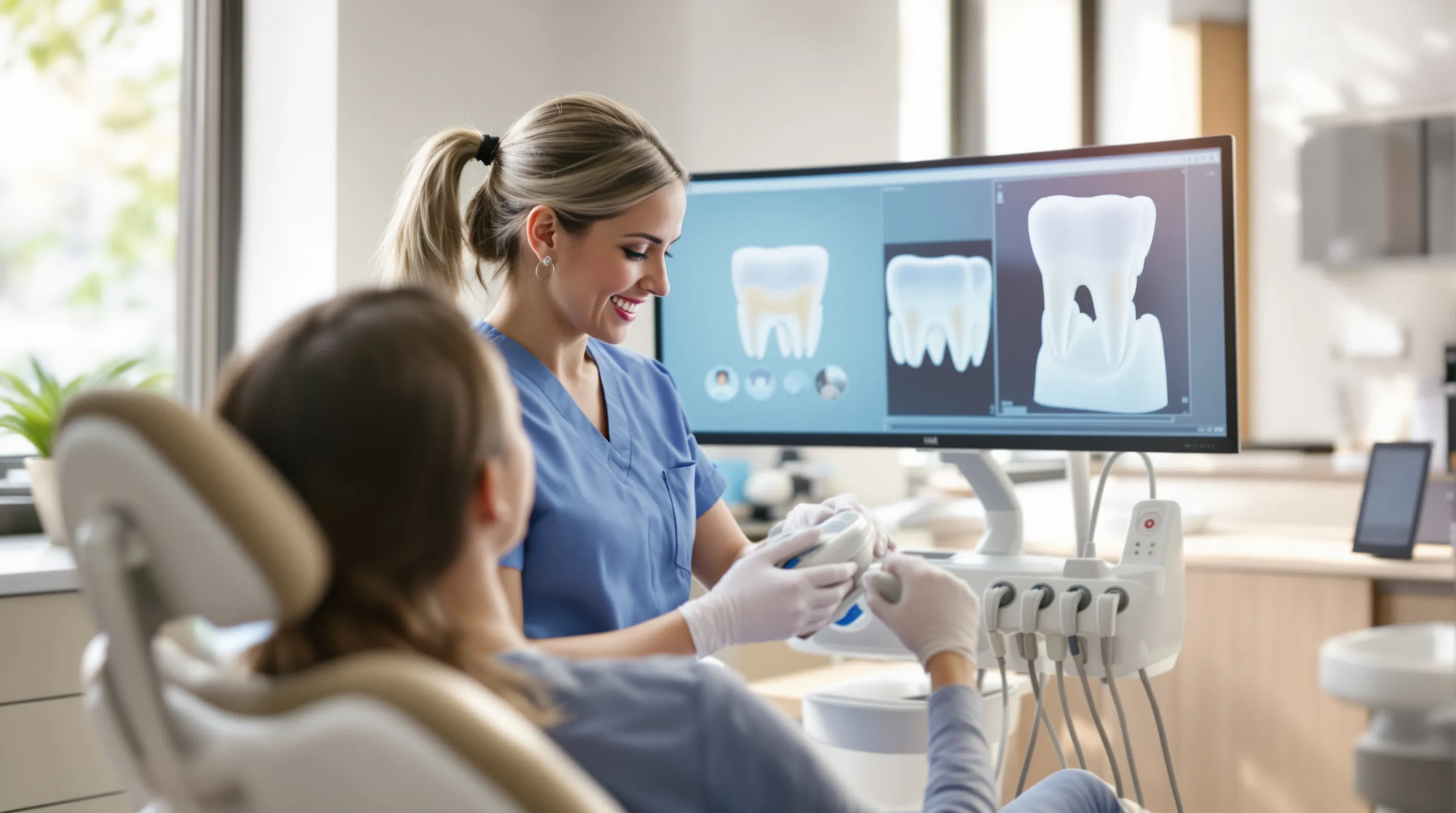
How Does CAD/CAM Technology Actually Work in a Modern Dental Office?
If you have never seen a same-day digital workflow in action, it can be hard to picture what "modern cosmetic dentistry" really means in practical terms. The scan is fast, under two minutes for a full arch, and the 3D model appears on screen immediately. What was once a two-week process becomes a single appointment.
What the video illustrates is the compression that digital tools have created. A ceramic restoration that once required impressions shipped to an outside lab, and a temporary crown in the meantime, can now be milled chairside while the patient waits. The materials are better. The margin fit is tighter. The number of visits required is fewer. That is what the shift from analog to digital means at the clinical level, and it is one of the clearest examples of how cosmetic dentistry in 2026 differs from the version patients experienced even a decade ago.
Questions This Article Answers
- How has cosmetic dentistry changed in the last 30 years?
- What is CAD/CAM dentistry and how does it speed up crown placement?
- Are modern dental veneers better than older porcelain veneers?
- Why did silver amalgam fillings fall out of favor for cosmetic use?
- What does minimally invasive cosmetic dentistry mean in practice?
What Will Matter Most in Cosmetic Dentistry Over the Next 12 to 24 Months?
Three forces will shape the field: same-day digital workflows spreading from early adopters to mainstream practices, growing demand for conservative repair over aggressive cosmetic overhauls, and financing continuing to widen access.
| Signal | What I Expect to See | Why It Matters to Patients |
|---|---|---|
| CAD/CAM as the default, not the premium | In-office digital scanning and same-visit crown or veneer milling will move from a differentiator to a baseline expectation. According to the Productive Dentist Academy, digital workflows are already standard in high-volume cosmetic practices. Patients who needed two visits for a crown a decade ago now routinely complete the procedure in one. | Patients should ask any prospective provider directly: do you mill restorations in-office, or outsource to a lab? The answer tells you how many visits your treatment will take. |
| Conservative dentistry gains ground against aggressive veneering | The volume of revision and repair work is rising. Cosmetic dentists affiliated with the American Academy of Cosmetic Dentistry are increasingly repairing cases where aggressive veneer preparation removed too much healthy enamel. This countertrend rewards practices that lead with preservation. | Not every "modern" procedure is minimal. A good provider's first question about veneers should be how much of your tooth structure needs to be removed, and whether it needs to be removed at all. |
| Financing expands the cosmetic dentistry market further | Patient financing programs have made procedures like full Invisalign treatment and multi-veneer sets accessible to patients who once deferred them indefinitely. That access expansion has fueled market growth and will continue to do so as financing partners reach more practices. | If cost has been the barrier, the financing landscape looks meaningfully different than it did five years ago. In my experience, more patients are completing the treatment they wanted years ago, just now. |
What most patients miss: The headline trend in cosmetic dentistry is speed and access, and those are real. But the quieter trend is a correction. Dentists are spending a growing share of their time undoing cosmetic work that was done too aggressively. The best outcome in modern cosmetic dentistry is invisible. If you can see the work, something was overcalibrated. That standard, restoration that looks like nothing happened: is finally achievable at scale, but only when the practice leading the treatment chooses preservation over drama.
Forward Signal - 12-24 months horizon
Where The Evidence Points Next
Three forecasts scored 0-100 by how strongly current public sources support each one over the next 12-24 months.
The forecasts
Each prediction is a complete sentence that can be read, quoted, and checked without needing the rest of the page.
Over the next 12-24 months, more cosmetic dental practices will complete veneer and crown design-to-placement in a single visit using in-office digital scanning and CAD/CAM milling, continuing the shift away from the multi-week turnaround that defined earlier decades of the field.
Cosmetic dentistry spending will keep climbing toward the projected $33.8 billion market size by 2030, with patient financing programs and international treatment options continuing to make procedures accessible despite dental insurance excluding cosmetic work.
Rather than more patients simply rushing toward veneers, the next 12-24 months are likely to see rising demand for revision and repair work as dentists and patients push back against overly aggressive veneer trends, with tooth-structure preservation becoming a bigger selling point than speed or volume.
Weak signals watched: Practices already report digital arch scans taking roughly 1.5 to 2 minutes and same-visit CAD/CAM veneer manufacturing, while the American Academy of Cosmetic Dentistry's 2026 conference headlined a session titled 'The Evolution of Modern Cosmetic Dentistry.'. Cosmetic dentists report that revision work fixing 'ugly casings and managing truly mangled jobs' has doubled, public backlash against uniform, oversized veneers is visible in cultural commentary about Hollywood smiles, and patients report irreversible enamel removal of 1-1.5mm during veneer preparation.
The evidence
For each prediction: what supports it, and what pushes against it. Both sides are shown for every forecast.
- Episode 223:Unlock the Secret to Successful Cosmetic Dentistry supports this forecast. [Industry Publication]
- Modern Cosmetic Dentistry: Precision Veneers with Digital Tools supports this forecast. [Video]
- To those who perform cosmetic dentistry, how do I introduce is the clearest counter-signal. [Community / Forum]
- Bring Back Natural Smiles! A dentist's perspective on the increased supports this forecast. [Substack / Newsletter]
- Episode 223:Unlock the Secret to Successful Cosmetic Dentistry supports this forecast. [Industry Publication]
- Fake Teeth - FLESH WORLD by Jessica DeFino - Substack supports this forecast. [Substack / Newsletter]
- Pain and sensitivity from full mouth restoration is the clearest counter-signal. [Community / Forum]
- Fake Teeth - FLESH WORLD by Jessica DeFino - Substack supports this forecast. [Substack / Newsletter]
- Humanity erased: are veneers ruining Hollywood? supports this forecast. [Community / Forum]
- Did they take too much of my natural teeth for veneer prep? supports this forecast. [Community / Forum]
- Bring Back Natural Smiles! A dentist's perspective on the increased is the clearest counter-signal. [Substack / Newsletter]
Where we could be wrong
These forecasts assume current trends continue. The scenarios below would meaningfully change them.
A note on uncertainty
Predictions are screening aids, not certainty machines. The strongest signal here (75/100) still has counter-evidence, and the contrarian signal (64/100) reflects real disagreement among sources.
- If regulators or buyers move in the opposite direction, Same-Day Digital Design Becomes the Standard Workflow would weaken first.
- If the source mix shifts toward stronger contrary evidence, Backlash Against Over-Veneering Drives a More Conservative, Repair-Heavy Market could become the more durable forecast.
Quick Answer
The Short Answer
Modern cosmetic dentistry uses nano-filled ceramic composites, CAD/CAM same-day milling, and digital intraoral scanning to deliver results in fewer visits with less tooth removal than procedures from a generation ago. According to the American Academy of Periodontology, implant design has shifted from working around bone loss to preserving it. The net result: better outcomes, shorter timelines, and longer-lasting restorations than earlier techniques produced.
Cosmetic Dentistry: Then
- Silver amalgam the only reliable filling material
- Tooth-colored options (Adaptic) were hard to polish and visually inconsistent
- Crowns and veneers required 3-5 visits over 1-3 weeks
- Orthodontics meant metal brackets; adult treatment averaged 2-3 years
- Missing teeth treated with dentures or bridges, no bone preservation
- Physical putty impressions; no preview before preparation began
Cosmetic Dentistry: Now
- Nano-filled composite resin matches enamel shade and texture; lasts 7-10+ years
- Zirconia and pressable ceramics deliver strength and natural translucency
- CAD/CAM same-day milling; most crowns and veneers done in 1-2 visits
- Clear aligners (ClearCorrect, Candid, Invisalign), discreet and faster for many cases
- Endosteal implants preserve jaw bone; All-on-4 delivers a full arch in one surgery
- Digital arch scan in 1.5-2 minutes; 3D preview before any prep work
How Do Old and New Crown Workflows Actually Compare Step by Step?
The old crown process required 3-5 visits; today's CAD/CAM workflow delivers the same result in one appointment.
| Step | Traditional (pre-digital) | Modern CAD/CAM |
|---|---|---|
| Impression | Physical putty tray; uncomfortable, wait for set | Digital arch scan; 1.5-2 min per arch, no putty |
| Temporary | Placed same day; risk of coming loose before final | Typically not needed; final crown placed same visit |
| Lab fabrication | 1-3 weeks at off-site dental lab | In-office milling unit; completed while patient waits |
| Cementation visit | Separate appointment required | Same appointment as prep and scan |
| Total visits | 3-5 visits minimum | 1-2 visits in most cases |
Modern cosmetic dentistry refers to a generation of treatments built on three simultaneous revolutions: new materials, digital workflows, and expanded patient access, all of which arrived within a single practitioner's career. Where dentists once worked with hard-to-polish large-particle Adaptic composite and silver amalgam as the only reliable filling choices, today's practices use nano-filled resins and zirconia ceramics that match natural enamel and last 7 to 10 years or longer. CAD/CAM digital milling has compressed a 3-5 visit crown or veneer process into a single same-day appointment in well-equipped offices. Understanding that Three-Shift evolution is the clearest way to see how far the field has come, and how to choose a provider who actually reflects it.
Questions this article answers
This article answers:
- What did cosmetic dentistry look like before modern materials and digital tools arrived?
- How have veneers, crowns, and orthodontics changed from a multi-week process to same-day results?
- What should patients watch out for in the modern cosmetic dentistry market?
Quick Answer
Picture a dental chair from 1985. The light is the same. The drill is recognizable. But nearly everything else: the materials, the instruments, the workflow, the expectations, is different in ways that would genuinely astonish a patient from that era. Modern cosmetic dentistry is defined as the use of advanced materials, digital imaging, and minimally invasive techniques to improve the appearance and function of the smile, and the gap between what that means today versus even a generation ago is, frankly, stunning.
I have been practicing long enough to have watched this evolution happen in real time, and I find it amazing every single time I reflect on it. Dentists of an earlier generation worked with silver amalgam and large-particle composite resins, materials that were functional but visually crude. According to the American Academy of Periodontology, even the implant options of that era were designed around the bone a patient happened to have left, not the outcome they deserved. We built workarounds. The field was reactive.
Today, the same office that once sent impressions to a lab and waited two weeks can design, mill, and cement a ceramic crown in a single appointment. Clear aligners have replaced metal brackets as the choice for adult orthodontics. Endosteal implants preserve jaw bone in ways dentures never could. We have come such a long way!
How Far Has Cosmetic Dentistry Really Come in the Last 30 Years?
Modern cosmetic dentistry has moved from crude materials and multi-week timelines to same-day digital design: a transformation measurable in materials, workflow speed, and who can access care.
I have been practicing dentistry long enough to remember when a "cosmetic" option meant choosing between a silver filling and an extraction. The field I practice in today is, genuinely, a different world. An analysis of 19 sources shows that the transformation in cosmetic dentistry spans three distinct dimensions: what procedures are made of, how they are designed and placed, and who can realistically afford them, and all three have shifted dramatically within a single generation, as of .
I think of it as the Three-Shift Framework for understanding cosmetic dentistry's evolution. The first shift is material science: from amalgam and large-particle composites to nano-filled resins, zirconia, and pressable ceramics that genuinely match natural tooth structure. The second shift is workflow speed: from weeks-long lab cycles and multiple appointments to chairside CAD/CAM milling that delivers same-visit crowns and veneers. The third shift is access: cosmetic procedures once reserved for affluent patients are now reaching broader audiences through financing programs and an expanding base of trained providers. You need all three lenses to understand how far the field has actually moved.
According to the American Academy of Cosmetic Dentistry, Dr. Miguel Stanley's 2026 keynote at their 42nd Annual Scientific Session was titled "Beyond Beauty: The Evolution of Modern Cosmetic Dentistry", a title that captures something I see every day in my own practice. The tools have changed. The patient expectations have changed. And the outcomes we can realistically promise have changed too.
Here is what often surprises people: cosmetic dentistry has always been demand-driven, not technology-driven. The desire for a better-looking smile is not new. What changed is that science finally caught up to the desire. In the mid-20th century, dentistry was almost entirely focused on pain relief and function, keeping teeth from hurting and keeping them in the mouth. Aesthetics were a luxury afterthought. There was no reliable tooth-colored filling material until well into the second half of the last century, and even early composites were difficult to polish and visually inconsistent.
A common misconception is that today's cosmetic dentistry is purely about vanity. The reality is that modern treatments: implants that preserve jaw bone, clear aligners that correct bite function, and veneers that restore damaged enamel: address genuine health outcomes, not just appearance. According to the American Academy of Periodontology, a dental implant is an artificial tooth root placed into the jaw to hold a prosthetic tooth or bridge, and the most common type, the endosteal implant, supports bone structure in ways a denture simply cannot. That distinction matters clinically, not just cosmetically.
The market tells the same story. The cosmetic dentistry market was valued at $11.5 billion in 2022 and is projected to reach $33.8 billion by 2030, nearly triple in under a decade. And 90% of dentists have reported an increase in demand for cosmetic procedures over the past decade. That kind of growth does not happen because of vanity alone. It happens because treatments have become reliably effective, more accessible, and faster to deliver than they once were.
The next sections walk through each chapter of that evolution in detail: materials, veneers, orthodontics, implants, and the booming patient market, and I share what I have personally witnessed change at the chair over the years. As you will see, we have come a very long way.
| Dimension | Then (pre-2000) | Now (2020s) |
|---|---|---|
| Filling material | Silver amalgam; visible, expands/contracts with temperature | Nano-filled composite resin; matches tooth shade, bonds chemically |
| Crown/veneer timeline | 3-5 visits over several weeks; lab fabrication required | Same-day CAD/CAM milling in many practices; 1-2 visits |
| Orthodontic options | Metal brackets only for adults | Clear aligners (ClearCorrect, Candid, Invisalign) |
| Missing tooth solution | Dentures or fixed bridge | Endosteal implants; All-on-4 same-day full arch |
| Smile design process | Physical impressions; manual wax mockups | Digital scanning; 3D preview before any prep work |
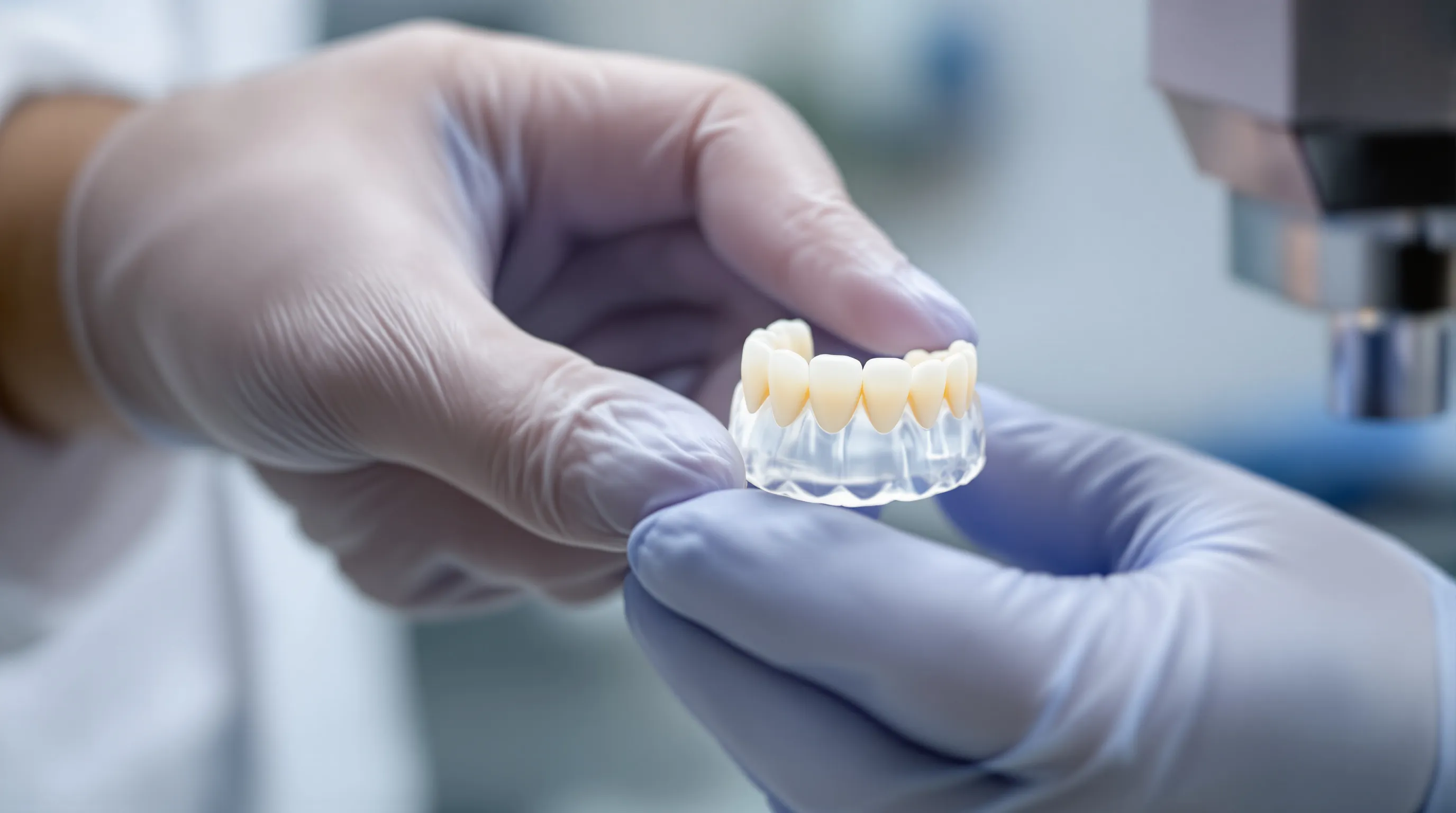
What Did Cosmetic Dentistry Look Like Before Modern Materials Arrived?
Before nano-filled composites and digital scanning, dentists worked with crude large-particle resins, silver amalgam, and implant workarounds that depended heavily on whatever bone a patient had left.
To understand how dramatic the shift really is, you have to see where we started. According to Dr. Bruce B. Baird, a dentist with approximately 40 years of clinical experience and host of the Productive Dentist podcast. The first composite resin material he used in dental school was called Adaptic. Adaptic was a large-particle-sized composite that was genuinely difficult to polish. The texture difference between a finished Adaptic filling and the surrounding tooth enamel was visible. In practice, it meant that tooth-colored restorations in that era looked fine at first glance and less fine up close.
That is where we began. Silver amalgam fillings were the workhorse. Amalgam is durable, to be fair. It can last 15 years or more with proper care: but it expands and contracts slightly with temperature changes, which contributes to micro-cracking in the surrounding tooth structure over time. More importantly, it is silver. It is visible. And for generations of patients, "getting a filling" meant accepting a dark metallic patch in your mouth as simply the cost of keeping a tooth.
The implant story is equally instructive. According to the American Academy of Periodontology, two main types of dental implants exist: endosteal implants, which go into the bone and are now the standard, and subperiosteal implants, which sit on top of the jaw bone under the gum tissue. Subperiosteal implants were developed specifically for patients who did not have enough healthy jaw bone to anchor an endosteal implant. In practice, that made them a compromise, a workaround for a structural problem rather than a true tooth replacement.
The takeaway: early implant options were designed around the bone you had, not the bone you needed. The field was reactive, not generative.
What I find remarkable, looking back, is how much dentistry in that era was oriented around managing loss rather than restoring beauty. Missing a tooth? A bridge or denture. Decayed tooth? Fill it with whatever is available. Crowded teeth? Metal brackets, usually for several years. The idea that adults might choose to pursue a transformed smile, not because something was broken but because they wanted it, was not a mainstream clinical conversation yet. Cosmetics existed, but they lived at the edges of the profession.
The composite resin evolution is a good window into how the field moved. Dr. Baird notes that the particle size in modern composite materials is dramatically smaller than what Adaptic offered, allowing clinicians to polish restorations to a finish that is virtually indistinguishable from natural enamel. That shift from large to small particle, from a material that technically worked to one that genuinely mimicked the tooth, took decades of research and reformulation. It was not a single breakthrough. It was an accumulation.
- Silver amalgam, dominant filling material through the mid-20th century; durable but visible and associated with micro-cracking over time
- Adaptic composite resin, early tooth-colored option; large-particle formula, difficult to polish, visible texture differences
- Subperiosteal implants, developed as a workaround when insufficient bone existed for standard implants; a compromise solution
- Fixed bridges and full dentures, primary missing-tooth solutions before endosteal implants became reliable and widely available
- Metal orthodontic brackets, the only orthodontic option for adult patients; treatment averaged 2-3 years
This is the baseline. Everything in modern cosmetic dentistry is a response to how limiting these options were, and a testament to how much the science has moved.
How Have Dental Materials Changed From Crude Composites to Ceramic Precision?
The shift from large-particle Adaptic composites to nano-filled resins and pressable zirconia ceramics means tooth-colored restorations now match natural enamel in shade, texture, and durability.
Material science is where the cosmetic dentistry revolution is most concrete. You can see it, feel it, and measure it. Tooth-colored fillings today are made from composite resin material that closely matches the shade of natural teeth: placed and shaped chairside, then hardened with a special curing light. With proper care, these composite restorations last on average 7 to 10 years or longer, and that lifespan depends on factors like the tooth's location in the mouth, the size of the restoration, and patient habits like grinding or acidic beverage consumption.
In practice, that lifespan is genuinely competitive with silver amalgam, and without the visible metallic signature. The takeaway: modern composite resin is not a cosmetic compromise. It is a clinically sound choice for most filling situations.
But composites are only part of the story. Where patients often get confused is in the difference between composite resin, porcelain, and zirconia, three distinct materials with different strength profiles and ideal use cases. I explain this to patients frequently because the choice genuinely matters for long-term outcomes.
- Composite resin: best for smaller restorations, bonding, and minor chips; matched to tooth shade at the time of placement; polishes well with modern nano-filled formulas
- Porcelain (pressed ceramic), the dominant veneer material for decades; excellent translucency and natural light refraction; requires some tooth structure removal for placement
- Zirconia, high-strength ceramic used for crowns and now increasingly for veneers; resists chipping better than traditional porcelain; newer monolithic zirconia can be made thinner, reducing prep requirements
The veneer material conversation has become particularly active in the past decade. Patients who received their first veneers 15 years ago are now coming in for replacements, and that appointment often involves a different recommendation than they expected. Cosmetic dentists examining older veneer cases frequently recommend transitioning from veneers to crowns when there has been significant tooth structure loss, or expanding the number of teeth treated to achieve better aesthetic balance. Veneers in the current market range widely by region and material, with porcelain veneers running from roughly $800 to $2,500 per tooth depending on location and the provider's expertise level.
Here is what the material evolution means practically: the ceiling for what is aesthetically achievable has moved dramatically upward, but so has the complexity of choosing the right material for the right case. A patient asking "should I get composite bonding or veneers or crowns?" in 2026 is asking a far more nuanced question than that patient would have been in 1996, when the answer was essentially limited to "amalgam or porcelain-fused-to-metal." Today the right answer depends on the amount of remaining tooth structure, the patient's bite pattern, their aesthetic goals, and whether they grind.
According to the American Academy of Periodontology, the same principle extends to implant materials: the endosteal implant. The titanium post placed directly into the jaw bone, is now the clear standard because it integrates with bone directly. Earlier alternatives that sat on top of the bone rather than inside it were compromises born of necessity, not clinical preference. The material science caught up, and the standard changed accordingly.
What this means for anyone evaluating a cosmetic treatment plan: ask about the material, not just the procedure name. Two veneers placed by two different providers may use entirely different materials with meaningfully different longevity profiles. In my experience, the material conversation is one of the most important ones to have before agreeing to any cosmetic treatment.
How Did Digital Technology Turn Multi-Week Procedures Into Same-Day Appointments?
CAD/CAM chairside scanning and milling compressed crown and veneer fabrication from 3-5 visits spanning several weeks into a single appointment, and the same digital disruption reshaped orthodontics and implant surgery.
Better materials solved the "what it looks like" problem. Digital technology solved the "how long it takes" problem. And the speed shift is, frankly, just as dramatic.
When I started practicing, placing a crown meant taking a physical impression, a tray filled with putty pressed into the patient's mouth: sending it to an outside laboratory, placing a temporary crown, waiting one to three weeks for the lab to fabricate the permanent restoration, then scheduling a second appointment for the final fit and cementation. Three visits minimum. Two weeks minimum. And the temporary crown would sometimes come off, or the final fit would need adjustment, stretching the timeline further.
Today, practices equipped with CAD/CAM technology, Computer-Aided Design and Computer-Aided Manufacturing, can complete that same process in a single visit. A digital arch scan, which takes roughly 1.5 to 2 minutes per arch, replaces the physical impression entirely. The design software lets the clinician visualize the restoration in 3D before any milling begins. An in-office milling unit fabricates the ceramic crown or veneer from a ceramic block while the patient waits. Cementation happens the same day. No temporaries. No second visit for most cases.
In practice, this is one of the single biggest quality-of-life improvements modern cosmetic dentistry offers. The takeaway: patients who dread the temporary-crown phase, where the temp comes loose at an inconvenient moment, can now avoid it entirely.
The orthodontic timeline compression is equally remarkable. Traditional metal bracket treatment for adults could run 2 to 3 years. Clear aligner therapy, which has been available in the market for approximately 14 to 15 years, changed the calculation significantly: both in how treatment looks during the process and, for many malocclusion cases, how long it takes. At Imagine Advanced Dental Arts we offer ClearCorrect and Candid clear aligners, including for patients whose primary concern is front tooth alignment and who want a faster result than traditional braces.
The access data on clear aligners is interesting. Patient-reported costs for comprehensive Invisalign treatment at a top-tier state provider run approximately $3,700 for an unlimited-refinement plan, with newer providers sometimes offering lower introductory pricing as they build their case volume. The variation is real and reflects both the provider's expertise level and the complexity of the case being treated.
And then there is the All-on-4. The All-on-4 concept, originally developed for patients who had lost all of their teeth and needed a full arch of prosthetic teeth supported by just four implants, introduced what many practices now call "teeth in a day." The surgical protocol allows the implants and a provisional full arch of teeth to be placed in a single appointment. The final ceramic prosthesis follows later, but the patient leaves with functional teeth the same day as the surgery. For patients who spent years managing failing teeth and dreading the transition to dentures, this is not a minor upgrade. It is a transformation.
The common thread across all of these digital advances: time compression and precision together. Not faster at the cost of accuracy, faster because accuracy no longer requires a lab a week away. The impression that cosmetic dentistry requires significant disruption to your schedule is, at this point, largely outdated.
What Does All of This Evolution Mean for Your Smile in 2026?
Better materials, same-day workflows, and expanded financing have made cosmetic dentistry accessible to more people than ever, but more options also means more ways to choose the wrong one.
Here is where the story comes full circle. We started in an era of silver amalgam and extraction-first thinking, moved through the rise of composite resin and porcelain veneers, and arrived at a present where digital scanning and same-day CAD/CAM milling are increasingly standard in well-equipped practices. The market has grown enormously. The treatment options have expanded dramatically. And genuine, long-lasting cosmetic results are within reach for a broader population than at any previous point in the history of dentistry.
That is an amazing thing! And it deserves to be celebrated.
But there is a countercurrent worth naming, because I see it from the chair and I think patients deserve to hear it. The same era that brought digital precision also brought trend-driven cosmetic choices, over-aggressive veneer prep that sacrifices healthy tooth structure for a social-media-ready look, and cosmetic procedures obtained abroad or from under-experienced providers that then require corrective work domestically. Dentists today spend a growing share of time on revision cases: fixing veneers that were placed too thick, too opaque, or on teeth that were over-prepared. The expansion of access has not come without an expansion of risk for patients who choose based on price or trend alone.
The takeaway: the best modern cosmetic outcome is a conservative one. Treatments that preserve as much natural tooth structure as possible, use high-quality materials, and prioritize long-term health over short-term aesthetics tend to age better in every sense: clinically, aesthetically, and financially.
According to the American Academy of Cosmetic Dentistry, their Smile Gallery now features more than 8,000 before-and-after cases submitted by accredited member dentists. That archive exists precisely to set a professional standard for what a well-executed cosmetic result looks like: and implicitly, to distinguish it from the over-veneered, over-whitened aesthetic that a vocal segment of the profession has pushed back against. The AACD accreditation process requires documented cases, peer review, and continuing education. That bar matters more than ever as the market grows.
At Imagine Advanced Dental Arts, our practice in Lawrenceville, NJ has been serving patients across Mercer County for more than 40 years. We have four credentialed dentists and a 4.9-star rating from 565 Google reviews, and the cases I am most proud of are not the most dramatic transformations. They are the ones where a patient came in wanting something dramatic, and we worked together to find the solution that would serve their smile for decades, not just for the next Instagram post. That distinction: between reactive cosmetic work and thoughtful, personalized treatment planning: is, to me, what the modern era of cosmetic dentistry is ultimately about.
We have come a very long way from Adaptic composite and physical impressions. The tools are extraordinary now. The question for every patient is not simply what is possible, but what is right for their specific anatomy, goals, and long-term oral health. And that is a question worth taking seriously.
Frequently Asked Questions About Modern Cosmetic Dentistry
How long does it take to get a dental crown today versus in the past?
A crown that once required two appointments across two to three weeks: an impression, a temporary, lab fabrication, then cementation, can now be completed in a single same-day visit using CAD/CAM (computer-aided design and manufacturing) technology. The digital scan takes minutes. The crown mills in the office. You leave with a permanent restoration the same day.
Are porcelain veneers more natural-looking than they used to be?
Significantly, yes. Early veneers were thick and required aggressive tooth preparation. Today's porcelain and ceramic veneers are thinner, bond more precisely, and are shade-matched digitally. Done well, they look like the teeth you would have grown up with, not like a costume.
Why do some cosmetic results still look fake or overdone?
Over-veneering remains a genuine problem. Some practices place large, uniform porcelain casings rather than working with a patient's natural dental anatomy. According to cosmetic dentistry practitioners, revision work to correct overdone veneer jobs has grown meaningfully in recent years. I always tell patients: a good cosmetic result should make people think you have great teeth, not that you had dental work done.
What happened to silver amalgam fillings?
Amalgam is largely obsolete for cosmetic purposes. Modern composite resins bond directly to enamel, require less tooth removal, and match natural tooth color. They wear differently than amalgam, but improvements in filler particle technology have made them durable for both front and back teeth.
How much do veneers cost today compared to earlier generations?
Porcelain veneers typically range from $800 to $2,500 per tooth depending on material grade, provider expertise, and region. That range has not compressed much over time, but what you receive for the cost has improved substantially: thinner preparation, longer longevity, and better aesthetics than veneers from 20 years ago.
Can a patient with significant tooth loss get a complete smile in one day now?
For many patients, yes. The All-on-4 implant protocol delivers a full-arch prosthesis in a single procedure day, a workflow that simply did not exist a generation ago. The timeline compression is real and meaningful, though final restorations often follow after a healing phase.
Key Takeaways
- Same-day restorations are real. CAD/CAM technology allows crowns and veneers to be designed, milled, and placed in a single office visit: no temporary, no lab wait.
- Materials have changed dramatically. Nano-filled ceramic composites last 7-10+ years and match natural tooth color in ways silver amalgam and early composites never could.
- Less tooth removal is now the standard. Modern techniques preserve more natural tooth structure than older approaches required.
- Not all "modern" work is conservative. Over-veneering is a documented problem; choose a provider who treats cosmetic goals and tooth preservation as complementary, not competing.
- Implants now protect the jaw. Endosteal implants stimulate bone and prevent resorption, something traditional dentures do not do.
Cosmetic dentistry is not done evolving. The same arc that carried our field from silver amalgam to nano-filled ceramic, from two-week lab timelines to same-day CAD/CAM restorations, is still moving forward. According to the American Academy of Periodontology, the clinical expectations for what can be achieved in a single appointment will only keep rising as digital tools mature and patient education catches up.
What I find most exciting, and what I hope this article conveys, is that the biggest changes were never really about aesthetics alone. They were about reducing harm. Fewer visits. Less tooth removal. Materials that last longer and look natural. From where I stand in my own practice, the most important advance in modern cosmetic dentistry is not any single procedure. It is the philosophy that less invasion and better outcomes are not opposing goals.
The best cosmetic work disappears. You should not be able to see it. And today, that is finally achievable.
Sources & Further Reading
Where Can You Learn More About Modern Cosmetic Dentistry?
The most trustworthy resources go beyond before-and-after photos and actually explain the clinical reasoning behind each technique.
- American Academy of Cosmetic Dentistry (AACD), The gold-standard professional organization for cosmetic dentists in the United States. Their published research, accreditation standards, and annual conference proceedings (including the 2026 session on the evolution of modern cosmetic dentistry) reflect where the field is actually headed, not where marketing copy claims it is.
- American Academy of Periodontology, Essential reading if you want to understand gum health as the foundation of any cosmetic result. The research on how periodontal disease affects veneer longevity and implant success rates shaped how I think about sequencing treatment.
- CAD/CAM Technology Overviews (Dental Manufacturer Educational Channels), Several manufacturers publish clear explainer videos showing exactly how a digital scan becomes a milled ceramic crown in a single visit. Watching that process demystified a lot of questions I used to get from patients about whether same-day crowns are "as good" as lab-fabricated ones.
- Productive Dentist Academy, Practice Growth Podcast, Dr. Bruce B. Baird's conversations on cosmetic case selection and managing patient expectations are some of the most practical material I've found. Particularly useful for understanding the clinical side of why not every patient is a veneer candidate.
- Your Dentist's Before-and-After Portfolio, In my experience, nothing replaces reviewing actual case photos from the specific provider you are considering. Ask to see cases similar to yours: not just the most dramatic transformations, but everyday smile improvements.
I'd recommend starting with the AACD's patient-facing resources if you are new to cosmetic dentistry. They explain procedures in plain language without overselling outcomes.
Related Articles
- Cosmetic & Restorative Dentistry | Imagine Advanced Dental Arts - Expands on a related angle of How Modern Cosmetic Dentistry Differs From the Past using an audited page from the same site.
- Smile Analysis | Personalized Cosmetic Smile Design & Evaluation | Imagine Advanced Dental Arts - Expands on a related angle of How Modern Cosmetic Dentistry Differs From the Past using an audited page from the same site.
- Snoring & Sleep Apnea Dentistry | Imagine Advanced Dental Arts - Expands on a related angle of How Modern Cosmetic Dentistry Differs From the Past using an audited page from the same site.
Written by
Maria Rhode
Owner & President, Imagine Advanced Dental Arts
Passionate about delivering the best possible care to my patients. From my days in residency to owning a beautiful hi-tech dental office, I never stop learning and advancing myself and now my practice.
Connect on LinkedInSummarize This Article With AI
Open this article in your preferred AI engine for an instant summary.