

Quick Answer
Most people with veneers are satisfied, but regret clusters among patients whose healthy teeth were covered to fix one or two small flaws that whitening plus bonding could have solved.
A Temple University comparison of porcelain and composite veneers found patients happy with both, so the gentler material is no downgrade. The real question is how many teeth truly need covering. Enamel removed for veneers never grows back. Ask whether a plan means thin veneers or full crowns, then start with whitening and bonding wherever they can do the job.
Key Points
- Dentist Rosie Sutton says otherwise healthy teeth should not get crowns as a first option, and Love Island winner Jack Fincham regrets crowns on teeth with "nothing wrong with them."
- In 2025, a Reddit r/porcelainveneerstruth poster described getting 8 porcelain veneers on teeth that were "perfectly fine, just a bit discolored," apart from one short tooth.
- In 2024, a Temple University study by Oras Antwan found porcelain veneer wearers rated satisfaction 4.63 out of 5 , with no significant difference from composite.
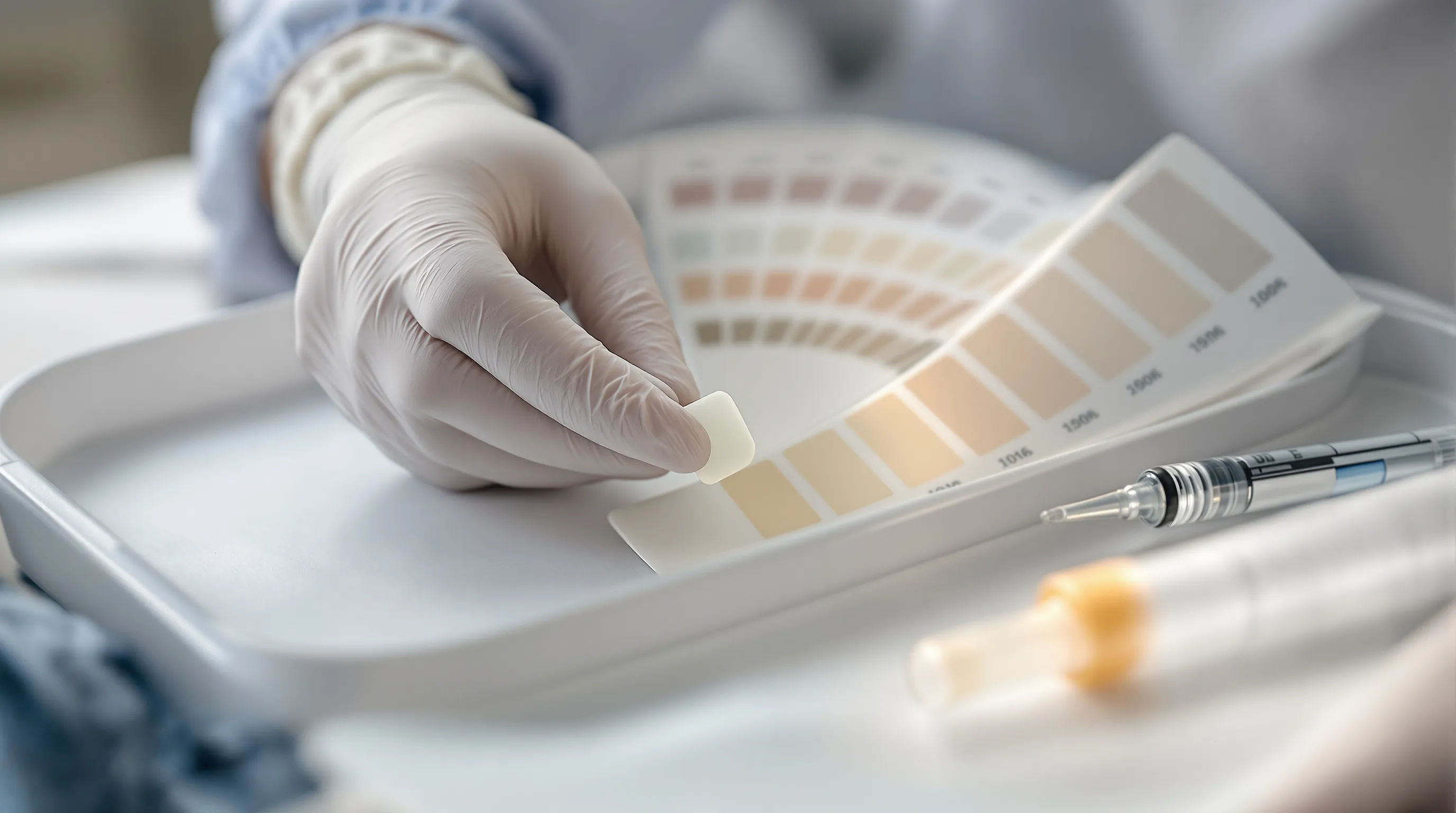
Porcelain or bonding? The right choice starts with how many teeth truly need help.
Choose the dentist who asks which teeth truly bother you, then offers whitening, bonding or composite before porcelain. Healthy enamel is a one-time gift, and the best plans protect it.
Did you know the material question matters less than most patients think? In 2024, a Temple University comparison of porcelain and composite veneers screened 288 patients, and the ones who took part were highly satisfied with both materials. That finding flips the usual sales pitch. If the lower-cost, more conservative material holds its own, the real decision is how much natural tooth gets covered at all.
And the stakes run far beyond one appointment. Veneer-skeptic advocates claimed in 2025 that porcelain veneers placed at a young age can cost $80,000 to $300,000 over a lifetime. That is an advocate's estimate, not a study! Still, the regret stories carry real weight. One woman, given the pseudonym Catherine, told a newspaper her cosmetic treatment was "the biggest mistake of my life," and that her teeth "weren't actually that bad."
So who are the best cosmetic dentists in Lawrenceville, NJ? Start with two questions. How many teeth does the plan treat? And why does each one need it? A dentist who can lay a whitening and bonding plan, a composite plan and a porcelain plan side by side, with honest tradeoffs for each, is offering a real choice, and the sections below show how to weigh them.
Veneer wearers in recent research rated their results highly, and composite matched porcelain, yet the loudest regret stories come from people whose teeth were healthy before anyone picked up a drill.
In 2024, a Temple University School of Dentistry study by Oras Antwan found an average satisfaction score of 4.51 out of 5 across 61 veneer patients, with porcelain wearers at 4.63 and no significant difference from composite on aesthetics, function, longevity or overall satisfaction. That is wonderful news for anyone who already has veneers!
Now picture a very different image. In 2020, model and TV personality Katie Price went viral with a photo of her real teeth shaved down to "pegs," ready for what turned out to be full coverage crowns. The internet gasped. Then the backlash grew.
Satisfaction surveys ask people who kept their veneers how they feel. They never ask whether those teeth needed covering in the first place. That means nobody can yet say how often healthy teeth get covered, since none of the research gathered here counts it. So bring one simple question to any consult: could whitening or bonding fix your one or two flaws first?
Top 3 questions this article answers
- Will I regret getting porcelain veneers on healthy teeth?
- What do people with veneers regret the most?
- How much enamel do veneers remove, and does it matter?
Picking a smile is a bit like getting a tattoo. You want to love it at 60, not just next weekend! Patients rate bonding and porcelain about the same, so the real question is which one your teeth actually need.
Why does tooth preparation decide whether veneers end in regret?
Backed by a 4.9 average rating from 587 Google reviews, our team reads the veneer research one way: preparation that stays inside enamel lasts, and healthy teeth deserve the gentlest plan first.
Before any enamel is touched, four questions deserve a clear yes:
- Is there enough healthy enamel for a veneer to bond to?
- Is the bite free of heavy grinding and edge-to-edge contact?
- Is the flaw one veneers are meant for, such as deep discoloration, worn or fractured teeth, an unusual tooth shape or minor crowding?
- Can the preparation stay inside the enamel layer instead of reaching deeper?
Did you know dental veneers have been improving smiles since the 1930s? In the year 1975, laminate veneers arrived at just 1 mm thick, and porcelain veneers followed in the 1980s, using etched enamel and a treated porcelain surface to improve the bond. Early materials had to be too thick to hide discoloration, were hard to polish and stained easily. As you can see, every leap forward made the shell thinner and the bond to enamel more important.
In 2018, a peer-reviewed review by Yousef Alothman of King Fahad Specialist Hospital and Maryam Saleh Bamasoud of Alfarabi Colleges reported a 91% survival rate for veneers over 20 years. That is a terrific record! The same review listed the conditions that work against veneers: bruxism, an edge-to-edge bite, poor oral hygiene and insufficient enamel. It also stressed that keeping the preparation within enamel is critical for bond strength, citing a recommended front-surface reduction of 0.4 to 0.7 mm. Though the authors found few clinical trials comparing preparation designs and leaned on 7 in vitro studies, their conclusion was refreshingly plain: the clinician's preference is the decisive factor.
The common assumption is that a veneer is a thin shell that simply sits on top of a tooth. Well, even a thin shell starts with reshaping the tooth beneath it, so ask exactly which of your teeth a plan would reshape! Ask whether each one truly needs it, or could simply be bonded or left alone. A good plan answers that for every tooth.
An analysis of 4 sources behind this section adds one more step: ask whether the reduction will stay inside that enamel range the review cites. In practice, healthy enamel is an asset you only spend once.
Our team's grounding in a DMD and residency with honors in prosthodontics and oral reconstruction shapes how we read that research. Rebuilding worn and broken teeth is where deeper preparation earns its place, while a healthy front tooth with one chip is a different story entirely, and that is exactly where tooth-colored dental bonding often belongs. Certification in BOTOX Cosmetic and dermal fillers keeps the whole face in view, too, so a smile plan gets judged on lips, proportions and expression rather than on how many teeth can be covered.
Yet plenty of people whose veneers never cracked or popped off still say they wish they could take them back.
What do people with veneers actually regret?
Forty-two years in the same Lawrenceville office means most of our cases finish here rather than bouncing between specialists, and that matters because veneer regret usually begins with a skipped conversation.
In 2020, Reddit's r/Dentistry community asked a simple question: "Those with veneers, do you have any regrets?" The answers split right down the middle, and that split is the whole story. One commenter had their top front 8 teeth done and called it "life changing." Another had composite veneers on two small, misshapen upper side teeth that were still holding up after 8 years of daily tea and coffee. Amazing results, both of them!
Then came the other voices. One commenter had two front teeth veneered for chipping and crookedness after a dentist promised the veneers would "protect my natural teeth" and "last a lifetime." Nobody mentioned the work was irreversible. Nobody offered a gentler option. Their verdict was four words long: "Yep I regret it." They wished they had chosen braces or Invisalign instead. A different commenter knew someone who simply "didn't realize the extent to which your natural teeth have to be filed down."
Contrary to that lifetime promise, another voice in the same discussion pointed to an "average 10 year failure rate" for dental work and warned that even "no prep" designs leave "irreversible changes to the structure underneath." Their advice was wonderfully modest: straighten first, because "you might even be happy with your appearance after straightening and only require minimal resin bonding."
So what separates the thrilled wearers from the heartbroken ones? Start by asking who will do the work. A self-identified dentist in that conversation put it plainly: "The outcome of veneers largely depends on who does them." So ask any dentist you consult which gentler options they ruled out for your teeth, and why. Their answer will tell you plenty.
That same dentist urged patients to add a nightguard to keep veneers from chipping or debonding, which puts the bite and nighttime grinding right at the center of the decision. Board certification in dental sleep medicine, as a Diplomate of the ABDSM, is part of our team's training, and it is a constant reminder that what teeth do at night matters as much as how they look by day. Thin shells and heavy night forces make a rough match. One commenter noted that veneers are still "far less invasive than full coverage crowns," which is true, but that comparison only helps when crowns were ever really needed. If a plan for a healthy tooth jumps straight to veneers or porcelain or zirconia crowns, ask for a bonding quote alongside it so you can compare.
The most painful version of that skipped conversation began with one short tooth.
Is veneer regret really an over-prescription problem?
As a practice awarded Practice of the Year, we read it this way: when a plan covers more teeth than the flaws you can name, over-prescription is the likely story.
In 2025, a member of Reddit's r/porcelainveneerstruth community shared a story that reads like a cautionary tale. "16 years ago, I was in my late thirties and had just lost 100 pounds." Their teeth were "perfectly fine, just a bit discolored," except for one tooth "somewhat noticeably shorter than the others due to grinding." The fix they received? 8 porcelain veneers, a gift paid for by their parents.
"Four years later, I had a pretty bad bicycle crash and broke 4 of my veneers." For the 11 years after that, the shells kept breaking one at a time, usually while eating. And the brighter smile? It came out only "a shade or two whiter" than their natural teeth. Their cry from the heart says it all: "I WISH I HAD ALL THOSE THOUSANDS OF DOLLARS BACK."
Here is the line worth reading twice. One commenter wrote that "a good cosmetic dentist would have maybe bonded the one short tooth and done whitening for the discoloration." One tooth. Not eight. That is the over-prescription problem in a single sentence!
Celebrity stories follow the same script. Writer Alanna Duffield reported that Love Island winner Jack Fincham, who had full coverage crowns rather than true veneers, now regrets them and says his original teeth had "nothing wrong with them." Dentist Rosie Sutton, Director of Tweak East, did not mince words: "If your teeth are otherwise healthy and you're looking for a cosmetic improvement, you absolutely should not be considering crowns as your first option."
Now, to be fair, that Reddit thread holds happy endings too. One commenter with minimal-prep veneers reported about 19 years without a single problem, with the teeth underneath "basically the same." Another called veneers "a very positive if expensive decision" for many people. So if veneers truly fit your case, ask whether a minimal-prep design could work for your teeth. That one question can protect a lot of enamel.
What should a patient with healthy teeth do with all this? Start with the least permanent fix that could work, and keep the bigger option in reserve. Dental practices that sell both treatments say a bonding-first path is common, because patients can still move to veneers later, while going from veneers back to natural enamel is not possible. Another commenter in that thread gave advice we would happily frame and hang in our waiting room: "always get at least 2-3 opinions and ask specifically about more conservative alternatives like composite bonding first."
Patience costs nothing here. Enamel does. Curious how our own patients describe their care? Their words are collected on our patient testimonials page.
Which brings up the practical question every healthy-teeth patient deserves answered: when does whitening plus bonding actually get you to the smile you want?
If your teeth are healthy, where does veneer regret really come from?
Porcelain veneers hold up well in the research, yet stories of regret keep surfacing. We read the studies and the personal accounts side by side to find where they part ways.
We started with the porcelain itself. A 2018 literature review by dentists Yousef Alothman and Maryam Saleh Bamasoud reports a veneer survival rate of 91% over 20 years and describes veneers as "a predictable aesthetic correction of anterior teeth." Patients seem to agree. In a 2024 Temple University thesis, Oras Antwan surveyed 61 dental school patients by phone, and those with porcelain veneers rated their satisfaction 4.63 out of 5. The sample was small and came from one clinic, but neither source points to the material as the weak point.
The regret accounts tell a different story. Most begin with teeth that were in good shape before anyone treated them.
| Who | Starting point | What was done | Looking back |
|---|---|---|---|
| Reddit poster, 2025 | One tooth "somewhat noticeably shorter than the others due to grinding," otherwise "perfectly fine, just a bit discolored" | 8 porcelain veneers, 16 years earlier | "Definitely one of the top 3 mistakes of my life" |
| Jack Fincham, 2018 Love Island winner | Original teeth with "nothing wrong with them," he later said | Full coverage crowns | Has said on TV that he regrets them |
| "Catherine," a pseudonym, speaking to The Guardian | Teeth that "weren't actually that bad" | Cosmetic work not detailed in our source | "the biggest mistake of my life" |
| Reddit commenter, 2020 | Two front teeth with chips and crookedness | Two veneers. Says the dentist promised they would "last a lifetime" and offered no less invasive option | Regrets them and wishes they had chosen orthodontics |
Four accounts can't tell us how often over-treatment happens, and one comes from a forum created to warn people about veneers. What they do show is a pattern: small flaws, large treatment, no way back. On the 2025 thread, one commenter sketched a gentler plan: "a good cosmetic dentist would have maybe bonded the one short tooth and done whitening for the discoloration."
Some of what gets called veneer regret doesn't involve veneers at all. Fincham's teeth were crowned. Dr Rosie Sutton, a UK dentist who directs an aesthetic clinic, told writer Alanna Duffield that "what people are often getting instead is full coverage crowns." Her advice for healthy teeth: "you absolutely should not be considering crowns as your first option."
Blaming all this on the oversized white smiles of the early 2000s is tempting. Dr. Jon Marashi, a Los Angeles cosmetic dentist who revises other dentists' work, says the problem is more recent.
"Half the revision veneers I do are from work that wasn't that long ago."
Dr. Jon Marashi, Los Angeles cosmetic dentist, 2026
Marashi earns a living from revisions, so he has a stake. Still, recent revisions can't be blamed on outdated fashion, and he adds that "not every dentist has the artistic skill set to execute at the highest level."
Bonding's weaknesses are real, and they are mostly about upkeep. Most practice guides we reviewed put its lifespan at 3 to 7 years, against 10 to 15 for porcelain, and it stains and chips more easily. Satisfaction is another matter. The Temple study found "non-significant differences" between porcelain and composite veneers, which use the same tooth-colored resin as bonding, in aesthetics, function, longevity and overall satisfaction. Bonding's price advantage also shrinks over time: a California practice estimated bonding may need replacing three to four times while one set of veneers lasts, so the cost gap "narrows considerably."
The biggest difference is that only one of these choices can be undone. The American Dental Association says of veneers that "Treatment is not reversible." Cleveland Clinic says that "dental bonding is reversible." Moving from bonding to veneers later is possible; going back is "a more complicated path," as the California practice puts it. Order matters too. Bleach doesn't lighten porcelain or resin, so whiten first, before anything is color-matched. The 2018 review lists grinding, an edge-to-edge bite, poor hygiene and too little enamel as unfavorable for veneers, and grinding can chip bonding too.
Side by side, the evidence points away from the porcelain and toward the plan. Veneers last and satisfy patients when the case calls for them. The regret accounts cluster where healthy teeth with small flaws were covered, crowned or treated far beyond the flaw. For one or two flaws on healthy enamel, the worst outcome of whitening and bonding is a repair or a redo; the worst outcome of veneers is permanent. None of our sources measures how often over-treatment happens or shows regret rising overall, and we offer both treatments.
Before you agree to any plan
- Ask your dentist to name the flaw on every tooth in the plan. If only one or two teeth have a real problem, ask what whitening and bonding would achieve on those teeth alone.
- Ask whether the plan is veneers or full coverage crowns, and how much of each tooth will be removed.
- Whiten before any bonding or veneers, because neither material lightens with bleach.
- Mention grinding, bite problems or gum issues before choosing either option, and ask whether a night guard belongs in the plan.
- If cost is pushing you toward bonding, ask for a 20-year estimate that includes replacements.
How we checked this
We used a peer-reviewed literature review, a university thesis, patient guidance from the American Dental Association and Cleveland Clinic, two journalist newsletters quoting dentists, two Reddit threads, and comparison guides published by dental practices in other states. None of the figures come from our own practice. The thesis surveyed 61 patients at one dental school. The regret accounts are personal stories that the people themselves chose to share, and the 2025 thread sits on a forum created to warn people about veneers. Dr. Marashi benefits from demand for revisions, and the practice guides come from dentists who sell both treatments. So do we. Still unknown: how often healthy teeth are over-treated, and whether regret is actually increasing.
- Alothman and Bamasoud, review of porcelain and composite veneers, December 2018.
- Oras Antwan, Temple University, thesis on veneer patient satisfaction, May 2024.
- Reddit r/porcelainveneerstruth, veneers regret thread, September 2025.
- Reddit r/Dentistry, thread on veneer regrets, October 2020.
- Alanna Duffield, newsletter on veneers and crowns, quoting Dr Rosie Sutton, December 2024.
- Maura Brannigan, interview with Dr. Jon Marashi, May 2026.
- American Dental Association, MouthHealthy page on veneers, retrieved October 8, 2026.
- Cleveland Clinic, dental bonding overview, updated January 5, 2026.
- A California dental practice, veneer and bonding lifespan guide, July 2026.
- An Iowa dental practice, veneers versus bonding comparison, August 2025, and another practice's porcelain versus bonding guide, January 2025.
Where does the veneer regret wave leave your smile plan?
Plan your smile in stages, not all at once. Whitening and bonding keep enamel largely intact, so porcelain stays available later if your teeth ever truly need it.
Did you know the backlash already has numbers behind it? In 2024, writer Alanna Duffield reported that 2.4 million people had liked a video begging pop star Sabrina Carpenter not to replace her natural teeth. A TikTok mourning actor Sam Claflin's changed smile drew 45,800 likes. Well, the mood has clearly turned! Duffield described a "trend pendulum" swinging "in the opposite direction."
Our read is simple. Whiten before anything else, because one California practice notes that neither veneers nor bonded teeth change shade with bleaching. Full coverage crowns, Duffield noted, need replacing every five to fifteen years, so an oversized plan on healthy teeth becomes a commitment that outlasts the trend that inspired it. We expect more practices to offer whitening and bonding first, and more patients to ask whether their plan means a thin veneer or a full crown.
So bring a short list to your consultation: the exact teeth that bother you, and why. That list, not a celebrity photo, is where a conservative plan starts.
Summarize This Article With AI
Open this article in your preferred AI engine for an instant summary.
Frequently Asked Questions
What else do people ask about veneer regret?
Most veneer questions come back to one issue: whether your teeth truly need covering. Here are straight answers on regret, lifespan, revisions, satisfaction and spotting overtreatment.
Will I regret getting porcelain veneers?
That depends on whether your teeth needed them. Regret stories cluster around healthy teeth that were covered to fix one or two small flaws, when a gentler plan could have handled the problem without removing enamel. "There's no turning back once you decide on a row of veneers," one patient wrote in 2025. If whitening plus bonding can solve your concern, start there.
How long do porcelain veneers last before they need replacing?
Not forever, and that surprises a lot of people! In 2025, one forum commenter estimated replacements "every 10-15 years minimum," adding that each replacement means more tooth structure lost. That is a commenter's estimate, not a study. Still, it shows why a first set of veneers is really a lifelong commitment.
Can veneers be redone if I don't like them?
Yes, but a redo replaces porcelain; it never brings back enamel. Veneer revision means removing existing veneers and making new ones. One Los Angeles cosmetic dentist who specializes in this work says half of the revisions in that practice are of fairly recent veneers, not just early 2000s smiles. Veneers made too thick can even cause a lisp by fighting the lip on certain sounds.
Are some patients more likely to be happy with veneers?
Not by age or gender. In 2024, a Temple University thesis by Oras Antwan found that neither age nor gender predicted satisfaction among veneer patients. The author flagged a small sample and a narrow range of scores as limits. So your teeth, not your demographics, should shape the plan.
How can I tell if I'm being sold more treatment than I need?
Ask what the most conservative plan would be, and how many teeth truly need work. Ask to see before-and-after photos of the dentist's own cases. In 2020, a forum commenter warned that many dentists "do veneers," yet not all of them do veneers well. If no gentler option is ever mentioned, get a second opinion.
How do I book a conservative smile consultation?
Reach our team through the contact page at imaginedentalarts.com/contact-us/. Imagine Advanced Dental Arts serves patients across New Jersey with four credentialed dentists. Bring your list of the exact teeth that bother you, and we will talk through the gentlest options first.
Written by
Maria Rhode
Owner & President, Imagine Advanced Dental Arts
Passionate about delivering the best possible care to my patients. From my days in residency to owning a beautiful hi-tech dental office, I never stop learning and advancing myself and now my practice.
Connect on LinkedIn