


Dental implants are one of the most life-changing restorations in modern dentistry, but most consultations quietly skip three facts that can dramatically change your decision and your budget. The staged cost structure, the real complication range of 5 to 10%, and the lifetime maintenance requirements of the crown are routinely downplayed or left out entirely in implant consults. As a dentist who has seen the confusion and financial surprises that follow incomplete consultations, I want to give you the complete picture before you commit. This article breaks down each of the three overlooked downsides in plain language, with real cost ranges and the questions you should ask at your next consultation.
Questions this article answers
- What is the true all-in cost of a dental implant once bone grafting, the crown, and every stage is counted?
- How common are dental implant complications and failures, and what are the real risk factors clinics rarely discuss?
- Does a dental implant really last a lifetime, or does the crown need to be replaced, and how often?
Quick Answer
I have had patients sit down in my chair absolutely blindsided: not by the procedure itself, but by the bills that arrived after a "complete" implant consultation elsewhere left out three major categories entirely. In my years of practice here in New Jersey, I have watched well-meaning people commit to dental implants based on a headline quote that was really just the beginning of the financial picture. I have seen patients proceed without knowing that their smoking habit would raise their failure risk by 2.5 times, or that the crown on top of their implant carries a typical lifespan of 10 to 15 years, not a lifetime. The three implant downsides most consults quietly skip are staged cost creep, a real complication range of 5 to 10%, and lifetime crown maintenance, and not one of them is actually a surgery risk.
Did you know that implants are simultaneously one of the best long-term tooth replacement options available and one of the most inconsistently disclosed? The technology is genuinely amazing. The informational gap between what a clinic tells you and what the clinical literature shows is, in my view, the actual problem. I do not write this to scare you away from implants. I write it because the patients I see who go in fully informed: who ask the right questions, understand the cost stages, and know their own risk factors, end up with better outcomes and far less frustration. This article is an attempt to bridge that gap. Let's look at what most consults leave on the table.
What Does a Dental Implant Actually Cost Once Every Stage Is Counted?
Let's look at the number that gets quoted first: somewhere between $3,000 and $5,000 per tooth.
That figure is not wrong. It is just incomplete. In most implant consultations, the quoted price covers the titanium post placement and, sometimes, the abutment: but it frequently omits the crown, any required bone grafting, sedation fees, and the imaging needed to plan the case. By the time a patient reaches the final restoration, the true all-in cost per tooth often falls between $4,500 and $8,000, and for patients who need preparatory procedures first, it can push considerably higher, as of .
One of the most telling things I have come across is a standard dental implant consent video circulated by clinics as part of their intake process. Listen to what it actually says when you parse it carefully: "The fee for the final teeth is usually separate from the surgical fees." That sentence is buried deep in a disclosure script most patients hear once and never again. Separate fees for the crown, separate fees if anything fails, separate fees for the prosthesis, none of which typically appear in the headline quote that opened the conversation.
I want to be clear that I do not believe most clinics are being deliberately misleading. Staged pricing is genuinely how implant treatment works. You cannot always predict every step until a proper workup is complete. But there is a meaningful difference between staged pricing explained upfront and staged pricing revealed one appointment at a time. From what I have seen in my practice, the patients who experience the most anxiety and frustration with implants are not the ones who had complications. They are the ones who received a quote, then discovered three additional invoices over the following six months.
Here is how the stages typically stack up, and which ones most initial quotes quietly leave out:
- Bone grafting: If you have experienced bone loss, common when a tooth has been missing for more than a year. You may need a bone graft before an implant can even be placed. This adds $500 to $3,200 to the total, depending on graft size. Socket preservation grafts are on the lower end; larger ridge augmentations are on the higher end.
- Sinus lift: For implants in the upper jaw near the sinus cavity, a sinus lift is sometimes required to create enough vertical bone space. Expect an additional $1,500 to $5,000 if this applies to your anatomy.
- Cone beam CT scan: The 3D imaging needed to plan implant placement precisely is not always included in consultation fees. It typically runs $150 to $600 and is essential for safe, accurate placement.
- Healing abutment: This small connector piece between the post and crown is sometimes bundled in the surgery fee, sometimes not. On its own it runs $200 to $500.
- The final crown: The porcelain or zirconia crown that actually looks and functions like a tooth is almost always billed as a separate procedure, typically $1,000 to $2,500. It is the piece that does all the visible work, and yet it is the one most frequently left out of initial estimates.
- Sedation or anesthesia: Many patients understandably want sedation for implant surgery. This adds $250 to $600 and is rarely included in base quotes.
| Stage | Typical Cost Range | Included in Most Quoted Prices? |
|---|---|---|
| Cone beam CT scan | $150, $600 | Rarely |
| Bone grafting (if needed) | $500, $3,200 | No |
| Sinus lift (upper jaw, if needed) | $1,500, $5,000 | No |
| Implant post (titanium screw) | $1,500, $2,500 | Yes |
| Healing abutment | $200, $500 | Sometimes |
| Final crown (porcelain or zirconia) | $1,000, $2,500 | Rarely |
| Sedation / anesthesia | $250, $600 | No |
| True all-in total (typical range) | $4,500, $14,000+ | - |
The consultation question that most patients never think to ask is this: "Does this quote include the crown?" You might be surprised how often the answer is no. In the consultations I run at Imagine Advanced Dental Arts, I walk every patient through a written, itemized cost estimate that shows each stage with its range, including the stages that may or may not apply to their specific anatomy. That extra fifteen minutes eliminates months of financial uncertainty later, and it should be the standard everywhere.
How Often Do Dental Implants Actually Fail, and What Does That Mean for You?
Here is the number I wish every implant brochure printed in a legible font: published research places the overall complication and failure rate for dental implants at approximately 5 to 10% over the implant's lifetime. For high-risk patients: those who smoke heavily, have uncontrolled diabetes, or have significant bone density issues, that number climbs higher. And yet, in most consultations described to me by patients coming in for second opinions, this range is either omitted entirely or buried under phrases like "very rare" or "extremely unlikely."
Well, those characterizations could not be more wrong! Five to ten percent is not a rounding error. If you are placing four implants to support a full arch restoration, that statistical range means a meaningful chance of facing at least one complication over a 10 to 15 year window. That is worth knowing before you decide, not after. What makes it more complicated is that even the dental community cannot fully agree on a single number. A remarkable thread on a dental hygiene forum illustrated this perfectly, one anonymous practitioner described placing 110 implants in a single year with 7 failures (roughly 6.4%) and called it "within the standard range." Another dentist in the same thread claimed a failure rate of just 0.8%. A nearly eightfold discrepancy, with no resolution. This is the data landscape your consult is being drawn from.
What actually counts as a complication or failure? The literature distinguishes several categories:
- Peri-implantitis: The most common long-term complication, an inflammatory condition around the implant that resembles gum disease. Studies suggest peri-implantitis affects 10 to 20% of implants at some point, though many cases can be managed without loss of the implant if caught early. End-stage peri-implantitis, where the implant develops mobility, is irreversible.
- Osseointegration failure: The implant simply does not fuse to the bone. This typically occurs within the first 3 to 6 months and usually requires removal and re-planning. The survival rate after a first reimplantation attempt drops to around 77%, according to data reviewed on implant forums citing published studies, a meaningful drop from the 95%+ success rate of the initial procedure.
- Crown or abutment fracture: The hardware above the gumline can chip, crack, or loosen over time, especially under heavy bite forces. These are categorized as restorative risks rather than surgical ones, but they still result in unplanned procedures and costs.
- Nerve or tissue injury: Rare but real, particularly for lower jaw implants placed near the inferior alveolar nerve. Numbness in the lip, chin, or tongue can occur: and in some cases, may be permanent, a disclosure that consent forms make but that verbal consultations often rush past.
The risk factors that most clinics underemphasize are the lifestyle and systemic ones. Smokers have a failure rate that is roughly 2.5 times higher than non-smokers, according to multiple meta-analyses. There is also a reason for this beyond the obvious: smoking reduces blood flow to oral tissues, which actually masks the early signs of peri-implantitis by suppressing the inflammatory response. Patients who smoke may not realize there is a problem until the implant is already mobile.
Uncontrolled diabetes is equally significant. One documented case review involving a patient with an HbA1c in the 9s, well above the controlled range, showed catastrophic implant failure following a $25,000 all-on-4 procedure, with extensive bone loss discovered only years after placement. The takeaway is not that implants are dangerous for diabetics. It is that candidacy assessment matters enormously, and an HbA1c above 7.5 before implant placement is a genuine red flag that deserves an explicit conversation, not a check-the-box disclaimer.
From my own practice experience, the consultations that serve patients best are the ones that ask these questions directly and adjust the treatment recommendation accordingly. Sometimes the right answer is: not yet, get the diabetes under better control first. That is not a revenue-killing conversation. It is the right one. Patients who are genuinely good candidates, properly selected and properly prepared, achieve success rates well above 95%. The complication data only becomes a problem when the selection process skips these questions.
Does a Dental Implant Actually Last a Lifetime, or Just the Titanium Post?
This is the distinction I feel most strongly about bringing up in every single consultation, because it is where patient expectations and clinical reality diverge the most dramatically.
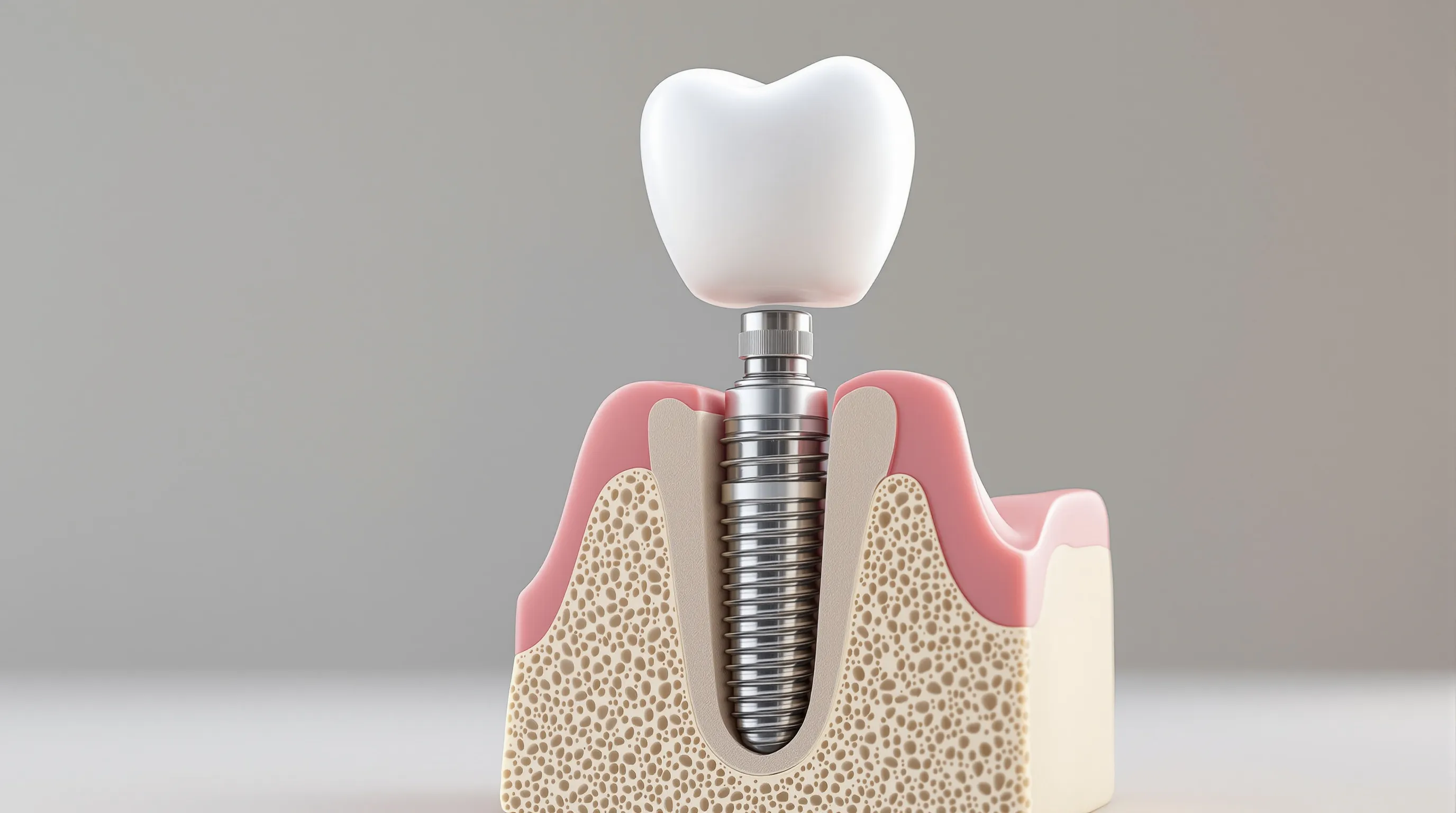
The titanium implant post. The screw that fuses into your jawbone, genuinely can last 25 or more years with proper care. It is an amazing piece of engineering, and that durability is one of the main reasons implants are worth considering. But the "lifetime" claim that gets attached to implants in marketing materials almost always refers to the post alone. The crown on top? That is a different story entirely.
Dental crowns: whether porcelain, zirconia, or porcelain-fused-to-metal, have an average lifespan of 10 to 15 years under normal bite conditions. For patients with a heavy bite, bruxism (teeth grinding), or acidic diet habits, that timeline can be shorter. As one patient community member noted plainly after receiving an implant: "After ten years you should expect that you might need it changed." She was right. The crown will eventually chip, wear, or need replacing, and that replacement runs another $1,000 to $2,500 per tooth. Over a 30-year period, a single implant restoration may involve two or even three crown replacements, none of which were mentioned at the original consultation.
The "lifetime" framing is also complicated by how a patient's age interacts with the implant's realistic durability timeline. A 30-year-old who gets an implant that functions perfectly for 15 years has still had it fail relative to their remaining lifespan. This is not a flaw in the technology. It is a fact of biology that deserves to be stated plainly at the outset. Clinics that describe implants as "lasting a lifetime" to a 35-year-old are setting an expectation that the component lifespan data does not consistently support.
Here is what lifetime maintenance of a dental implant actually looks like:
- Daily cleaning: Implants require meticulous cleaning, not just regular brushing but flossing around the abutment and ideally the use of an interdental brush or water flosser to clear bacteria from below the crown margin, where peri-implantitis typically begins.
- Professional cleanings: Implant patients generally benefit from cleanings every 3 to 4 months initially, then every 6 months once stability is confirmed, using specialized instruments that will not scratch the implant surface.
- Annual X-rays: Monitoring bone levels around the implant is essential for catching early peri-implantitis. Early-stage inflammation is largely reversible; by the time an implant becomes mobile, it is not.
- Nightguard (if applicable): Patients who grind will need a custom nightguard, typically $400 to $700, to protect the crown from premature wear. This is particularly critical for molar implants, which face significantly more chewing force than anterior teeth.
- Crown replacement planning: Building in a budget expectation for one or two crown replacements over the life of the implant is simply realistic financial planning, not pessimism.
| Implant Component | Expected Lifespan | Typical Replacement Cost |
|---|---|---|
| Titanium post (implant body) | 25+ years (often lifetime) | Full re-implantation if fails |
| Abutment (connector) | 10, 20 years | $300, $600 |
| Crown (porcelain or zirconia) | 10, 15 years | $1,000, $2,500 |
| Nightguard (for bruxers) | 3, 5 years | $400, $700 |
I want to emphasize that none of this makes implants a bad choice, quite the opposite. Compared to bridges (which can damage adjacent teeth over time and need replacement every 5 to 10 years) or dentures that shift and require repeated adjustments, implants still win the long-term value argument convincingly when you factor in bone preservation and function. But that argument only holds up when the patient goes in with accurate expectations, not a marketing promise that the post's durability extends to every component above the gumline. In my practice, I walk every implant candidate through a 30-year timeline before we move forward. That conversation takes ten extra minutes. It saves months of confusion later.
What Will Matter Most for Implant Patients in the Next 12 to 24 Months?
I am genuinely optimistic about where the implant conversation is heading over the next couple of years, but it is going to require some momentum from informed patients to get there. Here is what I am watching closely, and what I believe will reshape how clinics approach implant consultations by 2027 and 2028.
Pricing transparency is becoming a competitive differentiator. As more patients arrive at consultations having already researched cost stages, read real-patient forum discussions, and armed themselves with specific questions, clinics that default to headline pricing without itemization are starting to lose consultations to offices that lead with comprehensive, written estimates. I expect this trend to accelerate over the next 12 months. The question "does this quote include the crown?" is becoming as routine in implant consultations as asking whether parking is validated, and that is a very good thing for patients.
The conversation around peri-implantitis is also evolving fast. Updated clinical guidelines from the American Academy of Periodontology have placed implant maintenance center stage in a way that simply was not the emphasis a decade ago. Practices that have integrated implant-specific hygiene protocols: dedicated cleaning appointments, specialized instruments, annual bone-level radiographs, are seeing meaningfully better long-term outcomes than those treating an implant like any other tooth. In my practice, we treat every implant patient on a maintenance schedule that starts at three-month intervals and adjusts based on what we see at each monitoring appointment. That is the standard of care, and it is one that patients increasingly know to ask for.
On the technology side, I am watching the growing body of research on digital planning and guided implant surgery with genuine excitement. When implants are placed using 3D-printed surgical guides informed by cone beam CT scans, the precision of positioning reduces the risk of nerve proximity errors, improves integration outcomes, and lowers complication rates. Practices that have not yet integrated digital guided surgery into their implant workflow are going to face increasing pressure from patients who have done their homework and know this is available.
Finally, and this is the one I feel most personally invested in, I believe we are moving toward greater accountability around implant consultation disclosures. Consumer health platforms, dental review aggregators, and state dental board complaint patterns are beginning to surface a consistent theme: patients feel misled about costs and oversold on longevity claims. The offices that have been cutting consultation corners are going to find that the reputational cost outweighs whatever time they saved.
For patients reading this right now, the practical implication is simple: you have more power today than patients had five years ago. Bring a list of questions. Ask for itemized estimates in writing. Ask your dentist directly what their personal complication and retreatment rate is, not just the published literature average. A dentist who tracks their own outcomes should be able to answer that question. One who deflects to generic statistics is telling you something important about how their practice operates. As you can see, the technology around implants keeps getting better every year, and so does the informed patient's ability to hold their care providers to a higher standard.
Forecast window: 12-24 months
Where Dental Implant Failure Risk Is Headed Next
Three forecasts on how implant failure rates, screening, and long-term complications will play out over the next year or two.
What Patients And Providers Should Expect
Each forecast is scored against real patient reports and clinical claims so you can weigh confidence before deciding.
Over the next 12-24 months, more patients whose implants were placed a decade or more ago will present with peri-implantitis, pushing general dentists to refer more cases to periodontists for removal, bone grafting, and re-placement.
Claims that implants last "a lifetime" will be increasingly challenged as patients compare unsourced success-rate figures (95%, 98.6%) against real multi-year failure and revision cases, pressuring clinics toward more conservative, sourced outcome claims.
Clinics performing higher-cost, full-arch procedures like all-on-4/all-on-6 will more strictly screen for uncontrolled diabetes and smoking before approving candidates, following documented cases where these conditions preceded implant failure.
Weak signals watched: Patient reports already describe peri-implantitis as irreversible once implant mobility develops, requiring infected-tissue removal, bone grafts, antibiotics, and sometimes laser treatment before a larger implant can be re-placed. Patient discussion threads show success-rate figures like 95% or 98.6% circulating with no peer-reviewed or clinical citation, alongside first-hand accounts of failed implants and multi-year revision processes. A $25,000 all-on-4 case failed roughly five years post-surgery in a patient with an HbA1c in the 9s and undiagnosed heart disease, while general osseointegration-failure risk is already tied to smoking and uncontrolled diabetes.
Sources Behind Each Forecast
Every forecast below lists both the reports that support it and the cases that complicate it.
- What happens when a dental implant eventually fails? supports this forecast. [Community / Forum]“Dental implants are typically cited as having a”
- Dental Implant Experience supports this forecast. [Community / Forum]“User "breakup_letter": wife's front-tooth implant process took about”
- Failed Implant: Reason and 2nd Try Success Stories? supports this forecast. [Community / Forum]“95.4%”
- Anyone here who's gotten a dental implant 10 yrs or more ago? How is the clearest counter-signal. [Community / Forum]“User "kyled365" got 6 dental implants in 2007”
- How common is a dental implant failure supports this forecast. [Community / Forum]“I have perusing the dentistry subreddit and one said he did 110 last year and 7 failed and 'that is within the standard range.”
- Dental Implants Are Almost Always Better | by Richard Dawson supports this forecast. [Blog]“Dental implant treatments can be more expensive upfront than other tooth replacement options like dentures or bridges.”
- What happens when a dental implant eventually fails? supports this forecast. [Community / Forum]
- Anyone here who's gotten a dental implant 10 yrs or more ago? How is the clearest counter-signal. [Community / Forum]
- Dental Implant Surgery Explained | Step-by-Step Procedure, Risks supports this forecast. [Video]“A dental implant is a permanent solution to replace a missing tooth, but it's not just a fake tooth sitting on the gums.”
- When Dental Implants Fail: The Truth Behind This All-on-4 Disaster supports this forecast. [Video]“What happens when a $25,000 all-on four surgery goes catastrophically wrong?”
- Is a dental implant necessary? supports this forecast. [Community / Forum]“$4,500,”
- Anyone here who's gotten a dental implant 10 yrs or more ago? How is the clearest counter-signal. [Community / Forum]
What Could Change These Predictions
These forecasts shift if new outcome data, screening standards, or failure patterns emerge.
Before you rely on these numbers
Treat these scores as weights, not verdicts. The top signal (83/100) carries counter-evidence, and the contrarian signal (70/100) marks a real split among sources.
- If regulators or buyers move in the opposite direction, Late-stage implant failure drives specialist referrals would weaken first.
- If the source mix shifts toward stronger contrary evidence, "Lasts a lifetime" marketing faces data pushback could become the more durable forecast.
We have come a long way in dental implant technology: the materials are better, the success rates for properly selected patients are genuinely high, and the quality-of-life improvement is real. But the consultation experience has not always kept pace with the technology. Too many patients still sit across from a dentist who leads with the best-case scenario and buries the rest in a disclosure form handed over with a pen. The three downsides I have outlined here: staged cost creep, the real 5 to 10% complication range, and the lifetime maintenance reality of the crown, are not reasons to say no to implants. They are planning facts.
They help you budget accurately. They prompt you to ask the right follow-up questions. They remind you to reduce your own modifiable risk factors before surgery. They set a maintenance routine that extends the life of your investment. An implant that a patient goes into with eyes open is an implant that succeeds. One built on marketing language and a rushed consultation is the source of the negative reviews and the second-opinion calls I receive regularly. If you want a consultation that skips the soft-pedaling and gives you the complete picture, I would love to see you at Imagine Advanced Dental Arts. That is, truly, what a good consultation should look like, and you deserve nothing less.
Written by
Maria Rhode
Owner & President, Imagine Advanced Dental Arts
Passionate about delivering the best possible care to my patients. From my days in residency to owning a beautiful hi-tech dental office, I never stop learning and advancing myself and now my practice.
Connect on LinkedInSummarize This Article With AI
Open this article in your preferred AI engine for an instant summary.
Frequently Asked Questions About Dental Implant Downsides
What is the most common dental implant complication?
Peri-implantitis, an inflammatory condition around the implant post similar to gum disease, is the most common long-term complication. Studies suggest it affects between 10 and 20% of implants at some point. Early-stage inflammation is largely reversible with prompt treatment; once the implant develops mobility, the damage is irreversible. Regular monitoring appointments and good daily hygiene are the best prevention.
Why is the final cost of a dental implant so different from the initial quote?
Most initial quotes cover only the titanium post placement. Bone grafting, sinus lifts, cone beam CT scans, healing abutments, the final crown, and sedation are typically billed as separate procedures. The all-in cost per tooth generally ranges from $4,500 to over $8,000, and can reach $14,000 or more when significant preparatory work is needed. Always ask for a fully itemized written estimate before committing.
How long does a dental implant crown last?
The porcelain or zirconia crown on top of the implant typically lasts 10 to 15 years under normal conditions. The titanium post itself can last 25 years or longer. Patients with bruxism (teeth grinding) or heavy bite forces may see shorter crown lifespans. Budget realistically for at least one or two crown replacements over the lifetime of your implant, each running $1,000 to $2,500.
Do smokers have higher dental implant failure rates?
Yes, significantly. Smokers face a failure rate roughly 2.5 times higher than non-smokers, according to multiple meta-analyses. Smoking reduces blood flow to oral tissues and suppresses the inflammatory response, which can mask early peri-implantitis symptoms until the implant is already failing. Most implant specialists recommend smoking cessation before placement, not just after, to improve integration success rates.
Are dental implants worth it despite the downsides?
For most patients who are properly selected and prepared, yes. Implants preserve jawbone, function like natural teeth, and have a 30-year total cost of ownership that compares favorably with repeated bridge replacements or ongoing denture adjustments, as long as you enter the process with accurate expectations. The downsides discussed here are planning facts, not dealbreakers. They help you make a better decision, ask the right questions, and reduce your own risk factors before surgery.
What questions should I ask at a dental implant consultation?
Ask for a fully itemized cost estimate that includes all stages, not just the post. Ask whether bone grafting or a sinus lift might be needed in your case. Ask what the practice's own complication and retreatment rate is, not just the industry average. Ask what a realistic maintenance schedule looks like for your specific situation and what the expected lifespan of the crown will be. A dentist who can answer all of these questions clearly and in writing is a dentist worth trusting.