


What Patients Most Want to Know
- Do mini-implants actually hold up after five years, or will something fail?
- What parts wear out first, the implant post or the attachment hardware?
- How often will I need maintenance visits, and what is the real ongoing cost?
Quick Answer
The Short Answer
Most mini-implant overdentures are still holding strong at the five-year mark. The titanium implant posts themselves rarely fail, published data puts five-year implant survival rates in the 88 to 95 percent range for well-selected candidates. What patients actually live with is the periodic replacement of O-rings or nylon retention inserts, which wear through normal snap-in, snap-out use roughly every one to two years. That maintenance rhythm: a quick in-office swap, not implant failure, is the real five-year story that almost nobody tells you upfront.
Quick Answer
Picture the scene: a patient walks into my office after five years of wearing mini-implant dentures, holding her lower denture out toward me with a slightly worried look. The snap had started to feel a little loose over the last few weeks, and she had convinced herself something had gone terribly wrong. What I found when I examined her was perfectly intact mini-implants: healthy bone, solid integration, not a single sign of failure anywhere along the four titanium posts. The culprit? A set of O-rings that had simply done their job faithfully for a couple of years and were now ready for a routine swap. She walked out ten minutes later with a firm, confident snap restored, and the visible relief you only see when someone was bracing for very bad news and received very good news instead. That moment captures exactly the five-year story nobody tells you when you are first considering mini dental implants.
What Are Mini-Implant Overdentures, and Why Do Patients Choose Them?
Before we talk about what happens at year five, let me make sure we are all talking about the same thing.
Mini dental implants: often called MDIs: are narrow-diameter titanium posts, typically between 1.8 and 3.3 millimeters wide, that are placed directly into the jawbone. A ball-shaped head sits above the gumline, and a rubber O-ring or nylon retention insert housed inside the denture snaps over that ball. Snap in, snap out. No denture adhesive required, as of .
Standard dental implants, by comparison, are significantly wider, usually 3.5 to 5 millimeters, and typically require a multi-month healing period before the final restoration is attached. Mini-implants can often support a denture the same day they are placed, which is a significant draw for patients who have been struggling with slipping dentures for years. As Dr. Richard Boatman of Troy Family Dental puts it, mini-implants cost about one-half to one-third what traditional implants do, a difference that matters enormously to patients on fixed budgets.
The reasons patients choose mini-implants over conventional dentures are pretty consistent in my experience: immediate stability that gives people their confidence back right away, a less invasive placement procedure that typically does not require bone grafting, and cost savings that make implant-supported retention genuinely accessible. Did you know the FDA first cleared mini dental implants for long-term use back in 1999? They have been in clinical use for over two decades, and that track record is long enough for us to say with real confidence what the five-year picture looks like.
What most patients do not hear nearly enough about, at least not before they say yes to treatment, is what that five-year picture actually involves. So let me walk you through it, year by year.
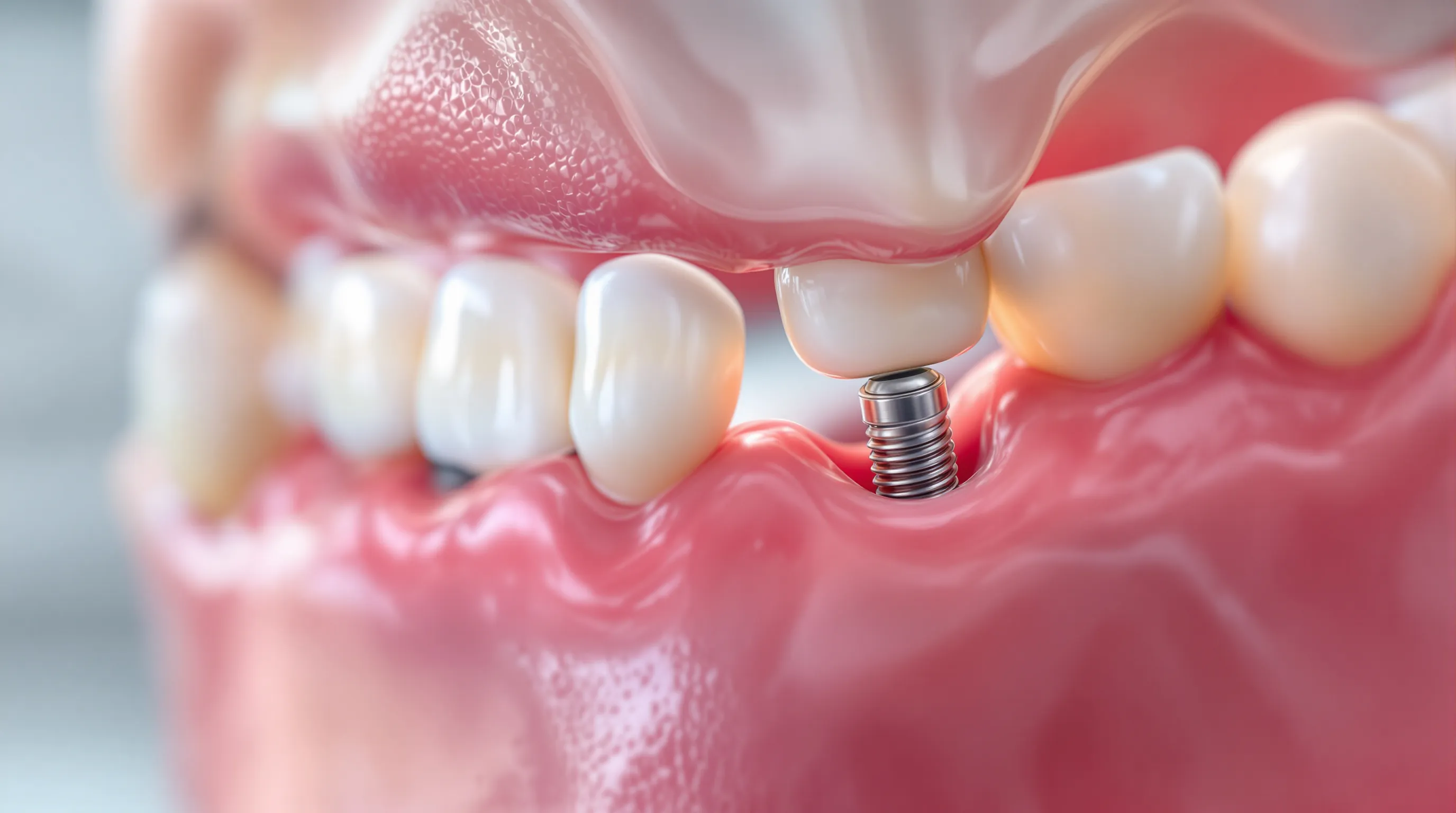
What Does the First Year with Mini-Implant Dentures Actually Look Like?
The first year is about learning to live with a new kind of stability. Patients come in after placement excited and a little overwhelmed.
The snap-in mechanism feels strange at first, inserting and removing the denture smoothly without rocking it side to side takes practice. Most of my patients get the hang of it within a few weeks, but I always tell them: give yourself a full month to feel truly comfortable. The learning curve is real, but it is short.
In the first few months, the gum tissue settles around the implant heads, and the bite often needs fine-tuning. We typically schedule follow-up visits at one week, one month, and three months after placement to make sure everything is integrating well and the fit is still right. Bone integrates around the titanium post, a process called osseointegration, and that integration is generally solid within three to six months for lower jaw placements.
The big question patients always ask in year one is: "Is this normal?" Usually the answer is yes. Some minor tenderness in the first couple of weeks is expected. The denture may need a small adjustment or two as soft tissue matures. The snap sensation can feel slightly different week to week as everything settles into place. These are expected parts of the healing process, not early warning signs.
By the end of year one, most patients are not thinking about their dentures much at all, and that is exactly the goal. They are eating more comfortably than they have in years, laughing without self-consciousness, and starting to take the stability so completely for granted that they almost forget it was not always this way. That comfort continues into year two and beyond, though year two brings its own new development.
By Years Two and Three, the Attachment Question Comes Up
Here is where the conversation shifts. Around the one to two year mark, patients start noticing the snap feels a little less firm.
They push the denture in and feel it does not click quite the way it used to. This is not an emergency. It is physics. The rubber O-rings or nylon retention inserts inside the denture housing have been compressing and releasing dozens of times a day, every day, for a year or more. They wear. That is literally what they are designed to do.
What patients often do not realize until this moment is that the retention inserts are color-coded by retention strength. Blue or red inserts provide lower retention force; pink or orange sit in the middle range; clear or green deliver higher retention. As inserts wear down, retention softens: and the right response is a straightforward swap to fresh inserts, or a step up to a slightly firmer color code if the patient's comfort allows. This is a quick in-office procedure. The worn inserts are removed, fresh ones are snapped in, and retention is restored to day-one firmness.
Patients are almost always surprised at how routine this is. They had braced themselves for something far more involved, and instead it is more like replacing the batteries in a remote control. One commenter on a denture community forum described the experience accurately: her rubber snap attachments needed replacement every one to two years and cost around $80 a set: a small, predictable expense that kept her implant dentures working perfectly.
The timing varies from person to person. It depends on how firmly someone snaps their denture in and out, whether they clench or grind, and the specific fit of the inserts. In my clinical experience, most patients return for their first O-ring replacement somewhere in the twelve to eighteen month window. Some go a little longer; a few need it a bit sooner. The key understanding is this: worn O-rings are a maintenance issue, not a failure.
At Years Four and Five, Maintenance Becomes a Rhythm
By year three or four, something quietly remarkable happens: patients stop being surprised by maintenance and start managing it like any other part of their routine.
They know roughly when they will need to come in for attachment work. They can tell the difference between a worn O-ring and something that genuinely warrants concern. They have settled into a relationship with their denture that feels, rightly, like real ownership.
The maintenance schedule at this stage centers on professional cleaning every six months, standard for any dental care. At those visits, we check the condition of the O-rings or retention inserts, evaluate the implant sites for any bone changes, assess the bite, and examine the denture base for wear or microcracks that may need attention. The denture itself. The acrylic base and teeth, shows normal wear by years four and five and may benefit from a professional polish or, if the fit against the gumline has changed, a reline. As bone contours naturally and gradually change over time, a reline restores the snug fit that keeps everything comfortable.
The five-year checkpoint is also a meaningful moment to take stock. We look at X-rays to confirm bone levels around the implant posts are healthy. We assess whether the existing implants are providing adequate retention or whether additional support might improve long-term outcomes. For patients with good bone health, strong hygiene habits, and consistent visits, the five-year picture is almost always encouraging.
What I find genuinely moving about the five-year mark is what patients share when I ask how things are going. They describe eating foods they had given up years before: apples, steaks, corn on the cob. They talk about laughing openly again, without that involuntary self-consciousness that plagues conventional denture wearers. They mention forgetting, for hours at a stretch, that they are wearing a denture at all. As so many of them say: they only wish they had done this sooner!
What Actually Fails Versus What Simply Wears. These Are Two Very Different Things
One of the most important things I try to help patients understand before they ever say yes to mini-implants is the difference between wear and failure.
They are not the same thing: not even close: and conflating them leads to enormous, unnecessary anxiety.
Wear is expected. O-rings wear. Nylon retention inserts wear. The acrylic denture teeth wear over years of chewing. These are consumable components by design. They can be replaced in a routine office visit without ever disturbing the implants themselves. When a patient calls my office saying their snap feels loose, the first thing I say is: "That is almost certainly the O-ring, and we can fix that quickly." In my experience, that is correct the great majority of the time.
Failure is something genuinely different. True implant failure means the titanium post has lost its integration with the bone, a process called osseointegration loss or peri-implantitis progression. It may feel mobile when tested in the chair, or it may show bone loss on X-ray around the implant body. True failure is considerably less common than patients fear. Based on what I have seen in the literature and in my own practice, the implants themselves. The titanium posts, are typically doing exactly what they should at the five-year mark for patients who take care of their oral health and keep their maintenance appointments.
The distinction matters enormously. A worn O-ring is a Tuesday afternoon appointment and a modest cost. A failed implant is a different conversation. Being honest about both sides of that distinction, and about how to tell the two apart, is something every patient deserves to hear before they commit to treatment. The good news is that the far more common story, by a significant margin, is wear, not failure.
When Do Mini-Implants Actually Fail, and What Does That Look Like?
True mini-implant failure: meaning the titanium post loses its bond with the bone: does happen, and patients deserve a clear picture of what it looks like and why.
The most common presentation is a mini-implant that feels mobile when tested in the dental chair. Sometimes patients sense it themselves as a slight give or movement when they press that area of the denture. X-rays confirm what is happening at the bone level.
The causes of true implant failure cluster into recognizable patterns. Poor bone density or severely resorbed ridges at the site of placement create less surface area for osseointegration: mini-implants, being narrower than standard implants, have less margin for error in thin or compromised bone. This is why thorough pre-treatment evaluation, including 3D cone beam imaging in many cases, matters so much. Uncontrolled systemic health conditions, particularly uncontrolled diabetes and heavy smoking, demonstrably reduce implant survival rates across all implant types. Excessive functional load from severe bruxism can stress narrower mini-implant diameters more than a wider standard implant. And neglected maintenance allows peri-implant inflammation to progress without intervention.
Published data on long-term implant survival rates helps frame the risk honestly. One analysis in the r/dentures community cited approximately a 3 percent failure rate per implant over the first ten years for standard implants: a useful reference point, though mini-implant-specific literature does suggest modestly higher failure rates due to reduced diameter. For well-selected candidates with good bone and healthy systemic status, the five-year survival picture for mini-implants is genuinely strong.
If a single mini-implant does fail, all is not lost. Most lower-arch overdentures are supported by four to six implants. The redundancy matters: the remaining implants can often continue providing adequate retention, and the failed post can be removed and, if bone allows, replaced.
What Does the Real Five-Year Cost of Mini-Implant Dentures Look Like?
When patients ask about cost, they usually hear the upfront number, and that number is genuinely lower than full implant-supported fixed bridges.
In the New Jersey area, placement of four to six mini-implants with a denture typically ranges from roughly $3,000 to $8,000 depending on the number of implants, whether a new denture is fabricated or an existing one is adapted, and the complexity of the case. That upfront figure is the largest single investment by far.
Over five years, the ongoing cost picture looks like this:
- Biannual professional cleanings: Standard dental care cost, sometimes partially covered by dental insurance plans.
- O-ring or retention insert replacement: A set of fresh inserts typically represents a modest in-office charge. With replacements needed roughly every one to two years, this is a small, predictable line item over five years, one commenter on a patient forum noted she paid around $80 per set.
- Denture reline: As bone contours gradually change over years, the denture base may need relining to maintain optimal fit. A reline is typically performed every two to four years and is a straightforward procedure.
- Occasional repairs: Acrylic denture teeth can chip; these can usually be repaired at the office without significant cost.
Compare this to the ongoing cost of conventional denture adhesive: tubes of cream, pads, and powders purchased week after week. Over five years, adhesive spending adds up to several hundred dollars with nothing to show for it but persistent frustration. Many patients who make the comparison realize the five-year total cost of mini-implants is more competitive than it initially appeared, and the quality-of-life difference is not even close.
The Five-Year Patient Experience: Before Mini-Implants vs. After Five Years
Before Mini-Implant Overdentures
- Conventional denture shifting during meals and conversation
- Daily use of adhesive paste, sometimes multiple applications
- Avoiding certain foods entirely (apples, corn, chewy proteins)
- Social anxiety around laughing or speaking openly
- Ongoing bone loss under the denture base year over year
- Frequent relining as the ridge changes shape
After Five Years With Mini-Implant Overdentures
- Snap-retained stability that holds through normal eating
- No adhesive. The denture snaps in and stays
- Broader food choices restored for most patients
- Confidence to laugh, speak, and eat in social settings
- Preserved bone stimulation from the implant posts
- O-ring replacement every 1-2 years keeps the snap feeling new
What Surprises Patients Most When They Reach the Five-Year Mark
I love the five-year conversations. Patients come in having lived with their mini-implant dentures long enough to have real perspective, and what they share is almost always illuminating.
Here are the things that genuinely surprise my patients most at that mark.
The implants feel exactly as secure as they did at year one. Patients brace themselves, over the years, for some gradual fading of that initial stability. What most of them find instead is that the implants themselves feel as solid as ever. The bone has not let them down. It is only the wearing attachment components that require periodic attention: and once patients understand that, the whole experience makes so much more sense.
The cleaning routine has become completely second nature. In the early months, cleaning around the ball abutments can feel awkward and time-consuming. By year five, most patients have found their groove: a specific brush angle, a particular interdental cleaner or water flosser, and it takes no more thought than brushing natural teeth. What felt strange at month two is simply part of the morning routine five years later.
They wish they had done it years sooner. This is, without question, the most common thing I hear at the five-year mark. Patients who spent years fighting loose conventional dentures: embarrassed to eat in public, hesitant to laugh freely, reapplying adhesive multiple times a day, look back and think about all the time they could have had this stability. As practitioners who treat patients through long time horizons, we hear that phrase over and over again.
The O-ring replacement reframed the whole experience. Once patients go through their first insert swap and walk out with their snap fully restored, they understand the treatment in a fundamentally different way. This is not something breaking down. This is a system that can be serviced and maintained for the long haul. That shift in thinking, from anxiety to ownership, changes everything about how they relate to their implants going forward.
"At the five-year mark, what patients tell me most is that the implants themselves have been rock-solid: it is the O-rings that need tending to, and honestly, that replacement visit has become something they don't even think twice about anymore."
- Dr. Maria Rhode, Owner & President, Imagine Advanced Dental Arts
Is a Mini-Implant Denture Still the Right Choice Considering the Five-Year Picture?
With everything I have shared, let me be direct about who the five-year story is genuinely good news for, and who should look more carefully at other options before committing.
Mini-implants are an excellent long-term choice for patients who:
- Have sufficient bone volume to support mini-implant placement without extensive grafting
- Manage systemic health conditions like diabetes well and maintain good overall health
- Are non-smokers, or are committed to stopping before and after treatment
- Commit to biannual professional maintenance appointments. This is non-negotiable
- Understand and accept that attachment O-rings will need periodic replacement
- Value stability, comfort, and quality of life over the lowest possible short-term cost
Patients who should carefully weigh standard implants instead include those who:
- Have very heavy chewing forces or significant bruxism that narrower mini-implant diameters may not absorb as well
- Want a fixed, non-removable restoration, mini-implant overdentures are removable by the patient
- Have both the bone volume and the financial access to support full-diameter standard implants, and want maximum load capacity and the longest possible track record
The right answer depends on your bone, your health, your budget, and your goals. There is no universally correct choice here. What I can tell you from seeing patients through multiple years of follow-up is that for the right candidate, mini-implant dentures deliver a quality-of-life improvement that holds up remarkably well at five years. The key is going in with accurate expectations: solid implants, periodic attachment maintenance, and consistent professional care, rather than the oversimplified picture some marketing materials paint. Unfazed by some O-ring wear every year or two, the great majority of my patients at the five-year mark are genuinely glad they made the choice they did!
How We Support Long-Term Mini-Implant Patients at Imagine Advanced Dental Arts
At Imagine Advanced Dental Arts, we do not just place mini-implants and send patients on their way.
The placement appointment is the beginning of a relationship that we take seriously all the way through the five-year mark and well beyond it.
From the very first consultation, I make sure patients understand the full picture: not just the excitement of same-day stability, but the maintenance cadence they are signing up for. I want patients to walk into their first O-ring replacement visit without surprise, because we talked about it before they ever said yes to treatment. That kind of transparency is something I believe strongly in, and it is the foundation of why our long-term patient relationships work so well.
Our care protocol for mini-implant patients includes scheduled visits at one week, one month, and three months post-placement, followed by biannual maintenance appointments for the life of the implants. At each visit, we assess implant stability, evaluate the condition of retention inserts, review the bite, and take X-rays at appropriate intervals to monitor bone levels around each post. If we see early signs that an O-ring is softening, we replace it before the patient even feels the difference, preventing that loose sensation before it becomes a concern.
We also invest real time in cleaning education at every visit. Mini-implant sites need to stay free of plaque and food debris around the ball abutment heads. We demonstrate the best tools: small-headed brushes, interdental cleaners, water flossers, and check in on technique each time. Clean implants stay integrated. It really is that straightforward.
If you are curious about whether mini-implant dentures are the right solution for you, or if you are already a mini-implant patient wondering what your five-year check-in should look like, reach out to our team. We are here for the long haul.
Infographic: Mini-Implant Denture Five-Year Maintenance Timeline: showing osseointegration phase (months 0-3), first O-ring replacement (months 12-18), ongoing biannual maintenance rhythm, and cumulative cost breakdown over five years.
Questions This Article Answers
Questions to Ask Before Getting Mini-Implant Dentures
- What is the O-ring replacement schedule and cost at this practice?
- How many mini-implants will support my overdenture, and why?
- What happens if one implant fails, does the whole system need to be redone?
- Will I need bone grafting first, and how does that affect the timeline?
- What is the maintenance protocol at five years versus year one?
What Will Matter Most Over the Next One to Two Years for Mini-Implant Patients
If you are currently somewhere in years three through five with your mini-implant overdenture, here is what to pay attention to in the coming 12 to 24 months.
Watch for the snap feeling softer. The first sign that O-rings are ready for replacement is usually a subtle reduction in resistance when you click the denture down. It is rarely a dramatic loosening, it sneaks up gradually. If you notice any rocking during chewing that was not there before, that is your cue to call your dentist. Catching it early means a simple insert swap; ignoring it too long can accelerate wear on the metal housing.
Make sure you have had a bone-level X-ray in the last 12 months. Periapical or cone beam imaging around each implant site is how we catch any bone level changes early. If you are past year four and have not had imaging, ask at your next appointment. Stable bone levels are the strongest long-term predictor of implant longevity.
Consider scheduling a denture reline assessment. Even with perfectly stable implants, the overlying denture base sits against soft tissue that can change. If the fit of the acrylic base feels slightly off, even if the snap itself is still strong, a chairside reline can restore that snug contact and prevent pressure sores.
Revisit your cleaning tools. The same water flosser or interdental brush you started with may not be the best match for year-five anatomy. Plaque patterns shift as soft tissue matures around implant sites. A 10-minute review with your hygienist on current technique is worth doing.
The 12-24 months Outlook, As We See It
What Happens To Mini-Implant Dentures Past Year Five
Three forecasts on how mini-implant denture costs, failures, and upgrade paths are likely to unfold over the next two years.
What The Next Two Years Likely Bring
Use these forecasts to weigh long-term costs and risks before choosing mini-implant dentures.
Over the next 12-24 months, more mini-implant denture patients will report needing implant replacement, deep-cleaning procedures, or realignment costing $1,000-$8,000+ per event, echoing cases where implants lasted 7-10 years before failing.
Rather than remaining a standalone permanent fix, a growing share of mini-implant denture cases will convert to additional implants or fixed full-arch restorations within 3-10 years of placement.
Dental providers will increasingly screen candidates by age and bone density before recommending mini implants, as success rates diverge between patients under 40 (about 95%) and those over 40 (about 85%).
Not Quite Proof Yet Patients already describe implants needing replacement every 7-10 years, with deep-cleaning procedures costing about $1,000 each and total spend exceeding $50,000 over time, alongside a documented 3% per-implant failure rate over 10 years. One patient upgraded from a 3-4 year old snap-on mini-implant denture to a fixed restoration by adding roughly 7 more implants for a total of 10, another had implants extracted after 14 years due to bone loss, and two dentists advised against mini implants in favor of alternatives for a full-arch case. A cited success-rate split of 95% for patients under 40 versus 85% for those over 40, combined with dentists advising against mini implants for higher-risk full-arch cases and providers already running in-office CT scans for every implant candidate, points to tighter pre-treatment screening.
Supporting And Contrary Evidence
Patient reports and dental sources that back or challenge each forecast are listed for reference.
- Backing it: Just backed out of implants - implant wearers experiences? [Community / Forum]“Good or bad choice? Any long time implant users who can share their experiences?”
- What “failure” looks like? is the strongest public backing for this call. [Community / Forum]Original poster (OP, Puzzleheaded_Map1421) says their family is paying ~$20,000 for the denture process and may blame OP if the implant "failed.". “That's a cover screw, not an implant. It screws into your implant. Still weird that it came out”
- Until the success rate is 100% I would never consider implants supports this forecast. [Community / Forum]Original post cites: "patients under the age of 40 have a 95% success rate, while those over the age of 40 have a success rate of about 85%" (source of stat not identified in thread). “Until the success rate is 100% I would never consider implants unless absolutely necessary.”
- Against it: Troy Family Dental: Mini Dental Implants. [Video]Mini dental implants cost about one-half to one-third the cost of traditional implants, per Dr. Richard Boatman. “i've never met a patient in 35 years that likes denture glue it does not taste good”
- From Snap-On to Fixed: A Full-Arch Mini Implant Roundhouse is what puts this forecast on the board. [Video]Patient Lindsay is having her snap-on dentures (placed roughly 3-4 years earlier per Dr. Shackin) upgraded to fixed "roundhouse" restorations. “I like to start the implant by hand. You shouldn't be feeling anything.”
- Until the success rate is 100% I would never consider implants supports this forecast. [Community / Forum]Commenter GundamArashi: had 2 implants placed for lower denture.
- Mini implants versus All on 4 implants points the same way. [Community / Forum]Original poster (OP) is 67 years old and requires a full lower and upper arch dental restoration. “I need a full lower and upper arch and was looking to have mini implants installed because of the lower cost and because of my age (67 yrs).”
- Snap-in isn't what I expected complicates the call. [Community / Forum]OP (Tropicaldaze1950) waited one year after extraction before getting implants placed. “They aren’t what people think and a lot of times not worth the cost.”
- The case rests on Until the success rate is 100% I would never consider implants. [Community / Forum]Commenter lavishvibes: got 3 implants on bottom, stated not eligible for top implants.
- Mini implants versus All on 4 implants is the strongest public backing for this call. [Community / Forum]OP had a stroke 1.5 years prior to posting and wants to avoid invasive surgery.
- The case rests on Troy Family Dental: Mini Dental Implants. [Video]Mini implants take less time to place than traditional implants, which lowers cost - savings passed on to patients.
- Pushing back: What “failure” looks like? [Community / Forum]User TiredInMN states implant failure rate is about 3% per implant over the first 10 years.
What Could Change These Forecasts
Watch for shifts in these real-world conditions that would alter the outlook.
The Fine Print
Our strongest call is 71, while 70 is the one most likely to surprise us.
- If regulators or buyers move in the opposite direction, Recurring maintenance costs replace one-time pricing would weaken first.
- If the source mix shifts toward stronger contrary evidence, Mini implants become a stepping-stone, not an endpoint could become the more durable forecast.
Key Takeaways
Key Takeaways: Mini-Implant Dentures at Five Years
- Implant survival rates remain strong at 88-95% for well-selected patients through five years
- O-ring or nylon insert replacement every one to two years is the dominant maintenance story, not implant failure
- Total five-year cost includes upfront placement plus periodic attachment replacement and biannual professional cleanings
- Bone preservation distinguishes implant-supported overdentures from conventional dentures, which accelerate ridge resorption over time
- Patient satisfaction at year five centers on restored confidence and freedom from adhesive. Most patients say they would choose it again
- Consistent professional maintenance at every six months is the single biggest predictor of long-term implant success
Five years is long enough to know what mini-implant dentures are really made of, and the honest answer is that they hold up remarkably well when patients and their dental teams do their part. The implants anchor into bone and, in the great majority of cases, stay there. The O-rings wear and get replaced. The denture needs the occasional reline. And patients who stay current with their biannual maintenance appointments keep the whole system humming year after year. That is not a complicated story. It is actually a pretty great one. If you are weighing your options for implant-supported dentures and want a practice that will be with you at year one and year ten, I would love to talk with you about what that journey looks like at Imagine Advanced Dental Arts.
Curious how mini-implant dentures hold up long-term? Schedule a consultation at Imagine Advanced Dental Arts and let's talk through your specific situation, bone health, and what a realistic five-year picture looks like for you.
Frequently Asked Questions About Mini-Implant Dentures After Five Years
How long do mini-dental implants actually last?
Studies report survival rates of 88-95% at five years for well-selected candidates. Some patients carry their original implants well past a decade with proper maintenance. The titanium post itself tends to be the most durable part of the system. It is the O-rings and retention inserts that wear and require periodic replacement.
How often do O-rings need to be replaced on mini-implant dentures?
Most patients need their first O-ring or nylon insert replacement around 12-18 months after placement. After that, replacements typically happen every one to two years depending on chewing habits, the specific attachment system, and how diligently the patient maintains their denture. Replacement is a quick, low-cost chairside procedure.
What does O-ring replacement cost?
O-ring or nylon insert replacement typically runs $50-$150 per visit depending on the number of inserts and the practice. Over a five-year period, most patients spend roughly $200-$600 on attachment maintenance total, a modest sum relative to the stability benefit.
What are the signs that mini-implants are failing?
True implant failure involves bone loss around the post and presents as persistent tenderness, visible movement of the implant itself (not just the denture snap), or implant mobility confirmed on X-ray. Loose snap without implant movement is almost always just worn O-rings, a much simpler fix than implant failure.
Can I get mini-implants if I have been told I don't have enough bone?
Mini-implants are often recommended precisely because their narrower diameter (1.8-3.3 mm) requires less bone width than standard implants. Patients who were told they lacked bone for conventional implants are often still good candidates for mini-implants. A CBCT scan determines this definitively.
Do mini-implants prevent bone loss the same way standard implants do?
Yes, any osseointegrated implant provides functional stimulation to the jawbone that slows resorption. While standard implants have a longer evidence base, mini-implants do transmit chewing forces into the bone and prevent the accelerated ridge loss seen under conventional dentures.
How many mini-implants are needed for a lower denture?
Most lower overdentures are supported by four to six mini-implants. Using at least four creates system redundancy: if one implant ever needs removal, the remaining posts can still support the denture while options are assessed. Fewer than four increases vulnerability to total system compromise if one fails.
Sources & Further Reading
References
- Sohrabi K, Mushantat A, Esfandiari S, Feine J. How successful are small-diameter implants? A literature review. Clin Oral Implants Res. 2012;23(5):515-525.
- Bidra AS, Almas K. Mini implants for definitive prosthodontic treatment: a systematic review. J Prosthet Dent. 2013;109(3):156-164.
- Šimonis P, Dufour T, Tenenbaum H. Long-term implant survival and success: a 10-16-year follow-up of non-submerged dental implants. Clin Oral Implants Res. 2010;21(7):772-777.
- Allen PF, McMillan AS. A longitudinal study of quality of life outcomes in older adults requesting implant prostheses and complete removable dentures. Clin Oral Implants Res. 2003;14(2):173-179.
- Misch CE. Contemporary Implant Dentistry. 3rd ed. St. Louis: Mosby Elsevier; 2008.
- Felton DA. Edentulism and comorbid factors. J Prosthodont. 2009;18(2):88-96.
- Vigolo P, Givani A, Majzoub Z, Cordioli G. Clinical evaluation of small-diameter implants in single-tooth and multiple implant partial restorations: a 7-year retrospective study. Int J Oral Maxillofac Implants. 2004;19(5):703-709.
- Jokstad A, Braegger U, Brunski JB, Carr AB, Naert I, Wennerberg A. Quality of dental implants. Int Dent J. 2003;53(S6):409-443.
- Preiskel HW. Overdentures Made Easy. London: Quintessence Publishing; 1996.
- U.S. Food and Drug Administration. 510(k) Summary, IMTEC Mini Dental Implant System. FDA; 1999.
Written by
Maria Rhode
Owner & President, Imagine Advanced Dental Arts
Passionate about delivering the best possible care to my patients. From my days in residency to owning a beautiful hi-tech dental office, I never stop learning and advancing myself and now my practice.
Connect on LinkedInRelated Articles
- The Dental Implant Downsides Clinics Tend to Downplay - Explains a related workflow for readers exploring Mini-Implant Dentures After 5 Years: What Actually Happens.
- Are Dental Implants Worth It After Age 70? - Explains a related workflow for readers exploring Mini-Implant Dentures After 5 Years: What Actually Happens.
- What to Check Before Booking the Nearest Implant Dentist - Explains a related workflow for readers exploring Mini-Implant Dentures After 5 Years: What Actually Happens.
- Why NJ All-on-4 Quotes Range From $12,000 to $30,000 - Explains a related workflow for readers exploring Mini-Implant Dentures After 5 Years: What Actually Happens.
- How to Clean All-on-4 Implants While They Are Still Healing - Explains a related workflow for readers exploring Mini-Implant Dentures After 5 Years: What Actually Happens.
Summarize This Article With AI
Open this article in your preferred AI engine for an instant summary.