


Six Month Smiles is marketed as a faster path to a straighter smile - and for the right patient, it genuinely is. But the marketing leaves out a key detail: the system is not faster because it moves teeth faster. It is faster because it treats fewer teeth in less complex cases. This article explains exactly how Six Month Smiles works, what makes someone a good candidate, what the system cannot fix, and how to approach a consultation with the questions that actually matter. If you have been wondering whether you qualify, this is the place to start.
- Does Six Month Smiles actually move teeth faster than traditional braces? No - it finishes sooner because it limits treatment to the front teeth in mild-to-moderate cases, not because the biology is different.
- Who is a good candidate for Six Month Smiles? Adults with mild-to-moderate front-tooth crowding or spacing, a healthy bite, healthy gums, and primarily cosmetic goals.
- What can Six Month Smiles not fix? Bite problems, back-tooth crowding, jaw discrepancies, and severe rotations all require comprehensive orthodontic treatment instead.
Quick Answer
The Short Answer
Six Month Smiles does not move teeth faster than traditional braces or clear aligners. It finishes in roughly four to nine months because it focuses only on the front "social six" teeth in mild-to-moderate cosmetic cases - treating less, not moving faster. The honest question is not speed but candidacy: if your front teeth are the primary concern, your bite is sound, and your case is mild-to-moderate, Six Month Smiles can genuinely deliver a fast result. If your case involves bite problems, back-tooth crowding, or jaw discrepancies, a different path will serve you far better.
A patient came into my office not long ago with a printout - one of those comparison pages that listed Six Month Smiles alongside traditional braces and Invisalign, with a bright checkmark in the "faster" column. She had already told her mother she would be done with orthodontic treatment by the holidays. I looked at her X-rays and her bite, and I had to have a different conversation than the one she was expecting.
Six Month Smiles is a wonderful system. I have used it with many patients and watched front smiles transform beautifully in under a year. But the name does something that deserves to be unpacked: it makes people think the technology is faster. In reality, Six Month Smiles is not faster than other orthodontic systems - it finishes in about six months because it only treats cases that can be done in about six months. The mechanism is case selection, not accelerated biology. As the brand's own training materials put it: "We are only addressing the patient's cosmetic concerns by simply straightening the teeth that people see when you smile."
That distinction matters enormously when you are the one deciding. So let me walk you through how this system actually works, who genuinely qualifies, what it cannot fix, and how to approach your own consultation with the right questions in hand.
What Actually Makes Six Month Smiles Finish in Six Months?
The name is marketing genius, I will admit that. When I first heard about Six Month Smiles years ago, I felt the same pull my patients feel today - the idea that you could be done with orthodontic treatment in half a year instead of two. But once you understand how the system actually works, the "six months" part becomes much less mysterious, and honestly, more honest than the advertising suggests.
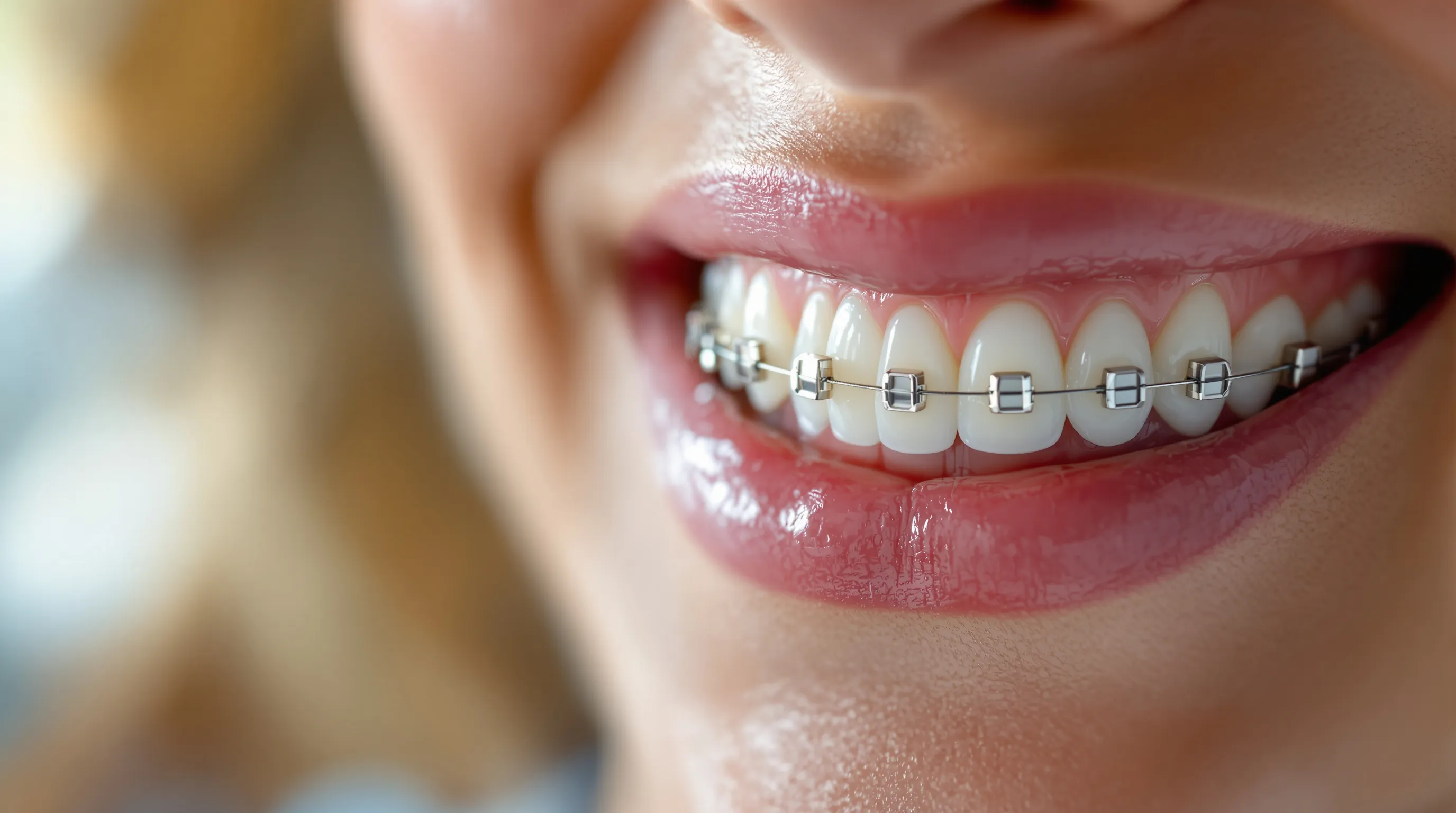
Six Month Smiles uses tooth-colored nickel-titanium wires and clear brackets - the same fundamental mechanics as traditional braces - to move teeth. The forces applied are gentle and similar to conventional orthodontics, and the underlying biology is identical. Teeth move at roughly the same rate regardless of which orthodontic system you use, because the rate of bone remodeling is a biological constant. We cannot make that process dramatically faster without risking root resorption or bone damage. No bracket system in the world has solved that particular problem of human biology, and anyone who tells you otherwise is selling something.
A commenter on a long-running Reddit thread in r/braces put it plainly: "Tooth movement is a biologic process. The only way it gets faster is by setting limited goals (doing less) or by altering the biology. Six Month Smiles falls into the former category." That is exactly right - and it comes from a community where dental professionals weigh in frequently alongside patients.
So what actually makes Six Month Smiles finish in about six months? It is the scope of treatment, not the speed of movement. The system focuses exclusively on the front six to eight teeth - the ones that show when you smile. Orthodontists sometimes call these the "social six." If your crowding or spacing issue lives right there in your front teeth, and it is mild to moderate in severity, a focused correction of just those teeth can often be completed in four to nine months. In many cases, that genuinely works out to about six months. The official Six Month Smiles brand training material says it directly: "We are only addressing the patient's cosmetic concerns by simply straightening the teeth that people see when you smile."
That is not magic. That is scope management. Think of it like a home renovation contractor who can update your kitchen in three months versus the one doing your whole house in eighteen. The faster one is not working faster. She is doing less. And if you only needed the kitchen done, she delivered exactly what you needed efficiently. Six Month Smiles does not move teeth faster. It moves fewer teeth a shorter distance. The speed is a product of selecting cases where that limited scope is exactly what the patient needs.
Who Actually Qualifies as a Six Month Smiles Candidate?
This is the question I wish more patients had answered before they scheduled a consultation with a specific timeline already in their head.
Because in my clinical experience at Imagine Advanced Dental Arts, a meaningful number of the patients who come to me specifically requesting Six Month Smiles turn out not to be ideal candidates for it - and I want to be upfront about that rather than let anyone leave disappointed. In fact, roughly four out of ten patients who request Six Month Smiles in my practice are better served by traditional braces or Invisalign after a proper candidacy evaluation. That is not a failure of the system. That is what honest, thorough screening looks like.
Here is what makes someone a genuinely good candidate:
The problem is primarily cosmetic, not functional. The crowding or spacing issue affects the front teeth - the ones visible when you smile - and your bite functions reasonably well. You can chew comfortably, you do not have significant jaw pain, and your upper and lower teeth meet without dysfunction. The distinction between cosmetic and functional is the single most important question I ask at a consultation.
The severity is mild to moderate. There is no universal clinical definition of "mild," but in practical terms: the teeth are not severely rotated, the gaps are not dramatic, and the overall arch shape is not significantly off from ideal. A trained clinician can assess this during an exam with X-rays. Anterior teeth do move somewhat more readily than back teeth, which is part of why focused front-tooth treatment can be completed in a shorter window - but "front teeth" and "easy" are not synonyms. Severity still determines the timeline.
Your skeletal structure is not the underlying issue. Bite problems that originate in jaw bone development - an underbite where the lower jaw protrudes, or a significant open bite - require treatment approaches that address jaw position itself, not just tooth position. Six Month Smiles works on teeth. It cannot reposition a jaw.
You have healthy gum tissue and supporting bone. Orthodontic movement requires a healthy foundation. Existing gum disease or significant bone loss changes what is safely achievable and how quickly.
You are a finished-growing adult. The system is designed for adults. In patients who are still growing, treatment timing and outcomes are managed quite differently by orthodontic specialists.
When all of those conditions are met, Six Month Smiles can be a genuinely wonderful option - faster in real calendar time than full braces, often more affordable, and capable of real cosmetic transformation. When those conditions are not all present, the system would simply not deliver the result you are imagining. I would rather spend extra time in a consultation being honest than have a patient feel misled three months into treatment.
What Six Month Smiles Is Not Designed to Fix
Let me be direct about this, because a lot of marketing material is not. Six Month Smiles is a focused cosmetic orthodontic system.
It is extraordinary at what it does. But it is not a full orthodontic solution, and it will not replace comprehensive treatment for patients who need it. The evidence for this limitation comes not just from clinical experience but from patients who have learned it the hard way - and shared their experiences publicly in ways that every prospective patient deserves to read.
Significant bite issues. If you have a pronounced deep overbite, an underbite, an open bite, or a crossbite, these affect how your upper and lower teeth meet when you chew and speak. Correcting them involves moving back teeth, coordinating arch forms, and sometimes working with jaw structure over time. Six Month Smiles focuses on the front teeth and is not designed to comprehensively correct back-tooth relationships that govern your bite. One r/Dentistry discussion from a community that includes dental professionals put it directly: if you want bite adjustments, these systems "might not be for you... especially 6 Month Smiles."
Severe crowding. When teeth are significantly rotated or dramatically displaced - not just nudged slightly off their ideal position - the amount of movement required increases substantially, and so does treatment time. One patient who posted about her experience reported wearing Six Month Smiles for a full year rather than the advertised six months, because her case turned out to need more correction than anticipated. Her situation was not unusual; real-world treatment times range from four to nine months for well-selected cases, and push further for anything more complex.
Jaw discrepancies. If your lower jaw sits significantly forward or backward relative to your upper jaw, that is a skeletal issue rooted in how your bones developed. No bracket system on its own resolves that. This is also where missed diagnoses become most consequential. One patient on r/Dentistry underwent Six Month Smiles treatment and was later told by an orthodontist that her pre-existing underbite was "obvious, not hidden" - meaning the problem should have been identified before treatment began, not uncovered by it. She ended up paying for braces twice. Her case is why candidacy screening is not a formality - it is the most important part of the process.
Back-tooth alignment. The molars and premolars you rely on for grinding and chewing are simply not within Six Month Smiles' target zone. If your back teeth are crowded, tilted, or out of position, that portion of your bite will be unchanged after treatment is complete.
I do not say any of this to steer anyone away from Six Month Smiles when it is the right fit. I say it because you deserve a clear picture of what you are deciding.
Before
After
What a Well-Matched Six Month Smiles Case Actually Looks Like
Before
Adult patient, age 34. Two upper central incisors overlapping slightly at the midline. Minor spacing between lower front teeth. Bite is functional - no jaw pain, no crossbite, molars meeting well. Patient declined traditional braces due to time commitment and metal appearance.
After Six Month Smiles (8 months)
Front teeth aligned and spacing closed. Bite unchanged - was not a problem to begin with. Patient wore bonded retainer placed behind front teeth plus removable retainer nightly. No back-tooth movement was needed or attempted. Cosmetic goal fully achieved. This is the ideal Six Month Smiles case: mild front-tooth issue, healthy bite, clear cosmetic goal, adult patient.
Note: Treatment time exceeded the six-month average by two months - a realistic range, not a failure. Providers who guarantee exactly six months for every patient are not accounting for individual tooth movement variation.
What Will Matter Most for Short-Term Orthodontics in the Next 12 - 24 Months?
The short-term orthodontics space is changing quickly, and a few trends are worth watching if you are considering Six Month Smiles or any cosmetic orthodontic option in 2026 and beyond.
Digital treatment planning is improving candidacy precision. When I first began offering Six Month Smiles, candidacy assessment relied almost entirely on clinical exam, X-rays, and experience. Today, digital scanning and 3D treatment simulation allow me to model tooth movement before a single bracket is placed. This means better pre-treatment prediction of whether a case will land within the six-to-nine-month window or push beyond it - and better conversations with patients about realistic expectations before they commit.
AI-assisted orthodontic diagnosis is entering the conversation. Orthodontic research is actively exploring how AI tools can improve case analysis and flag bite discrepancies that might otherwise be missed at a cosmetic-focused consultation. For patients considering short-term systems, this matters because it makes early identification of underlying issues more reliable. The question "is this truly a front-tooth-only case?" will become easier to answer with precision tools, not just clinical intuition.
The direct-to-consumer aligner market has created consumer skepticism that affects all short-term options. The rise and highly visible failures of mail-order aligner companies have made patients rightfully more cautious about any orthodontic option that sounds fast and easy. This is actually good news for the clinical credibility of systems like Six Month Smiles when offered by a provider who screens appropriately - but it means patients are asking harder questions than they were five years ago, and they should be.
Retention innovation is the underappreciated frontier. The biggest risk in short-term orthodontics has always been relapse - teeth drifting back after treatment ends. Fixed lingual retainers combined with clear removable night retainers have become the standard of care. In the next two years, I expect continued innovation in retainer materials and monitoring to make long-term stability after short-course treatment more reliable and easier for patients to maintain.
The core question - scope or speed? - will not change. But the tools for answering it honestly before treatment begins are getting better every year.
~4 in 10
Six Month Smiles inquiries at Imagine Advanced Dental Arts are redirected to a better-fit orthodontic option after candidacy screening - because not every front-tooth complaint is a Six Month Smiles case.
How Six Month Smiles Compares to Traditional Braces and Invisalign
Patients often come to me weighing three options side by side: Six Month Smiles, traditional metal braces, and clear aligners like Invisalign.
I understand the impulse to line them up and compare checkboxes. But the honest truth is they are not interchangeable tools competing for the same job. They are different instruments suited to different situations, and the right answer really does depend on what your mouth is actually doing right now - not what the marketing makes sound most appealing.
Traditional metal braces remain the most powerful and versatile tool in orthodontics. They can correct complex bite problems, severe crowding, significant tooth rotations, and jaw discrepancies when used as part of a comprehensive treatment plan. They are also the most visible - metal brackets and wires are present in every photo and every conversation, and for many adults, that visibility is a genuine quality-of-life consideration. Treatment typically runs eighteen to thirty-six months. The power is real. The commitment is also real.
Six Month Smiles uses the same bracket-and-wire mechanics as traditional braces, but with tooth-colored brackets and discreet nickel-titanium wires. The trade-off for that cosmetic improvement is scope: you are getting braces mechanics focused entirely on the cosmetic front-tooth zone. For the right candidate, this is a significant upgrade over metal braces, accomplished in a fraction of the time. For the wrong candidate, it is a start that cannot finish the job - and as one patient noted after her experience, "I kind of slightly wish I just went straight to the orthodontist" when she realized she would need additional comprehensive treatment after completing Six Month Smiles.
Clear aligners like Invisalign are removable and nearly invisible when worn. They work extremely well for mild-to-moderate crowding and spacing in adults, and newer generations of aligner technology can manage increasingly complex movements. Treatment times range widely - a simple case might finish in six months, while moderate-to-complex cases often run twelve to twenty-four months. The critical variable with aligners is compliance: they must be worn twenty to twenty-two hours per day. Patients who remove them frequently for comfort or social reasons see slower progress and sometimes compromised outcomes. Our practice also offers ClearCorrect, an Invisalign alternative, for patients who want the aligner experience.
Here is how I summarize it: the best orthodontic option is the one that actually corrects your specific problem, not the one with the most appealing number on the label. If Six Month Smiles can give you a beautiful, lasting result, it is also the fastest and often most affordable path to that result. If your case needs more, starting with Six Month Smiles and discovering three months in that it was not enough is not a shortcut. It is the longest possible route.
What to Expect at Your Six Month Smiles Consultation
I want to give you a realistic picture of what happens when you sit down with me to discuss whether Six Month Smiles is right for you - because the consultation itself is where the honest answers actually live, and knowing what to expect helps you get the most out of it.
The first part of the conversation is always about your goals. What bothers you about your smile right now? How long has it bothered you? Have you had orthodontic treatment before - braces as a teenager, a retainer you stopped wearing? Do you notice any symptoms like jaw pain, morning headaches, or difficulty chewing certain foods? These details matter because they tell me whether there is a bite issue underneath the cosmetic concern that might change the treatment path entirely. I have seen cases where a patient came in believing the problem was purely cosmetic, and a quick clinical assessment revealed an underlying bite issue that had simply never been named before.
From there, I do a hands-on clinical evaluation. I am looking at your teeth, your gum health, and how your bite comes together in all dimensions - not just front to back, but side to side and the way your teeth slide past each other during function. X-rays give us the full picture: bone support around each root, root lengths, and the underlying jaw structure. In many cases I will also take photographs and a digital scan. That combination of information lets me tell you honestly what I see, what movement is needed, and whether Six Month Smiles is the right instrument for it. At our Six Month Smiles program page you can learn more about how we approach candidacy at our Lawrenceville practice.
If you are a candidate, I can often provide a realistic timeline at that first appointment. If you are not - and roughly four in ten patients who specifically request Six Month Smiles end up better served by a different approach - I will walk you through exactly what I found and what would actually work for your situation. Nobody leaves my office without understanding what comes next.
Here are the questions I encourage every patient to ask at their consultation:
- Which specific teeth are being moved, and which are staying in place?
- How will my bite change - or will it remain the same after treatment?
- What is the plan if we reach six months and more treatment turns out to be needed?
- What does retention look like after treatment is finished?
That last question is more important than most people realize. All orthodontic treatment - Six Month Smiles, traditional braces, Invisalign - requires dedicated retention afterward. Teeth want to drift back toward their original position over time. Retainers are not optional, and "done" means done with active movement, not done permanently. Understanding that from the start sets realistic expectations and protects your result for years to come. You can also learn more about your overall orthodontic options at our practice before scheduling a consultation.
Key Takeaways
Key Takeaways
- Six Month Smiles does not move teeth faster than other orthodontic systems - it finishes sooner because it treats only the front cosmetic teeth in mild-to-moderate cases.
- Candidacy screening is the most important step - bite problems, back-tooth issues, severe crowding, and jaw discrepancies are outside this system's scope.
- Real-world treatment time ranges from 4 to 9 months, not a guaranteed six - providers who promise an exact date regardless of your case are not being honest about variation.
- Roughly 40% of patients who request Six Month Smiles at Imagine Advanced Dental Arts are better served by traditional braces or clear aligners after proper evaluation.
- Retention is required after all orthodontic treatment - "done" means done with active movement, not permanently finished.
Did you know the question of whether Six Month Smiles moves teeth faster has a surprisingly straightforward clinical answer - and it is right there in the system's own description? "We are only addressing the patient's cosmetic concerns by simply straightening the teeth that people see when you smile." That is not a limitation. That is an honest statement of scope. And for the patient whose problem lives exactly there - front teeth, mild crowding, healthy bite - Six Month Smiles can deliver a beautiful result in genuinely less calendar time than full braces would require.
As you can see, the real question was never about speed. It was always about fit. The patients I have watched walk out of my Lawrenceville office with transformed smiles after Six Month Smiles were not the patients who pushed hardest for the faster option. They were the ones who qualified for it honestly. We have come a long way in how we can offer short-term orthodontics to adults who deserve a clear, direct answer about whether it is right for them - and that clarity starts at the consultation. Learn more about Six Month Smiles at Imagine Advanced Dental Arts and see if your smile is a match.
Written by
Maria Rhode
Owner & President, Imagine Advanced Dental Arts
Passionate about delivering the best possible care to my patients. From my days in residency to owning a beautiful hi-tech dental office, I never stop learning and advancing myself and now my practice.
Connect on LinkedInThe verdict
Is Six Month Smiles Right for You? A Simple Decision Framework
Walk through these questions honestly before your consultation. The pattern of your answers tells you a lot about which path makes sense.
Start Here: Your Goals
- Are you bothered by the appearance of your front teeth specifically (crowding, spacing, slight crookedness)?
- Is your concern primarily cosmetic, or do you also have trouble chewing, jaw pain, or bite symptoms?
If your concern is purely cosmetic and limited to front teeth: Six Month Smiles may be worth evaluating.
If you have bite symptoms or functional issues: a comprehensive orthodontic consultation is the right first step.
Next: Your Bite
- Do your upper and lower teeth meet comfortably when you bite down?
- Do you have a noticeable underbite, overbite, open bite, or crossbite?
- Do you experience jaw clicking, grinding, or morning soreness?
If your bite is sound and symptom-free: you may be a Six Month Smiles candidate.
If any of those bite flags apply: Six Month Smiles is likely not the right starting point.
Finally: Your History
- Have you had orthodontic treatment before that relapsed?
- Has a previous dentist or orthodontist mentioned jaw alignment issues?
- Are you still growing (under 18)?
If you have a history of complex orthodontic issues or are still growing: comprehensive evaluation first.
If you are an adult with no prior complex treatment: Six Month Smiles candidacy is genuinely possible.
The final step is always a clinical exam. This framework narrows the field; only X-rays, a bite evaluation, and a trained clinical eye confirm whether Six Month Smiles can give you the result you are imagining.
Frequently Asked Questions About Six Month Smiles
Does Six Month Smiles actually work?
Yes - for the right candidate. Patients with mild-to-moderate front-tooth crowding or spacing and a healthy bite can achieve meaningful cosmetic improvement, often in four to nine months. The system uses proven fixed-bracket mechanics. The key variable is whether your case falls within its intended scope.
How is Six Month Smiles different from regular braces?
The mechanics are the same - tooth-colored brackets and nickel-titanium wires move teeth the same biological way traditional braces do. The difference is scope: Six Month Smiles focuses only on the front cosmetic teeth, while traditional braces address all teeth including back-tooth bite relationships.
Will Six Month Smiles fix my bite?
No. Six Month Smiles is a cosmetic system focused on the front teeth you see when smiling. It is not designed to correct overbites, underbites, crossbites, or open bites. If bite correction is part of your goal, traditional braces or a comprehensive aligner program is the appropriate choice.
What happens if my treatment takes longer than six months?
Real-world treatment duration ranges from four to nine months depending on the individual case. Some patients finish faster; some take longer. A provider who guarantees exactly six months regardless of your teeth is not being clinically realistic. At my practice, I give patients a range, not a fixed promise.
Do I need a retainer after Six Month Smiles?
Yes - absolutely. All orthodontic treatment requires retention afterward, and Six Month Smiles is no exception. Teeth will drift back toward their original position without a retainer. Most patients wear a bonded retainer behind the front teeth plus a removable retainer at night, indefinitely.
Is Six Month Smiles done by a dentist or an orthodontist?
Six Month Smiles can be performed by trained general dentists as well as orthodontists. What matters most is thorough candidacy screening and clinical competence. I screen carefully before recommending it and refer out any case that exceeds the system's appropriate scope.
How much does Six Month Smiles cost in NJ?
In the Lawrenceville and Princeton, NJ area, Six Month Smiles typically ranges from approximately $3,500 to $5,500, depending on the complexity of the case. This generally makes it less expensive than full traditional braces ($5,000 - $8,000) while delivering a cosmetically focused result for qualified patients.
Summarize This Article With AI
Open this article in your preferred AI engine for an instant summary.