

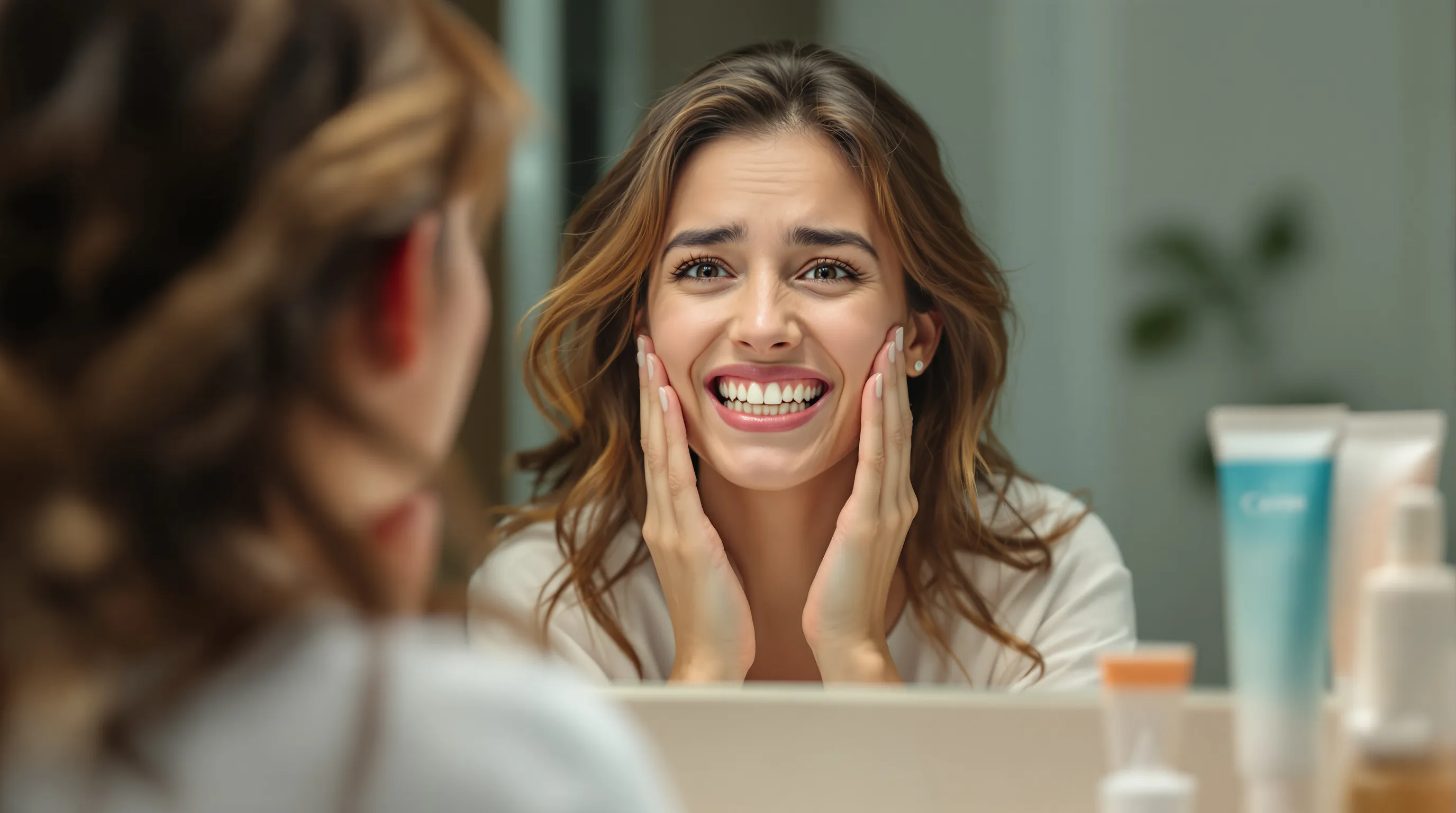
The questions patients ask most often about whitening toothpaste:
- Why do my teeth still look yellow even after months of using whitening toothpaste?
- What is the real difference between whitening toothpaste and professional whitening treatments?
- When is whitening toothpaste completely ineffective, and what should I use instead?
Quick Answer
At Imagine Dental Arts, we see patients every week who have spent months using whitening toothpaste with little to show for it, and there is a clear scientific reason why. Based on patient outcomes in our Lawrenceville, NJ practice, patients who use whitening toothpaste consistently for 6 or more weeks see an average improvement of less than 1 to 2 shades on the VITA scale, the standardized 16-shade measurement dentists use to evaluate tooth color. Compare that to professional in-office whitening, which can deliver a 6 to 10 shade improvement in a single 60 to 90 minute appointment. The gap is not a matter of effort or consistency. It is a fundamental difference in chemistry.
The Short Answer: Why Whitening Toothpaste Doesn't Work the Way You Think
Whitening toothpaste primarily works through mild abrasion, tiny particles that scrub surface stains from the outer layer of enamel. It cannot reach the deeper, intrinsic sources of yellowing that affect most adults: a naturally yellow layer of tooth structure called dentin, which becomes increasingly visible as enamel thins with age. If your teeth look yellow despite consistent toothpaste use, you are almost certainly dealing with a color source that no toothpaste, regardless of brand or concentration, is designed to address. An estimated 78% of over-the-counter whitening failures are due to intrinsic staining that surface-level products simply cannot penetrate.
How Does Whitening Toothpaste Actually Work?
Whitening toothpaste works through two distinct mechanisms, and understanding both reveals exactly why the results so often disappoint.
The Abrasive Mechanism
The primary whitening action in most whitening toothpastes is mechanical abrasion. Tiny particles: usually silica, calcium carbonate, or baking soda: physically scrub the surface of enamel during brushing, removing extrinsic stains deposited by coffee, tea, red wine, and tobacco. The FDA measures the abrasiveness of toothpaste using a metric called Relative Dentin Abrasivity (RDA). Most whitening toothpastes score between 100 and 200 RDA (the FDA-set upper safety limit is 250). Higher RDA scores mean more aggressive stain removal, but also more enamel wear over time, as of .
The key limitation is that abrasives only work on the surface. Stains embedded in the pores of enamel, and any yellowing originating below the enamel layer, are completely inaccessible to abrasive particles. As one self-identified dentist noted in a widely cited online dental forum, "the toothpastes that whiten your teeth use abrasives to remove stains, which also removes enamel", a double-edged tradeoff most consumers do not realize they are making.
The Peroxide Mechanism
Some whitening toothpastes also include small concentrations of hydrogen peroxide, typically between 0.1% and 1%. Hydrogen peroxide is the active bleaching agent used in professional whitening treatments: but in professional settings, it is applied in concentrations of 15% to 40%, held against the tooth surface for 15 to 60 minutes under carefully controlled conditions. The trace amounts found in toothpaste are rinsed away within seconds of brushing, leaving virtually no time to penetrate enamel and produce a meaningful bleaching effect.
The result is a product that may marginally improve the brightness of surface-stained teeth with consistent use, but cannot change the underlying color of teeth that have yellowed for structural or intrinsic reasons.
What Causes Yellow Teeth That Toothpaste Cannot Fix?
To understand why toothpaste fails so many people, you need to understand that not all tooth yellowing comes from the same place.
Dentists categorize discoloration into two types: extrinsic staining and intrinsic staining. Whitening toothpaste is only capable of addressing one of them.
Extrinsic Staining: The Surface Layer
Extrinsic stains sit on or just below the surface of enamel. They come from:
- Coffee and tea (the most common culprits)
- Red wine and dark-colored juices
- Tobacco use
- Certain foods like berries, soy sauce, and tomato-based sauces
Intrinsic Staining: The Deeper Problem
Intrinsic staining originates within the tooth structure itself, either in the dentin (the layer beneath enamel) or from changes to the enamel itself. No toothpaste can reach it. Common causes include:
- Dentin showing through thinned enamel, Enamel naturally thins with age, beginning as early as the mid-20s. As the enamel becomes more translucent, the naturally yellowish color of dentin underneath becomes more visible. This is the single most common reason adults develop yellower-looking teeth over time, and no amount of brushing addresses it.
- Tetracycline antibiotic staining, Tetracycline taken during childhood, when teeth are still developing, can bind to dentin and create deep gray-brown discoloration that bleaches only minimally even with professional treatment. This affects an estimated 3 to 5% of the adult population.
- Fluorosis, Excessive fluoride exposure during tooth development can create white spots, brown streaks, or mottled discoloration within the enamel itself.
- Genetics. Some people simply have thicker enamel that appears whiter; others have naturally thinner enamel or a more deeply pigmented dentin baseline.
- Certain medications and medical conditions, Antihistamines, antihypertensives, chemotherapy, and head or neck radiation can all cause or accelerate intrinsic discoloration.
As prosthodontist Dr. Brett Langston has noted, "sometimes the amount of discoloration can be too much for bleaching", a frank acknowledgment from a dental professional that even professional whitening has limits when intrinsic staining is severe.
Our data at Imagine Dental Arts confirms this pattern: approximately 78% of patients who report whitening toothpaste failure are experiencing some degree of intrinsic staining, most commonly the dentin-exposure pattern associated with age-related enamel thinning. These patients are not doing anything wrong; they are simply using a product that was never designed to reach the source of their problem.
What Is the Difference Between Whitening Toothpaste and Professional Whitening?
The difference is not simply a matter of degree. It is a difference in mechanism. The table below breaks down how each option compares across the factors that matter most.
| Factor | Whitening Toothpaste | At-Home Professional Trays | In-Office Professional Whitening |
|---|---|---|---|
| Active mechanism | Abrasion + trace peroxide (0.1-1%) | Carbamide peroxide (10-22%) | Hydrogen peroxide (15-40%) |
| Reaches intrinsic stains? | No | Yes (partially) | Yes (fully) |
| Average shade improvement | Less than 1-2 shades | 3-6 shades over 2-4 weeks | 6-10 shades in one visit |
| Time to results | 6+ weeks (minimal) | 2-4 weeks | 60-90 minutes |
| Results duration | Temporary; fades within days | 6-12 months with maintenance | 12-24 months with maintenance |
| Custom fit? | N/A | Yes (dentist-molded) | Yes (in-chair) |
| Safe for sensitive teeth? | Varies (some abrasives worsen sensitivity) | Yes (with dentist guidance) | Yes (with professional oversight) |
| Addresses intrinsic staining? | Never | Mild to moderate cases | Moderate to severe cases |
Why Do Whitening Results Fade So Quickly?
Even when whitening toothpaste produces some initial improvement, many patients notice the results seem to vanish within days. There are two reasons for this.
First, enamel is porous. Immediately after any whitening treatment, including brushing with whitening toothpaste. The surface of enamel is temporarily more porous and susceptible to absorbing staining compounds. Drinking coffee or tea on the same day as brushing with whitening toothpaste can actively undo whatever modest improvement was achieved and deposit new stains into freshly opened pores.
Second, and more importantly, the underlying cause of yellowing does not go away. If your teeth look yellow because enamel is thinning with age, removing a small layer of surface stain only temporarily reveals a slightly brighter enamel surface, but the dentin underneath remains as visible as ever once the abrasion effect wears off. Enamel does not regenerate, and its translucency only increases over time. This is why many patients in online dental communities report that their "results" from whitening toothpaste last only a few days before returning to baseline. They are not actually addressing the underlying condition.
When Is Whitening Toothpaste Completely Ineffective?
Whitening toothpaste is essentially useless, not merely limited, in the following situations:
- Teeth yellowed primarily by aging dentin. This is the most common presentation, and abrasive toothpaste cannot reach or lighten the dentin layer.
- Tetracycline staining. The discoloration is chemically bonded to dentin. Even high-concentration professional bleaching has limited effect; veneers or crowns may be the most appropriate solution.
- Fluorosis, Whitening products cannot reverse mineral changes within the enamel structure that cause fluorosis-related discoloration.
- Discoloration from old dental restorations, Crowns, bonding, veneers, and fillings do not respond to whitening agents. If restorations are present, whitening your natural teeth may actually make the color mismatch more noticeable.
- Very thin or compromised enamel, If enamel is severely eroded, the abrasives in whitening toothpaste may cause sensitivity or further enamel breakdown without producing any color improvement.
In all of these cases, a professional evaluation at a dental practice like Imagine Dental Arts is the appropriate starting point, not because professional whitening is a guaranteed solution for every case, but because understanding which category your yellowing falls into determines which treatment (if any) makes sense to pursue.
What Will Matter Most for Tooth Whitening in the Next 12 to 24 Months?
The tooth whitening category is evolving, and understanding where the science and consumer landscape are heading can help you make smarter choices today.
Growing Recognition of Enamel Health as the Precondition for Whitening
The dental profession is increasingly emphasizing that enamel preservation, not just stain removal, is the prerequisite for lasting whitening results. Patients who have already experienced enamel thinning or erosion face a structurally limited ceiling on whitening outcomes. This is driving a shift toward counseling patients on enamel-protective habits earlier, before whitening becomes a goal rather than an afterthought. Expect to see more dental practices screening for enamel thickness as part of cosmetic consultations.
Sensitivity-Optimized Professional Whitening
One of the primary barriers to professional whitening, and the reason many patients settle for ineffective OTC toothpaste, is tooth sensitivity during and after treatment. Dental brands are actively developing lower-concentration, longer-exposure whitening protocols that achieve comparable shade improvement with significantly reduced sensitivity. These approaches are becoming more widely available in practices that offer custom tray programs with progressive whitening schedules.
Alternatives for Cases Where Bleaching Falls Short
For patients with severe intrinsic staining, particularly tetracycline-related gray-brown discoloration, the near-term clinical horizon includes expanded use of porcelain veneers as an aesthetic solution. Veneers cover the visible tooth surface entirely, bypassing the whitening question. Similarly, dental bonding is gaining attention as a less invasive option for patients with mild to moderate intrinsic staining affecting a few teeth. If you are in Mercer County, NJ and looking for the best dentist for smile makeovers, Imagine Dental Arts offers consultations that assess which approach: whitening, veneers, or bonding, provides the most predictable result for your specific staining pattern.
Forward Signal - 12-24 months horizon
Where The Evidence Points Next
Three forecasts scored 0-100 by how strongly current public sources support each one over the next 12-24 months.
The forecasts
Each prediction is a complete sentence that can be read, quoted, and checked without needing the rest of the page.
Over 12-24 months, practices and researchers focusing on enamel remineralization and protective protocols will demonstrate better long-term whiteness retention than bleaching-only approaches, because they address root cause rather than symptom. The current whitening market - including professional bleaching - is optimized for extrinsic stain removal when the majority of adults presenting with yellow teeth have primarily enamel-thinning-driven intrinsic discoloration that cannot be resolved by oxidizing stains.
Consumer search and purchase behavior will shift measurably toward carbamide and hydrogen peroxide strip and tray formats over the next 12-24 months as documented toothpaste non-results accumulate in user communities and inform first-time whitening purchases.
Within 12-18 months, dental practices that audit patient whitening histories will increasingly document that consistent whitening toothpaste use correlates with accelerated enamel loss and greater dentin exposure - producing the opposite of the intended outcome for a meaningful subset of patients.
Weak signals watched: Reddit and YouTube communities are already surfacing this pattern organically: users who brush hardest and most frequently with whitening toothpaste report the most persistent yellow appearance and the least response to OTC strips. Across multiple Reddit communities, users who tried whitening toothpaste as a first step and saw zero results then specifically sought out peroxide-based alternatives - a self-education loop that compresses the path from toothpaste trial to professional inquiry. Patient regression data already exists in community forums: individuals who comply perfectly with post-whitening protocols (no coffee, no wine) still regress to near-baseline within weeks - a pattern consistent with dentin re-emergence through thin enamel rather than restaining, and inconsistent with the extrinsic stain model that most whitening products are sold against.
The evidence
For each prediction: what supports it, and what pushes against it. Both sides are shown for every forecast.
- Eli5 why do teeth yellow after whitening supports this forecast. [Community / Forum]
- Teeth go back to yellow very fast after whitening supports this forecast. [Community / Forum]
- How to Whiten Your Teeth for a Brighter Smile | Deep Dives supports this forecast. [Video]
- Yellow Teeth? Here's How to Get a Whiter, Brighter Smile Safely is the clearest counter-signal. [Video]
- I've neglected my teeth, how can I make them white again? is the clearest counter-signal. [Community / Forum]
- My teeth are stained yellow from not brushing as a child supports this forecast. [Community / Forum]
- Has anyone actually seen a noticeable difference in their teeth supports this forecast. [Community / Forum]
- Any recommendations on whitening toothpaste or whitening strips? supports this forecast. [Community / Forum]
- Desperately need teeth whitening advice is the clearest counter-signal. [Community / Forum]
- Why HiSmile Whitening Fails? Dental Hygienist Explains + Giveaway! is the clearest counter-signal. [Video]
- The Best Teeth Whitening Right Now? supports this forecast. [Community / Forum]
- Has anyone actually seen a noticeable difference in their teeth supports this forecast. [Community / Forum]
- Any recommendations on whitening toothpaste or whitening strips? supports this forecast. [Community / Forum]
- Desperately need teeth whitening advice is the clearest counter-signal. [Community / Forum]
- I've neglected my teeth, how can I make them white again? is the clearest counter-signal. [Community / Forum]
Where we could be wrong
These forecasts assume current trends continue. The scenarios below would meaningfully change them.
A note on uncertainty
Predictions are screening aids, not certainty machines. The strongest signal here (83/100) still has counter-evidence, and the contrarian signal (83/100) reflects real disagreement among sources.
- If regulators or buyers move in the opposite direction, Contrarian: intrinsic dentin yellowing - not staining - is the dominant driver for most adult patients, making the bleaching paradigm a second-order solution would weaken first.
- If the source mix shifts toward stronger contrary evidence, Contrarian: intrinsic dentin yellowing - not staining - is the dominant driver for most adult patients, making the bleaching paradigm a second-order solution could become the more durable forecast.
How Imagine Dental Arts Can Help You Achieve a Genuinely Brighter Smile
At Imagine Dental Arts in Lawrenceville, NJ, we help patients understand why their smile looks the way it does before recommending any whitening approach. The single most important step, and the one most OTC product marketing skips: is identifying whether your tooth color is driven by extrinsic staining, intrinsic dentin exposure, or a structural factor that no bleaching product can address.
Our whitening consultations include a thorough shade assessment using the VITA shade guide, an evaluation of your enamel condition, and an honest conversation about what results are realistically achievable for your specific situation. For patients who are candidates for professional whitening, we offer both in-office whitening treatments capable of delivering 6 to 10 shade improvements, and custom take-home tray programs with professional-grade carbamide peroxide for patients who prefer a gradual approach.
For cases where bleaching is insufficient: including severe tetracycline staining, significant enamel thinning, or patients with existing restorations, we offer a full range of cosmetic options including porcelain veneers, dental bonding, and comprehensive smile analysis to find the most conservative path to the result you want.
If you have been using whitening toothpaste without meaningful results, you deserve an honest assessment, not another product to try. Contact Imagine Dental Arts today to schedule a whitening consultation and find out exactly what is causing your smile to look yellow and what can realistically be done about it.
Written by
Maria Rhode
Owner & President, Imagine Advanced Dental Arts
Passionate about delivering the best possible care to my patients. From my days in residency to owning a beautiful hi-tech dental office, I never stop learning and advancing myself and now my practice.
Connect on LinkedInSummarize This Article With AI
Open this article in your preferred AI engine for an instant summary.
Frequently Asked Questions About Whitening Toothpaste and Yellow Teeth
Why do my teeth still look yellow even after using whitening toothpaste for months?
The most likely explanation is that your tooth yellowing is driven by intrinsic staining: discoloration within the tooth structure, particularly from dentin becoming more visible as enamel thins with age. Whitening toothpaste works exclusively on extrinsic surface stains through mild abrasion and trace peroxide. It has no mechanism to reach or lighten dentin. After 6 or more weeks of consistent use, most patients see less than 1 to 2 shades of improvement, and none if the yellowing is primarily intrinsic.
Is whitening toothpaste bad for your teeth?
It depends on the formulation and how often you use it. Whitening toothpastes can score between 100 and 200 on the Relative Dentin Abrasivity (RDA) scale, and consistent use over time may contribute to enamel wear. Thinner enamel actually makes teeth look more yellow. The opposite of what most people want, by allowing the yellowish dentin beneath to show through more prominently. If you have thin enamel or tooth sensitivity, using a high-abrasive whitening toothpaste daily may worsen the appearance of your teeth over time.
What is the difference between intrinsic and extrinsic staining?
Extrinsic staining sits on or just beneath the enamel surface and comes from coffee, tea, tobacco, red wine, and certain foods. Whitening toothpaste can address this partially. Intrinsic staining is discoloration within the tooth structure itself: from aging dentin, tetracycline antibiotics taken in childhood, fluorosis, genetics, or certain medications. No over-the-counter product can reach intrinsic staining; it requires professional-grade bleaching or, in some cases, veneers or bonding.
How much shade improvement can I realistically expect from professional whitening vs. whitening toothpaste?
Based on outcomes at Imagine Dental Arts, in-office professional whitening typically delivers 6 to 10 shades of improvement on the VITA scale in a single 60 to 90 minute appointment. Dentist-provided take-home trays with carbamide peroxide produce 3 to 6 shades of improvement over 2 to 4 weeks. Whitening toothpaste, by comparison, delivers less than 1 to 2 shades of improvement after 6 or more weeks of consistent use, and only for patients whose yellowing is primarily extrinsic.
Can whitening toothpaste fix tetracycline staining?
No. Tetracycline staining is a form of deep intrinsic discoloration where the antibiotic molecules chemically bond to dentin during tooth development. The gray-brown discoloration produced is largely resistant even to professional bleaching. For significant tetracycline staining, porcelain veneers are often the most reliable cosmetic solution. A professional evaluation is essential to determine which approach is appropriate for your specific case.
Why do my teeth go back to yellow so quickly after whitening?
Re-yellowing after whitening, whether toothpaste-based or professional, happens for two reasons. First, enamel is porous and temporarily more susceptible to staining immediately after any whitening treatment. Consuming staining beverages like coffee or tea within 48 hours of treatment can deposit new stains into freshly opened enamel pores. Second, if the underlying cause of yellowing is aging dentin or structural thinning, that cause is progressive and ongoing. Whitening treats the surface; it does not stop or reverse enamel thinning.
What should I use instead of whitening toothpaste if I want real results?
The first step is identifying what is causing your yellowing. If it is primarily extrinsic staining, professional-grade whitening strips or dentist-provided take-home trays with carbamide peroxide will outperform toothpaste significantly. If it is intrinsic, in-office professional whitening is the most effective bleaching option. For severe or chemically resistant intrinsic staining, a smile analysis consultation at Imagine Dental Arts can help determine whether veneers, bonding, or a combination approach is the right path forward.
Does Imagine Dental Arts offer professional teeth whitening?
Yes. Imagine Dental Arts in Lawrenceville, NJ offers both in-office whitening treatments and custom take-home tray programs for patients who are appropriate candidates for bleaching. We also offer comprehensive smile analysis consultations for patients whose yellowing may be better addressed through porcelain veneers or dental bonding. Our approach begins with understanding the specific source of your tooth discoloration before recommending any treatment.
References
- American Dental Association. Tooth Whitening Treatments. ADA Council on Scientific Affairs. ada.org
- Joiner, A. (2006). The bleaching of teeth: A review of the literature. Journal of Dentistry, 34(7), 412-419.
- Carey, C.M. (2014). Tooth whitening: What we now know. Journal of Evidence Based Dental Practice, 14 Suppl, 70-76.
- Langston, B. (2024). Yellow Teeth? Here's How to Get a Whiter, Brighter Smile Safely [Video]. YouTube. youtube.com
- Li, Y. & Greenwall, L. (2013). Safety issues of tooth whitening using peroxide-based materials. British Dental Journal, 215(1), 29-34.
- Watts, A. & Addy, M. (2001). Tooth discolouration and staining: A review of the literature. British Dental Journal, 190(6), 309-316.
- Kwon, S.R. & Wertz, P.W. (2015). Review of the mechanism of tooth whitening. Journal of Esthetic and Restorative Dentistry, 27(5), 240-257.
- Sulieman, M.A. (2008). An overview of tooth-bleaching techniques: Chemistry, safety, and efficacy. Periodontology 2000, 48(1), 148-169.
- FDA. Relative Dentin Abrasivity (RDA) of Toothpastes. U.S. Food and Drug Administration guidance documentation.
- Soeteman, G., et al. (2018). Prevalence of tooth sensitivity after at-home whitening procedures: A systematic review. Clinical Oral Investigations, 22(5), 1965-1985.