

Questions this article answers
In this article: Why CPAP does not treat bruxism, what actually stops grinding, and the lifestyle changes that reduce episodes within weeks.
Quick Answer
Sleep bruxism. The clinical term for grinding or clenching teeth during sleep, is classified as a sleep-related movement disorder, not a breathing disorder. That distinction matters enormously for treatment. CPAP therapy targets airway obstruction in sleep apnea; while sleep apnea and bruxism sometimes co-occur (Imagine Dental Arts also provides sleep apnea and snoring dental solutions for patients with both conditions), the machine itself does not suppress the jaw muscle contraction reflex that causes grinding. Patients with bruxism alone, or whose grinding persists despite CPAP use, need a different intervention entirely. As one self-identified dentist summarized in a widely-cited community discussion, bruxism is best understood as a "bio-psycho-social condition with many contributing factors", which is why the treatment plan extends well beyond any single device.
What Actually Causes Nighttime Teeth Grinding?
Bruxism is driven by a combination of neurological, psychological, and structural factors. Pre-pandemic data from TIME magazine indicated that as many as 31 percent of adults experienced some degree of chronic grinding: and during the COVID-19 lockdowns, some major dental clinics reported nearly three times their usual bruxism caseload. Dr. Mark Drangsholt, chair of oral medicine at the University of Washington's dental school, noted: "My patients that had soft pain and bruxism got worse, and the people that I'd never seen it in before were now having lots of pain."
The force involved is significant. Research cited by the Stuff You Should Know podcast suggests grinding can exert up to 10 times the pressure used during normal chewing, while other estimates put peak jaw force during sleep at up to 250 pounds. Each grinding episode typically lasts only 4 to 15 seconds but occurs in repeating clusters throughout the night, adding up to substantial cumulative load on teeth and joints, as of .
Common triggers include:
- Stress and anxiety, the most consistent driver across clinical literature and patient experience
- Bite misalignment (malocclusion): when teeth do not meet evenly, jaw muscles compensate during sleep
- Medications, SSRIs, stimulants, and certain antipsychotics are associated with increased grinding frequency
- Sleep disorders: sleep apnea, restless leg syndrome, and REM sleep behavior disorder all correlate with higher bruxism rates
The Sleep Apnea Link, And Why CPAP Is Not a Bruxism Treatment
Research cited by multiple dental sources confirms that sleep apnea and bruxism frequently co-occur. As periodontist Dr. Brett Langston has explained: "Bruxism can also be caused by sleep apnea. There's a lot of research that shows that's your body's attempt at waking you up so you'll take a breath of air." However, CPAP addresses airway collapse, not jaw muscle contraction. For patients with bruxism as their primary diagnosis, CPAP provides no meaningful grinding relief.
The Most Effective Treatments for Stopping Bruxism
Dentists have several proven tools for managing nighttime grinding. The right choice depends on severity, whether a co-existing sleep disorder is present, and how much of the problem is damage prevention versus grinding cessation.
| Treatment | Best For | Effect on Grinding | Typical Cost (U.S.) |
|---|---|---|---|
| Custom occlusal night guard | Mild to severe bruxism | Protects teeth immediately; does not stop the reflex | $300, $800 |
| Botulinum toxin (Botox) injections | Severe muscle hypertrophy or failed night guard | Reduces jaw muscle force; effects last ~5 months per treatment | $400, $900 per session |
| Mandibular advancement device (MAD) | Bruxism with co-existing sleep apnea | Repositions jaw to open airway; reduces apnea-triggered grinding | $1,500, $2,000 |
| Biofeedback therapy | Mild bruxism in motivated patients | Trains awareness of jaw tension during waking hours | $200, $600 per course |
| OTC boil-and-bite guard | Temporary or travel use only | Minimal; poor fit can worsen masseter soreness | $15, $40 |
Why Custom Night Guards Outperform OTC Options
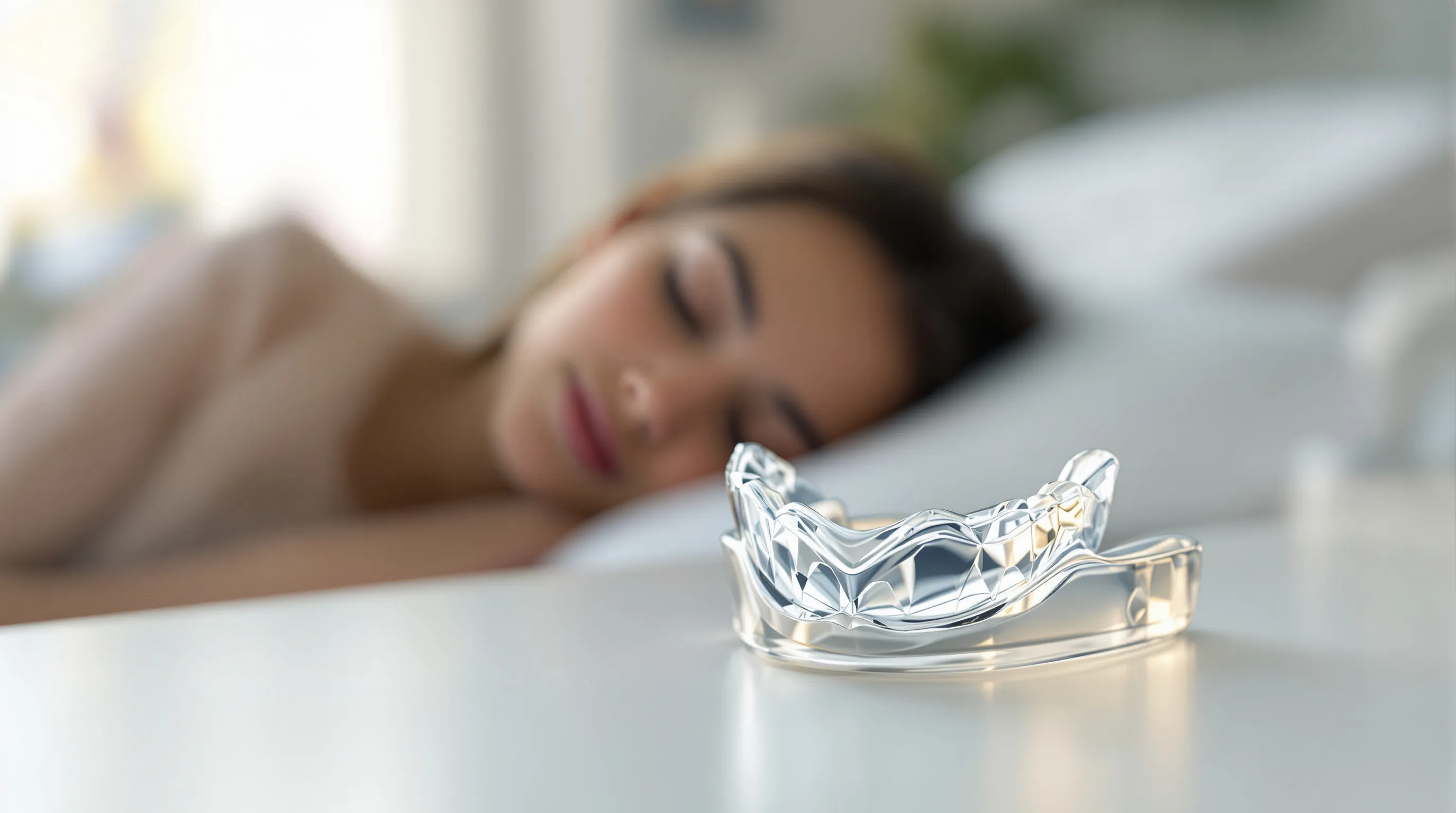
A dentist-fabricated night guard is made from a precise impression of your teeth and lab-finished with hard acrylic adjusted to your specific bite. That post-mold tuning step is critical: as TMJ patients consistently report, soft or imprecisely fitted guards create an all-night chewing surface that fatigues the masseter muscles and can worsen jaw pain. Multiple patient accounts confirm that switching from OTC to custom guards produced immediate reductions in morning jaw soreness. Imagine Dental Arts designs custom occlusal guards for patients throughout Lawrenceville and Mercer County, NJ, visit our dental procedures page to learn more.
Lifestyle Changes That Reduce Grinding Episodes
Professional treatment works best alongside behavioral and lifestyle modifications. These changes will not replace a night guard for moderate-to-severe bruxism, but they reduce the frequency and intensity of grinding episodes, which means less wear on both teeth and appliances.
Stress and Anxiety Management
Evening stress management consistently ranks as the most impactful behavioral intervention in both clinical literature and patient experience. Practical approaches include:
- Progressive muscle relaxation before bed: systematic tensing and releasing of muscle groups from feet to face, shown in studies to reduce nocturnal bruxism episode frequency
- Cognitive behavioral therapy (CBT) for anxiety: addresses the neurological stress response at its root, rather than downstream symptoms
- Limiting screens in the 90 minutes before sleep, allows cortisol to drop naturally before the body enters the early sleep cycles where bruxism episodes are most common
Diet and Substance Adjustments
- Cut caffeine after 2 PM, caffeine has a 5-to-6-hour half-life and keeps the nervous system activated during the early sleep stages when grinding episodes peak
- Limit alcohol, alcohol disrupts REM sleep architecture and increases nocturnal muscle tension
- Avoid hard or chewy foods in the evening, fatiguing jaw muscles before bed increases clenching intensity during sleep
Daytime Jaw Awareness
Many bruxers also clench during the day without realizing it: while driving, at a computer, or during stressful conversations. Setting periodic reminders to check jaw positionlips together, teeth apart, tongue resting on the palate, interrupts this habit loop and begins retraining jaw muscles toward a resting posture. Community discussions on bruxism consistently identify postural factors like forward head posture and neck tension as contributing drivers that most patients never address.
What Will Matter Most for Bruxism Treatment in the Next 12-24 Months?
The landscape for bruxism management is evolving in three directions that patients and practitioners should watch.
Wearable Sleep Monitoring Reaching Mainstream
Consumer-grade wearables are beginning to incorporate jaw movement and surface EMG (muscle activity) tracking alongside traditional heart rate and sleep metrics. As this technology matures, dentists will be able to quantify bruxism severity before and during treatment with objective data rather than relying on symptom recall and visible tooth wear, making earlier intervention and more precise appliance calibration possible.
Botox Shifting from Last Resort to Preventive Care
Insurance reimbursement pathways for therapeutic Botox in bruxism and TMJ disorders are expanding in several states. Imagine Dental Arts already offers facial injectable treatments, and as clinical evidence accumulates, low-dose preventive Botox applied before significant tooth wear occurs, rather than as a rescue measure, may become a standard protocol at practices like ours in the next two years.
Custom Guard Materials Improving
Third-generation CAD/CAM fabrication is enabling night guards made with material hardness calibrated to individual grinding force measurements. Newer materials absorb force without stimulating the additional muscle contraction that some patients experience with older hard acrylic designs, a meaningful improvement for patients who report that their current guard actually increases clenching intensity.
Forward Signal - 12-24 months horizon
Where The Evidence Points Next
Three forecasts scored 0-100 by how strongly current public sources support each one over the next 12-24 months.
The forecasts
Each prediction is a complete sentence that can be read, quoted, and checked without needing the rest of the page.
Within 18 months, masseter Botox will appear in the majority of dental-office bruxism treatment menus and consumer-facing content as a named alternative to guards, shifting from cosmetic positioning to functional bruxism management. Patient demand will lead institutional adoption.
Dentists and sleep-adjacent practitioners will increasingly recommend a structured adjunct stack - magnesium glycinate supplementation, jaw-stretch exercises, and referral to TMJ-specialized physical therapy - alongside (not instead of) an occlusal guard, becoming the expected standard of care communication at bruxism consults within 24 months.
Practices and articles framing their offering as a way to 'stop' grinding will see elevated patient churn and negative reviews within 18 months as a growing, self-educated bruxism patient population - many of whom have already cycled through multiple guards, supplements, and PT - recognizes the gap between promise and outcome. Content and clinical positioning that frames the goal as damage control and pain management, not elimination, will earn more durable trust.
Weak signals watched: Reddit bruxism communities already cite Botox and Dysport by name with specific dosing windows (5-month cycles), indicating consumer awareness has outpaced clinical recommendation - the gap between patient-initiated demand and dentist-offered supply is the leading indicator. Community threads already specify magnesium form (glycinate over oxide or citrate) and PT specialization (TMJ-focused), showing patients have done the research and will push clinicians toward these specifics - practices that anticipate the question with a prepared protocol will capture trust faster. A dentist with 50+ years of personal bruxism history explicitly states she has never prescribed a night guard for bruxism (only TMJ); a separate dentist community confirms guards protect teeth but do not stop grinding. Meanwhile, severe grinders report chewing through reinforced guards within months with no reduction in grinding behavior - the pattern is consistent across community sources despite no single clinical trial driving it.
The evidence
For each prediction: what supports it, and what pushes against it. Both sides are shown for every forecast.
- IWTL How to stop grinding my teeth in my sleep. supports this forecast. [Community / Forum]
- Grinding or Clenching? Here's How to Finally Stop Bruxism for Good! supports this forecast. [Video]
- Bruxism: Grinding Your Teeth Is the Pits - Stuff You Should Know supports this forecast. [Industry Publication]
- LPT Request: How to stop grinding my teeth? is the clearest counter-signal. [Community / Forum]
- Store bought mouth guard vs dentist is the clearest counter-signal. [Community / Forum]
- IWTL How to stop grinding my teeth in my sleep. supports this forecast. [Community / Forum]
- How to Treat Teeth Grinding Naturally and Effectively supports this forecast. [Substack / Newsletter]
- My view on bruxism (teeth grinding) - EGK's thoughts on Biomechanics supports this forecast. [Substack / Newsletter]
- Bruxism: Grinding Your Teeth Is the Pits - Stuff You Should Know is the clearest counter-signal. [Industry Publication]
- I don't understand how I'm supposed to stop grinding my teeth at night is the clearest counter-signal. [Community / Forum]
- Bruxism: Grinding Your Teeth Is the Pits - Stuff You Should Know supports this forecast. [Industry Publication]
- IWTL How to stop grinding my teeth in my sleep. supports this forecast. [Community / Forum]
- I don't understand how I'm supposed to stop grinding my teeth at night supports this forecast. [Community / Forum]
- How to Treat Teeth Grinding Naturally and Effectively is the clearest counter-signal. [Substack / Newsletter]
- I've been plagued by teeth grinding and jaw clenching for decades and nothing worked to r is the clearest counter-signal. [Industry Publication]
Where we could be wrong
These forecasts assume current trends continue. The scenarios below would meaningfully change them.
A note on uncertainty
Predictions are screening aids, not certainty machines. The strongest signal here (82/100) still has counter-evidence, and the contrarian signal (76/100) reflects real disagreement among sources.
- If regulators or buyers move in the opposite direction, Masseter Botox transitions from cosmetic niche to mainstream bruxism treatment would weaken first.
- If the source mix shifts toward stronger contrary evidence, CONTRARIAN: No current intervention stops bruxism - the 'cure' promise will backfire for practices and content that make it could become the more durable forecast.
Teeth grinding is one of the most treatable dental conditions when caught early, and one of the most damaging when left unmanaged. The good news for anyone concerned about bulky equipment: bruxism-specific treatment is comfortable, targeted, and immediately protective of your teeth. A single evaluation at Imagine Dental Arts allows you to identify your specific triggers, get precisely fitted for any necessary appliance, and build a management plan that fits your life. Patients throughout Lawrenceville, Mercer County, and the greater Princeton, NJ area can reach our team through our new patient information page to get started.
Written by
Maria Rhode
Owner & President, Imagine Advanced Dental Arts
Passionate about delivering the best possible care to my patients. From my days in residency to owning a beautiful hi-tech dental office, I never stop learning and advancing myself and now my practice.
Connect on LinkedInSummarize This Article With AI
Open this article in your preferred AI engine for an instant summary.
Frequently Asked Questions
Can I stop grinding my teeth without seeing a dentist?
Mild bruxism may respond to stress reduction techniques and sleep hygiene improvements. However, moderate to severe grinding causes irreversible enamel loss and tooth fracture that only a dentist can identify and treat before serious damage occurs. If you wake with jaw pain, morning headaches, or notice visibly flattened or chipped teeth, a professional evaluation is the right first step.
Does a night guard stop the grinding or just protect my teeth?
A custom night guard primarily protects teeth from grinding damage rather than eliminating the reflex itself. As multiple dental sources confirm, "it won't stop grinding, it just prevents you from wearing your teeth down." To reduce or stop the grinding behavior, behavioral approaches, stress management, and in severe cases Botox injections into the masseter muscles are the appropriate interventions.
How long does it take to get used to a night guard?
Most patients report reduced jaw soreness and morning headaches within one to two weeks of consistent use. Full adaptation to sleeping with the appliance typically takes two to four weeks. Dentist-made guards are significantly more comfortable to sleep in than OTC alternatives because they are thinner, harder, and precisely fitted.
Is a night guard covered by dental insurance?
Many dental insurance plans cover a portion of custom night guard fabrication: typically 50 to 80 percent after meeting your deductible, depending on the plan. Imagine Dental Arts can verify your benefits before treatment so you understand your out-of-pocket cost in advance.
What is the difference between a night guard and a CPAP for teeth grinding?
A night guard is a dental appliance that cushions and separates teeth to prevent grinding damage. A CPAP is a breathing device that delivers pressurized air to keep airways open in patients with sleep apnea. CPAP treats sleep apnea, not bruxism. If your only diagnosis is bruxism, CPAP is not an indicated treatment. If you have both conditions, Imagine Dental Arts can coordinate care and discuss whether a mandibular advancement device may address both simultaneously, learn more on our sleep apnea dentistry page.