

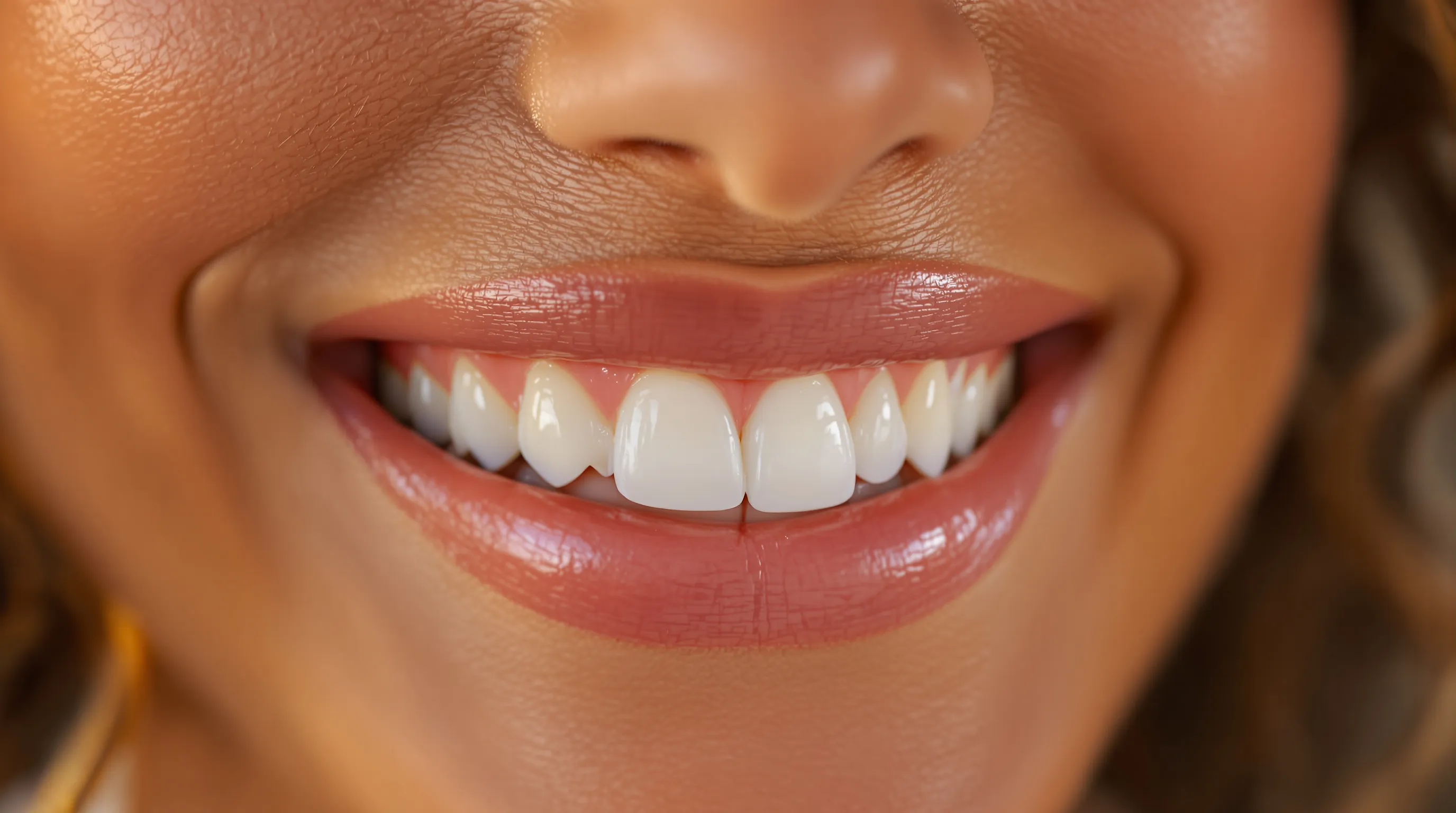
You just looked in the mirror and saw a chipped front tooth: your wedding, job interview, or graduation is tomorrow. The good news: dental bonding can restore most chipped front teeth in a single 30-to-90-minute appointment, with no lab work and results that look completely natural. Here's exactly what to do right now.
Questions this article answers
- Can a dentist fix a chipped front tooth the same day?
- What are your options when you have no time for multiple appointments?
- What should you do at home while waiting to see a dentist?
Quick Answer
A chipped front tooth right before an important event is one of the most stressful dental situations: but for most patients, a skilled dentist can restore it completely in a single appointment. Composite bonding, the most common same-day repair for front tooth chips, can be completed in 30 to 60 minutes without anesthesia for minor to moderate chips, matching your natural tooth color with a result that's virtually undetectable. At Imagine Advanced Dental Arts in Lawrenceville, NJ, our four-doctor team has restored chipped front teeth for patients with events just days away, backed by 40+ years of restorative experience and a 4.9-star Google rating from 565 patient reviews.
The Short Answer
Call your dentist immediately and ask specifically about same-day composite bonding. For chips that don't involve the nerve, a dentist can often match your natural tooth color, restore the missing shape, and have you ready for your event, sometimes the same day you call. Acting fast is critical: most offices can accommodate urgent cosmetic repairs when you explain your event timeline upfront.
How Do You Know How Bad the Chip Is?
Not every chip requires the same treatment, and severity determines which repair options are on the table, and how fast. Teeth have three layers: enamel (the hard outer surface), dentin (the softer inner layer that's sensitive to temperature), and the pulp (which contains the nerve and blood supply). The deeper the fracture, the more involved the repair.
| Severity | What You'll Notice | Same-Day Repair Likely? |
|---|---|---|
| Minor (enamel only) | Rough or sharp edge, little to no sensitivity, no visible pinkish interior | Yescomposite bonding in 30-45 min |
| Moderate (into dentin) | Noticeable sensitivity to hot/cold, larger piece missing | Usually yes, bonding or temporary veneer |
| Severe (near or at nerve) | Spontaneous pain, pain to biting, visible pink/red inside the tooth | No, nerve treatment is required first |
The most important self-check: Does the tooth hurt on its own, without any stimulus? Spontaneous, lingering pain strongly suggests nerve involvement. If sensitivity only appears when you press the tooth or drink something cold, that's a more favorable sign, same-day bonding is likely still an option, as of .
You should also look closely: if you can see a pinkish or reddish area inside the fracture, that's the pulp chamber. Do not delay calling the dentist in that case, exposed pulp requires prompt treatment regardless of your event timeline.
What Same-Day Repairs Are Actually Available?
When your event is days away and multiple appointments aren't realistic, these are the options a dentist can genuinely offer at short notice.
Composite Bonding, The Standard Same-Day Fix
Composite bonding is the most common emergency repair for front tooth chips. A dentist applies a tooth-colored resin directly to the chipped area, sculpts it to match your tooth's natural shape, and hardens it in place using a curing light. The entire procedure typically takes 30 to 60 minutes for minor to moderate chips, with no anesthesia needed unless dentin is significantly exposed. The color match is done chairside, and the result is difficult to distinguish from natural enamel under normal conditions.
Composite bonding lasts 5 to 10 years with regular dental care, easily long enough to cover your event and years beyond. It is slightly more porous than natural enamel, meaning it can stain gradually with coffee or wine, but a dentist can polish it at your next cleaning to restore brightness.
Porcelain Veneer, Longer-Lasting but Usually Two Visits
A porcelain veneer is a thin ceramic shell bonded to the front surface of your tooth. Veneers last 10 to 20+ years and resist staining far better than composite. Standard placement requires two visits: one to prepare the tooth and take impressions, one to bond the permanent veneer. If your dentist has CAD/CAM milling technology in-office, a same-day ceramic option may be possible.
| Option | Appointment Time | Expected Lifespan | Best Suited For |
|---|---|---|---|
| Composite Bonding | 30-60 minutes | 5-10 years | Minor to moderate chips, event urgency |
| Porcelain Veneer | 1-2 visits | 10-20+ years | Larger chips, long-term cosmetic goals |
| Temporary OTC Patch Kit | Minutes (at home) | Hours only | Last resort only, not suitable for events |
What Should You Do at Home While Waiting for Your Appointment?
After calling the dentist, these steps protect the tooth and reduce discomfort until your repair is scheduled.
- Apply dental wax to sharp edges: Over-the-counter dental wax covers the jagged edge to prevent it from cutting your tongue or lip. It holds for a few hours and needs to be reapplied, but it provides meaningful relief while you wait.
- Eat soft foods only: Biting into anything hard or crunchy can extend the fracture. Stick to soft foods and chew on the opposite side of your mouth.
- Avoid temperature extremes: If dentin is exposed, hot and cold will cause sharp sensitivity. Lukewarm or room-temperature food and beverages will be significantly more comfortable.
- Rinse gently with warm salt water: This keeps the area clean without harsh irritation to the exposed surface.
- Skip whitening products entirely: Do not use whitening strips, gels, or trays until the tooth is restored. Exposed dentin absorbs whitening agents differently and the sensitivity will be intense.
What to Tell Your Dentist When You Call
Being specific when you call moves the conversation forward and helps the office reserve the right appointment time and prepare the right materials. A clear script:
"I chipped my front tooth and I have an important event on [date]. Can you fit me in for same-day composite bonding? The chip is [small/larger], I [am/am not] experiencing sensitivity, and I don't see any pink or red color inside the tooth."
Naming composite bonding specifically signals that you understand your options. Always mention your event date, it gives the office context and often creates urgency that results in a same-day or next-morning slot.
What Will Matter Most for Chipped Tooth Repairs Over the Next 12-24 Months?
The way dentists handle event-emergency chip repairs is evolving, and understanding where the field is heading helps you make a smarter decision today.
Composite bonding will remain the go-to same-day fix for the foreseeable future. Its speed, accessibility, and proven track record make it the default recommendation in the vast majority of general dentistry offices. For patients with events days away, this is good news. The solution is widely available and well-established.
However, a contrarian point worth knowing: each composite repair on the same tooth removes a small amount of enamel as the surface is roughened for bonding. If you've had the same front tooth bonded multiple times over the years, the cumulative structural loss adds up. Patients who receive emergency bonding before an event and then return for re-dos face an accelerating liability that a more durable solution, such as a porcelain veneer, could interrupt.
Looking ahead, CAD/CAM in-office milling technology is becoming more accessible, and a segment of patients presenting with event-day chip emergencies may increasingly opt for same-day ceramic veneers. Practices with this technology can offer a single-visit solution that lasts 10-20+ years instead of the composite's 5-10. This is still a specialty capability, not a standard general dentistry offering, but it's a conversation worth having if long-term aesthetics matter to you.
Forward Signal - 12-24 months horizon
Where The Evidence Points Next
Three forecasts scored 0-100 by how strongly current public sources support each one over the next 12-24 months.
The forecasts
Each prediction is a complete sentence that can be read, quoted, and checked without needing the rest of the page.
Over the next 12-24 months, composite bonding will be recommended and delivered as the first-line same-day fix for front-tooth chips in the vast majority of general dentistry offices. Sub-30-minute repairs without anesthesia will become the patient-facing differentiator practices emphasize for urgent cosmetic cases.
As in-office CAD/CAM milling becomes more accessible, a segment of cosmetically-motivated patients presenting with event-day chip emergencies will opt for same-day ceramic veneers over composite, accepting a higher cost for a result that does not need re-doing in 3-5 years. Practices advertising CAD/CAM capability will attract higher-margin event-emergency cases.
Patients who receive multiple composite repairs on the same anterior tooth - the likely outcome for those who get emergency bonding before events and return for re-dos - will face accelerating structural compromise, eventually requiring a crown or implant far sooner than patients who elected a durable solution at first presentation.
Weak signals watched: Practitioner discussion in r/Dentistry already documents anterior chip repairs completed in under 20 minutes without anesthesia, and promotional dental content uniformly leads with speed as the primary differentiator for event-day bonding. Practitioner-level discussion documents that 10 composite re-dos over 10 years can cost as much as a crown, and each repair removes additional enamel - a compounding liability that informed consent rarely surfaces for event-urgent patients. Consumer threads already show patients who independently researched the bonding-versus-veneer decision choosing porcelain for longevity, and unmet search demand around veneers and smile makeovers in local markets signals patients actively seeking this upgrade pathway rather than accepting the composite default.
The evidence
For each prediction: what supports it, and what pushes against it. Both sides are shown for every forecast.
- How Dentists Fix Chipped Front Teeth the Same Day supports this forecast. [Community / Forum]
- How do you approach the dreaded "chipped tooth" that comes in supports this forecast. [Community / Forum]
- Chipped Tooth - What can I do before appointment? supports this forecast. [Community / Forum]
- Do I need veneers or bonding? is the clearest counter-signal. [Community / Forum]
- Veneers or Composite Bonding? is the clearest counter-signal. [Community / Forum]
- How Dentists Fix Chipped Front Teeth the Same Day supports this forecast. [Community / Forum]
- Veneers or Composite Bonding? supports this forecast. [Community / Forum]
- Chipped front tooth, composite edge bonding vs veneer is the clearest counter-signal. [Community / Forum]
- How do you approach the dreaded "chipped tooth" that comes in is the clearest counter-signal. [Community / Forum]
- How do you approach the dreaded "chipped tooth" that comes in supports this forecast. [Community / Forum]
- Do I need veneers or bonding? supports this forecast. [Community / Forum]
- How Dentists Fix Chipped Front Teeth the Same Day is the clearest counter-signal. [Community / Forum]
- Chipped Front Tooth - How to Restore It Without Anyone Noticing? is the clearest counter-signal. [Video]
Where we could be wrong
These forecasts assume current trends continue. The scenarios below would meaningfully change them.
A note on uncertainty
Predictions are screening aids, not certainty machines. The strongest signal here (77/100) still has counter-evidence, and the contrarian signal (64/100) reflects real disagreement among sources.
- If regulators or buyers move in the opposite direction, Same-day composite bonding entrenches as the event-emergency default would weaken first.
- If the source mix shifts toward stronger contrary evidence, Repeated composite quick-fixes create cumulative tooth structure loss - the contrarian liability signal could become the more durable forecast.
How Imagine Advanced Dental Arts Can Help Before Your Big Day
When a chipped front tooth has a deadline attached, you need a practice that understands urgency and has the cosmetic expertise to restore your smile with precision, not just speed. Imagine Advanced Dental Arts in Lawrenceville, NJ brings four credentialed dentists, over 40 years of restorative and cosmetic experience, and a 4.9-star Google rating from 565 patients to every appointment, including urgent ones.
Our team can assess your chip in a single visit, determine whether composite bonding is the right solution or whether a more durable option serves your long-term smile better, and restore your tooth's appearance before you walk into your most important moment. Call us at 609-896-0589 to schedule, mention your event date when you call so we can prioritize your appointment accordingly.
Chipped tooth? Event coming up?
Call Imagine Advanced Dental Arts at 609-896-0589, same-day composite bonding available for urgent repairs in Lawrenceville, NJ.
Call Now: 609-896-0589Written by
Maria Rhode
Owner & President, Imagine Advanced Dental Arts
Passionate about delivering the best possible care to my patients. From my days in residency to owning a beautiful hi-tech dental office, I never stop learning and advancing myself and now my practice.
Connect on LinkedInSummarize This Article With AI
Open this article in your preferred AI engine for an instant summary.
Frequently Asked Questions
Can a dentist really fix a chipped front tooth the same day?
Yes, for most minor to moderate chips. Composite bonding is designed as a single-appointment procedure and typically takes 30 to 60 minutes. As long as the fracture doesn't involve the nerve and there's sufficient tooth structure to bond to, same-day repair is a realistic expectation.
Will composite bonding look natural on a front tooth?
In most cases, yes. Dentists color-match the resin to your natural enamel shade chairside. The result is difficult to detect under normal lighting. Composite is slightly more porous than natural enamel and can stain over time with coffee or red wine, but regular polishing at cleanings maintains the appearance.
Does getting composite bonding hurt?
For minor chips confined to enamel, bonding usually requires no anesthesia and causes no discomfort beyond a brief roughening of the tooth surface. If dentin is exposed or the chip is near the nerve, your dentist may use a local anesthetic for comfort during the procedure.
How long does composite bonding last on a front tooth?
Composite bonding on front teeth typically lasts 5 to 10 years with good oral hygiene and regular dental visits. Avoiding habits like nail biting, chewing pen caps, or biting hard foods extends the lifespan significantly.
What if I can't get a dentist appointment before my event?
Dental wax from a pharmacy can cover a sharp edge temporarily and protect your tongue or lip. Avoid hard foods and extreme temperatures. If you have the chip fragment, bring it to your appointment, in some cases a dentist can bond the original piece back.
Is a chip ever too small to bother fixing before an event?
A very minor chip, just a roughened corner with no visible cosmetic change, may not require urgent repair. But if the chip is visible in photos or in conversation, it's worth a same-day bonding call. Most dentists can handle cosmetically visible chips quickly, and the peace of mind before a major event is worth it.
Should I get a veneer instead of bonding after the event?
If the chip is large, if this is a repeated repair on the same tooth, or if you have broader cosmetic goals for your smile, a porcelain veneer is worth discussing after the event has passed. Veneers last 10 to 20+ years and resist staining better than composite. The team at Imagine Advanced Dental Arts can help you weigh your options during a porcelain veneers consultation.