

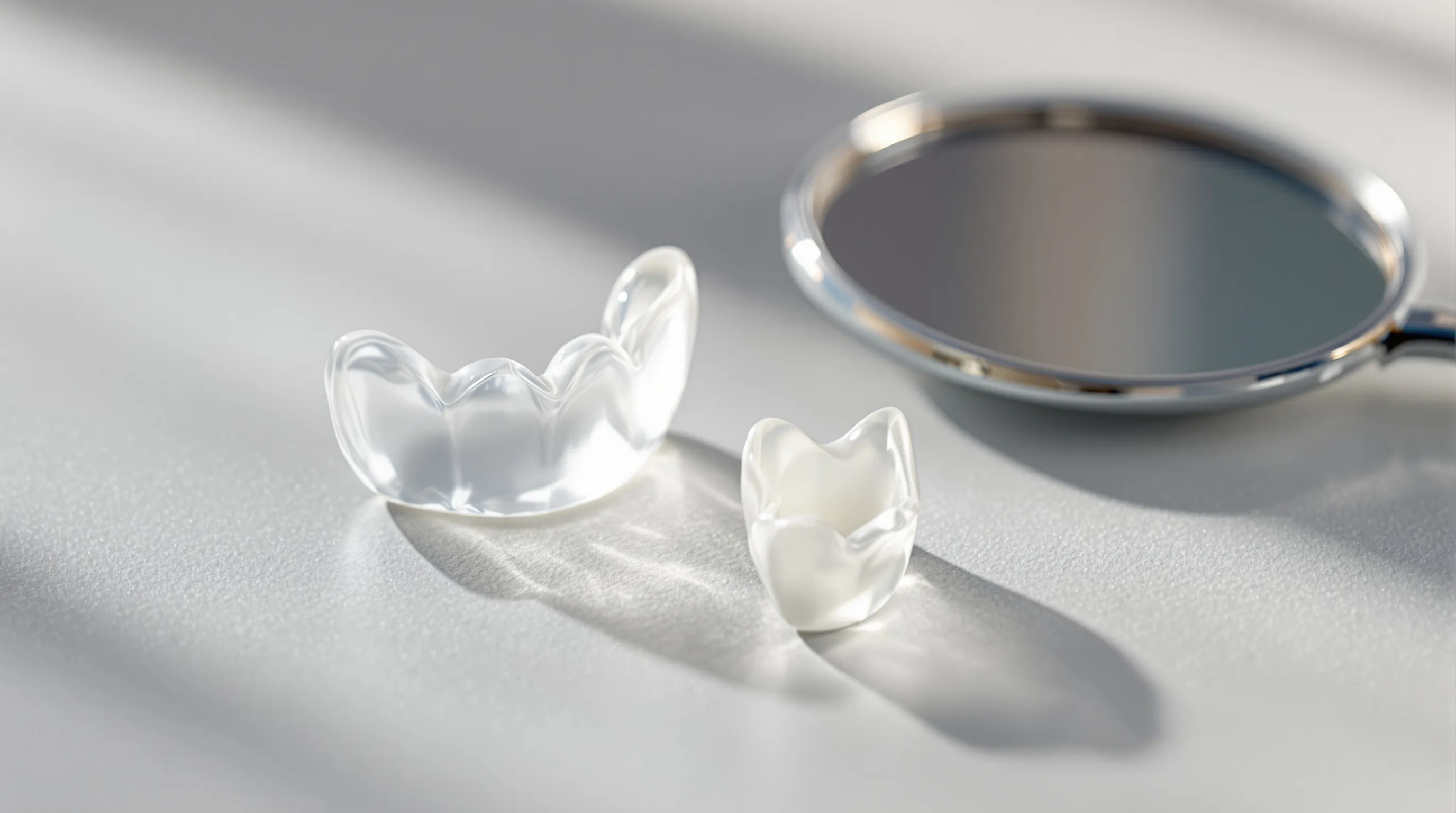
Zirconia veneers last longer on paper, but the gap is narrow and the right pick depends on your bite. Porcelain still wins the front-tooth looks most patients want.
A veneer refers to a thin ceramic shell bonded to the front of a tooth. E.max porcelain chases light. Zirconium oxide chases strength. The short answer is the light-versus-strength test: choose for your tooth, not the spec sheet.
Questions this article answers
Quick Answer
The short answer: Zirconia veneers, made of zirconium oxide, usually outlast porcelain E.max veneers by roughly five years because they resist fracture better. But porcelain looks more natural on front teeth, and real-world longevity depends more on your bite and bonding than on the material itself.
Quick Answer
Here is something patients are always surprised to hear: a veneer is a thin ceramic shell bonded to the front of a tooth, which means your new smile is only as durable as the material and the bite behind it. Zirconia and E.max porcelain are the two front-runners, and they could not be more different in temperament. One is built like armor. One glows like enamel! So which one truly lasts longer? That honest answer is the heart of this guide.
What is the real difference between zirconia and porcelain veneers?
Porcelain veneers chase a natural look, while zirconia veneers chase raw strength. Both are thin ceramic shells bonded to your front teeth, yet each one gives something up to win its specialty.
An analysis of 18 sources shows the same split again and again. Porcelain veneers are usually made from E.max lithium disilicate, a glass-ceramic prized for the way it bends light like real enamel. E.max is about 4x stronger than natural enamel and needs only 0.3 to 0.7 millimeters of enamel reshaped, roughly the thickness of a contact lens. Zirconia is zirconium oxide, a denser ceramic built for force rather than sparkle. I call this the light-versus-strength test: porcelain wins on light, zirconia wins on strength, as of .
Here is the common misconception. Stronger does not always mean better for the tooth you are looking at. A shell that reads slightly opaque on a front tooth can still be the smart call on a tooth that takes a beating. The reality is that neither material is "best" on its own. The best one is simply the one matched to the job.
Which actually lasts longer, zirconia or porcelain veneers?
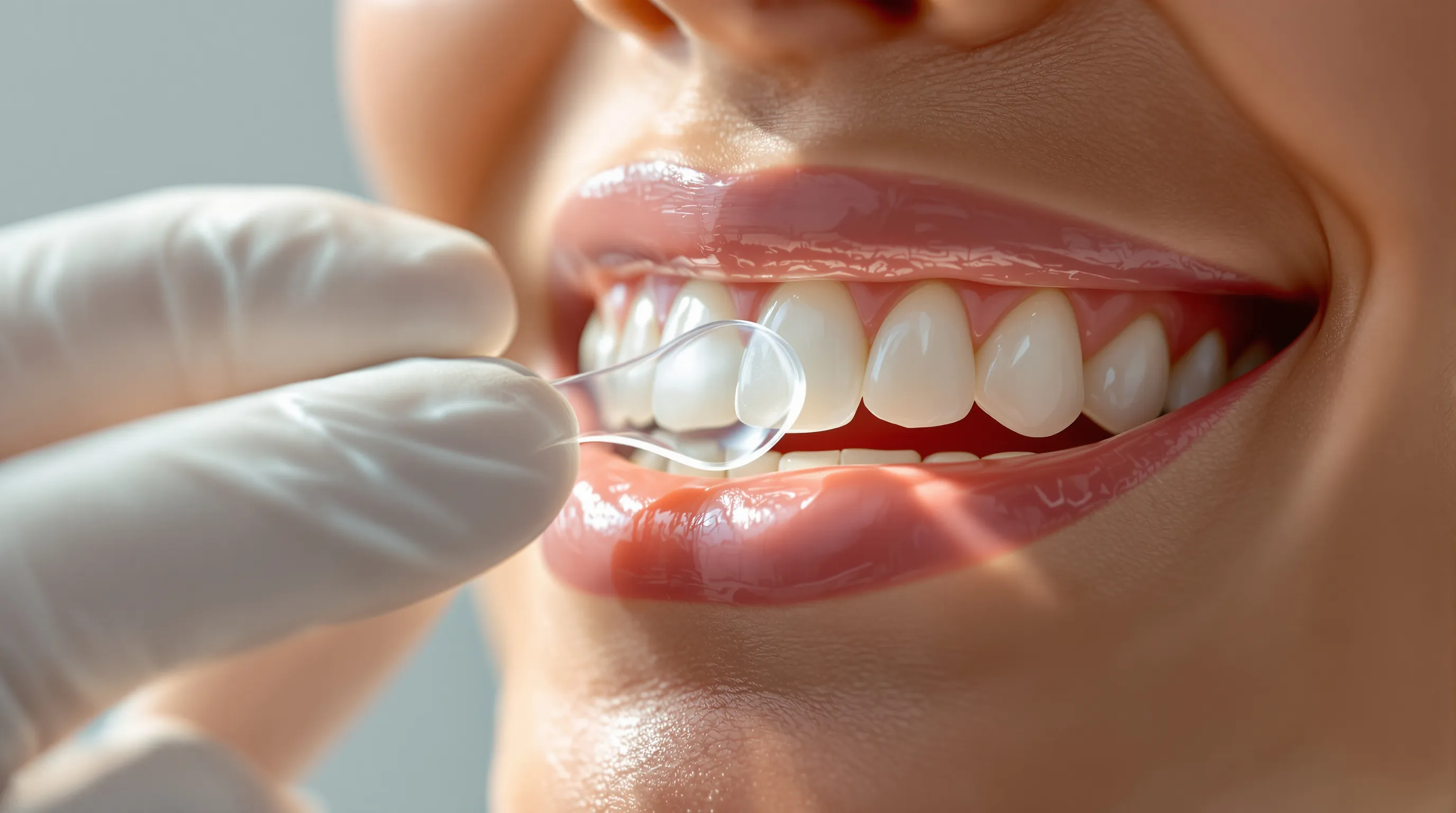
On paper, zirconia lasts longer. Zirconia veneers last 15 to 20+ years while porcelain E.max runs 10 to 15+ years, a gap of about five years.
But the real story is wider than any chart. In patient communities, people report porcelain veneers still going strong at 15, 20, and even 25 years. One woman has worn the same set since , well past the quoted range. The often-repeated "10-year" number is a conservative floor, not an expiration date. Composite veneers are the genuine short-timers, lasting only 5 to 7 years. The honest answer is that veneer lifespan is a range, not a date stamped on the box.
Here is what the gap does not tell you. A comparison of practitioner experience shows strength runs zirconia, then E.max, then feldspathic porcelain, yet a well-bonded porcelain veneer often outlives a poorly bonded zirconia one. In practice, the material sets the ceiling, not the result. The takeaway: zirconia wins the spec sheet, while your habits and your dentist decide the real number.
Does zirconia look as natural as porcelain on your front teeth?
Usually, porcelain still wins up front. Its translucency mimics enamel, while standard zirconia can read more opaque. The strength that helps it last works against a lifelike glow.
According to dentists on r/Dentistry, the esthetics order runs exactly opposite the strength order: porcelain, then E.max, then zirconia. That is why so many cosmetic dentists reserve zirconia for grinders and back teeth, where chewing force matters more than shine. The gap is shrinking, though. Newer multilayer zirconia is more translucent, and some clinicians now place a layered zirconia crown beside an E.max veneer and call them practically identical.
There is a catch worth naming. Matching shades across mixed materials is genuinely tricky, and zirconia and porcelain do not always take light the same way. Patients sometimes notice the difference. In practice, for a single bright front tooth, porcelain is still my first instinct. The takeaway: if your smile zone is the priority, lead with translucency, not just lifespan.
What does the right material choice look like in real cases?
Picture two patients with the same goal but different bites. The "before" is identical worry about a chip; the "after" splits along which material matched the mouth.
Case one, before: Bright, healthy front teeth, no grinding habit, and a wish for a flawless smile-zone makeover that still reads natural in photos.
Case one, after: Porcelain E.max delivered the translucency, and a decade-plus on it still passes for enamel.
Case two, before: A heavy grinder kept fracturing restorations and feared another chip within the year.
Case two, after: Zirconia absorbed the clenching force, paired with a nightguard, and held its ground far longer.
Same dilemma, two answers. Neither material lost. The bite chose the winner.
What will matter most for veneer choice in the next 12 to 24 months?
Expect the question to shift from "which material is strongest" to "which one survives in your mouth," as patients weigh lifetime cost and the dentist's technique over raw spec sheets.
- Prediction: Replacement-cycle thinking will steer more first-time buyers toward zirconia's longer lifespan. Weak signal: According to patient threads on r/PlasticSurgery, people already describe veneers as an ongoing financing commitment, not a one-time purchase. Why it matters: A material replaced once over two decades can cost more than a pricier one that lasts.
- Prediction: Bonding technique, not material grade, will be recognized as the real longevity driver. Weak signal: Practitioner forums show the same zirconia thriving in one office and failing in another. Why it matters: Your result depends on the hands placing it, so vet the dentist as carefully as the ceramic.
- Prediction: Multilayer zirconia will take more front-tooth cases where porcelain is risky. Weak signal: Clinicians report placing layered zirconia beside porcelain with near-identical results. Why it matters: Grinders who once traded looks for strength may soon get both.
What most buyers miss: published lifespans are best-case numbers. The real swing comes from technique and bite, not the label on the box.
Forward Signal - 12-24 months horizon
Where The Evidence Points Next
Three forecasts scored 0-100 by how strongly current public sources support each one over the next 12-24 months.
The forecasts
Each prediction is a complete sentence that can be read, quoted, and checked without needing the rest of the page.
Over the next 12-18 months, growing patient recognition that porcelain veneers require repeat financial commitment every 5-10 years will accelerate interest in zirconia's 15-20+ year lifespan - even at the higher per-tooth price of $1,500-$3,000 versus E.max porcelain at $1,500-$2,500 - particularly among patients planning full-arch smile restorations where replacement costs compound across multiple teeth.
Within 12-24 months, the clinical community will increasingly recognize that zirconia's fracture-strength advantage - exceeding 600-800 MPa - does not automatically deliver the advertised 15-20+ year service life, because decementation rates of 2-3% per year in some practices impose a practical longevity ceiling well below that figure, while dentists using strict bonding protocols report a first decementation event only after approximately 19 years of continuous use.
Over the next 18-24 months, multilayer zirconia - which achieves greater translucency than standard monolithic zirconia while still falling short of E.max aesthetics - will take an expanding share of anterior veneer cases among patients whose structural or occlusal risk profile makes E.max lithium disilicate unsuitable, such as those with missing posterior occlusal support, where zirconia is selected as the load-tolerant alternative despite patient expectations anchored to porcelain appearance.
Weak signals watched: Practitioner forums already document dramatic outcome divergence for zirconia that correlates with cementation technique rather than material grade - a pattern that in other dental materials categories has preceded formal protocol standardization efforts and revised manufacturer guidance.
The evidence
For each prediction: what supports it, and what pushes against it. Both sides are shown for every forecast.
- Those who got veneers years ago, how is it going for you? supports this forecast. [Community / Forum]
- What's your experience with dental veneers? supports this forecast. [Community / Forum]
- If veneers are supposed to last ~ 10 years. What happens after that? is the clearest counter-signal. [Community / Forum]
- Zirconia vs emax vs other is the clearest counter-signal. [Community / Forum]
- Who else thinks zirconia is so much more predictable than e-max? supports this forecast. [Community / Forum]
- Zirconia vs emax vs other supports this forecast. [Community / Forum]
- Zirconia vs emax vs other supports this forecast. [Community / Forum]
- zirconia porcelain crowns + veneers combo. supports this forecast. [Community / Forum]
- Zirconia vs Porcelain Crowns: 5 Tips to Choose the Right Dental is the clearest counter-signal. [Video]
- Patient is complaining zirconia isnt porcelain is the clearest counter-signal. [Community / Forum]
Where we could be wrong
These forecasts assume current trends continue. The scenarios below would meaningfully change them.
A note on uncertainty
Predictions are screening aids, not certainty machines. The strongest signal here (90/100) still has counter-evidence, and the contrarian signal (52/100) reflects real disagreement among sources.
- If regulators or buyers move in the opposite direction, Replacement-Cycle Cost Awareness Shifts Buyer Preference Toward Zirconia for Full-Arch Cases would weaken first.
- If the source mix shifts toward stronger contrary evidence, Cementation Protocol Variance Will Prove the Binding Constraint on Zirconia's Real-World Longevity could become the more durable forecast.
Which veneer is better if you grind your teeth?
If you grind, zirconia has the edge. Its fracture resistance handles clenching forces that can chip porcelain. But strength alone does not guarantee a veneer reaches year fifteen.
Here is the part the strength chart hides. According to dentists on r/Dentistry, zirconia's fracture strength exceeds 600 to 800 MPa: and beyond that plateau, extra hardness is clinically irrelevant inside an average mouth. What actually decides longevity is the bond. One practice reported zirconia coming loose at 2 to 3% per year, while another saw a single decementation in nearly 19 years using a strict cementation protocol. Same material, wildly different outcomes.
So the honest frame is bite plus bond, not material alone. Porcelain can still chip from grinding or an accidental impact, whatever its rating. In practice, I protect either material with a custom nightguard for grinders. The takeaway: choose the material for your bite, then judge the dentist on technique. That pairing is what carries a veneer past 15 years.
Best dentist for veneers and smile makeovers in Mercer County NJ?
The right choice is a dentist who picks the material for your bite, not a default one. At Imagine Advanced Dental Arts in Lawrenceville, that decision starts with a hands-on smile analysis.
Cost belongs in this conversation, and it is wider than a sticker price. Porcelain E.max veneers run $1,500 to $2,500 per tooth and zirconia runs $1,500 to $3,000 per tooth. But the smarter number is cost per year. Spread a $2,000 porcelain veneer over 12 years and it works out to about $167 a year; a $2,500 zirconia over 18 years lands closer to $139. Across a lifetime, that gap nearly closes. For a four-doctor practice serving Mercer County, mapping out that long view is exactly what a good consultation is for.
So how do you choose well? Ask to see real cases, ask which material the dentist would pick for your bite, and ask how they bond it. In practice, the dentist's hands matter as much as the ceramic. The takeaway: a thoughtful smile analysis beats any one-size chart, book one before you commit.
Key Takeaways
Key takeaways
- Zirconia lasts a little longer; porcelain looks a little better. Neither wins both.
- Your bite decides. Grinders lean zirconia; smile-zone front teeth lean porcelain.
- Bonding technique outweighs the material name for real-world longevity.
- Compare cost per year, not per tooth. The gap is smaller than it looks.
- Ask to see real cases and how the dentist bonds before you commit.
So which lasts longer? Zirconia, usually, by a few years: but that edge only appears when the bonding, the bite, and the case selection all line up. Here is the part most charts miss: the better-looking veneer and the longer-lasting one are rarely the same shell. Choose for your front teeth and your grind, not for a number. A smile matched to the mouth lasts.
Written by
Maria Rhode
Owner & President, Imagine Advanced Dental Arts
Dr. Maria Rhode, DMD is the owner and president of Imagine Advanced Dental Arts in Princeton, New Jersey. A Temple University-trained dentist with more than 20 years in practice, she focuses on dental implants and cosmetic dentistry.
Connect on LinkedInReady to choose the veneer that fits your smile?
At Imagine Advanced Dental Arts in Lawrenceville, NJ, our doctors match zirconia or porcelain to your bite, your front teeth, and your goals during a personalized smile analysis. Call 609-896-0589 to book your veneers consultation.
The verdict
Use this quick decision lens to match the material to your situation:
- Choose porcelain (E.max) if your veneers sit front and center, you want the most natural, light-catching look, and you do not grind heavily. Translucency is its superpower.
- Choose zirconia if you clench or grind, you have chipped restorations before, or the tooth takes heavy bite force. Strength is its superpower.
- Consider multilayer zirconia if you want both durability and a more lifelike front-tooth look, and your dentist is confident in the shade match.
- Either one works if your bite is gentle: then comfort, cost, and your dentist's bonding skill break the tie.
One rule cuts through it all: the longest-lasting choice is the one bonded well to the right tooth, protected by a nightguard if you grind. Pick for the mouth, not the marketing.
Zirconia vs porcelain veneers: frequently asked questions
Is zirconia the same as porcelain?
No. Zirconia is zirconium oxide, a harder ceramic, while porcelain veneers are usually E.max lithium disilicate glass. Some practices loosely call zirconia "porcelain," which occasionally leaves patients feeling misled.
What happens when a veneer finally fails?
Most can be replaced with little or no extra tooth reduction. If decay has formed underneath, the tooth may need a crown instead of another veneer.
Do veneers grind your teeth down to nubs?
No. Only a thin outer layer of the front is reshaped so the shell can grip. The tooth keeps nearly all of its structure.
Do I have to keep replacing veneers forever?
Not on a fixed clock. Many patients keep theirs well over a decade, sometimes two, with good care. Plan for an eventual redo, but it is not a yearly subscription.
Can I mix zirconia and porcelain in one smile?
It is possible, but matching shades across the two is tricky because they handle light differently. For a uniform smile, most dentists keep to one material.
Summarize This Article With AI
Open this article in your preferred AI engine for an instant summary.