

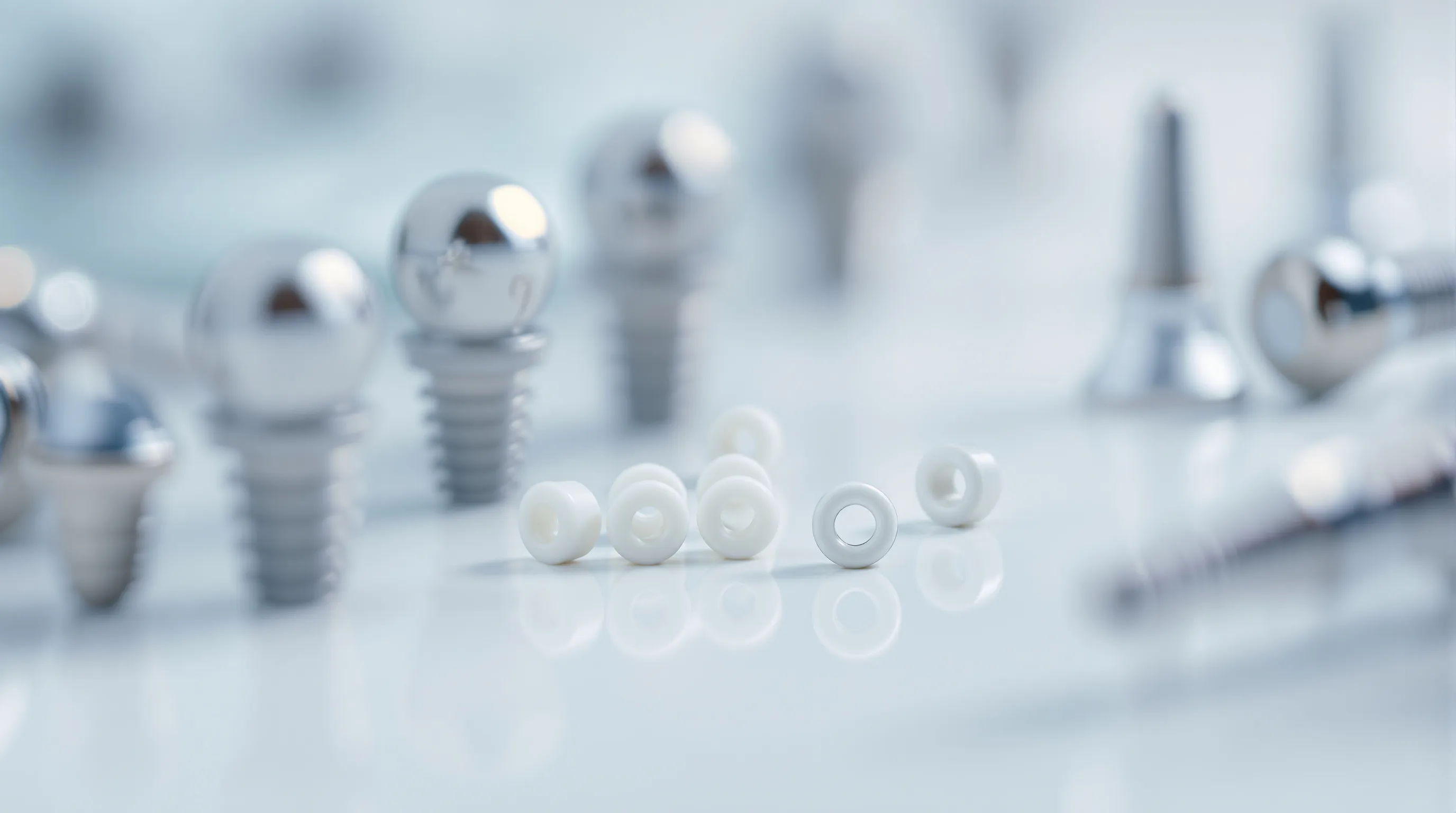
Most mini-implant patients hear a lot about the titanium posts and very little about the small nylon ring that actually creates the daily snap. That tiny component is the first thing to wear out - and knowing when and why it wears changes the entire maintenance picture. Read on for what I tell every snap-in denture patient in my practice: what the retention insert is, how long it really lasts, what speeds up its wear, and what to expect when it is time for a swap.
- What is the nylon retention insert and what role does it play in keeping my snap-in denture secure?
- How long do retention inserts realistically last before they need to be replaced?
- What warning signs tell me my inserts are wearing out and it is time to call the office?
Quick Answer
The short answer: On a mini-implant snap-in denture, the first part to wear out is not the implant - it is the nylon retention insert, a small O-ring-like component inside the metal housing embedded in your denture that creates the characteristic snap sensation. The titanium mini-implants themselves can last 15 to 25+ years with proper care. The nylon inserts, however, are consumable components that typically need replacement every 12 to 24 months, depending on bite habits, nighttime wear, and care routine. A loose denture is almost always a worn insert, not a failing implant.
I cannot tell you how many times a patient has sat in my chair, a worried look on their face, and said the same thing: "My snap-in denture is getting loose. Are my implants failing?" It is one of the most anxiety-producing moments for a mini-implant patient! And I completely understand why - after the investment they have made, the last thing anyone wants to think about is starting over.
But here is what I have learned after years of placing and maintaining these restorations: in the vast majority of cases, the implants are absolutely fine. The culprit is a tiny component most patients have never even heard of - the nylon retention insert. This little piece wears out long before the implant itself ever does, and once patients understand that, everything changes. A loose denture goes from terrifying to a simple 20-minute maintenance appointment. That is the kind of knowledge I want every snap-in denture patient to carry with them.
What Is the Nylon Retention Insert and Why Does Nobody Talk About It?
I remember the first time I really explained this to a patient - a retired teacher named Carol who had been coming to me for years.
She had just gotten her mini-implant snap-in denture and was absolutely thrilled with how secure it felt. "I had no idea my old dentures were bothering me so much until I tried this!" she said. Then, about 18 months later, she came in a little frustrated. The snap felt softer. The denture rocked a tiny bit when she chewed. She was convinced something had gone wrong with the implants themselves.
She was not alone in thinking that. And she was not right, either!
Here is what I told Carol - and what I tell every patient: your mini-implant snap-in denture has two very different components with very different lifespans. The mini-implants themselves are titanium posts that fuse to your jawbone through a process called osseointegration. Once properly integrated, mini implants can last 15, 20, even 30+ years with proper care. They are remarkable, durable little devices. The bone grows around the titanium surface and the implant becomes, for all practical purposes, a permanent part of your jaw.
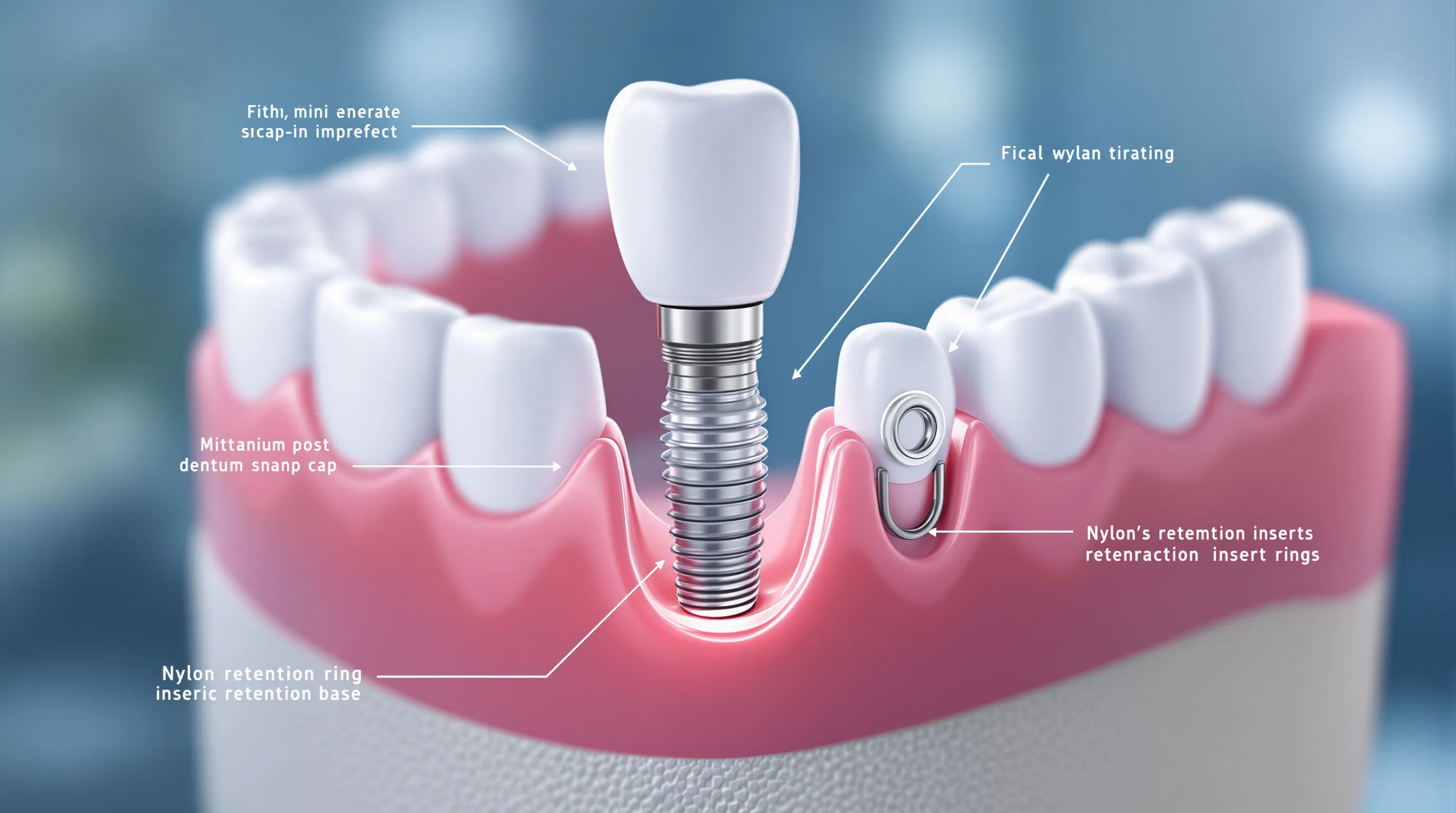
Then there is the nylon retention insert. This is a small, O-ring-like piece made of nylon or a similar polymer that sits inside the metal housing (called the cap or socket) that is built directly into your denture base. When you press your denture down onto the implants, the ball-shaped head of each mini-implant snaps through this nylon ring and holds the denture securely in place. That satisfying click you feel every morning? That is the insert doing its job.
The insert is literally a wear item - it is designed to absorb friction so the more expensive implant and metal housing do not have to. Every single time you put your denture in or take it out, that nylon ring flexes around the implant head. Multiply that by two insertions per day, 365 days per year, and you start to understand why the nylon gradually loses its elasticity and grip over time.
What makes this particularly interesting is that different manufacturers use color-coded inserts to indicate retention strength. Pink inserts tend to be the softest (easiest snap, least grip). Yellow are medium. Blue or green are firmer. Most of my patients do well starting with the medium yellow insert, though patients with bruxism or heavy bite force sometimes do better with the softer pink to reduce stress on the surrounding bone.
Carol ended up needing a fresh set of yellow inserts. Twenty minutes later, her denture snapped in exactly the way it did on day one. She left smiling - which is always the goal!
How Do You Know When Your Retention Insert Has Worn Out?
This is where I love being direct with my patients, because the warning signs are actually pretty clear once you know what to look for.
The tricky part is that the change is gradual - like how you do not notice a child growing until you look at an old photo and think, "When did that happen?"
The most common sign is that your denture does not snap in as crisply as it used to. A fresh insert gives a firm, satisfying click. A worn insert gives a softer, mushier sensation - or sometimes no click at all. Patients often describe it as the denture "sitting" in place rather than "locking" in. If you have had that feeling lately, you know exactly what I mean.
Here are the warning signs I tell every mini-implant patient to watch for:
- Denture rocks or tips during chewing - especially noticeable on one side, which may mean one insert has worn faster than the others due to an uneven bite
- Clicking or clunking sounds while eating or speaking, different from the intentional insertion snap
- Reaching for adhesive cream when you never needed it before - this is one of the clearest signals I see
- Visible gap between the denture base and gum tissue when you smile at yourself in a mirror
- Soreness or irritation under the denture from the denture shifting and rubbing the gum tissue with each chew
- Denture nearly falls out when yawning or laughing - this is a late-stage sign and should never be ignored
One important distinction I always make with patients: these symptoms can also, in rare cases, point to a problem with the mini-implant itself - bone loss around the post, a bent or fractured implant, or a loosened cap housing. If you experience sudden dramatic loosening rather than a gradual softening of the snap, please come in for an evaluation rather than assuming it is just the insert. A quick exam and a set of X-rays tells us everything we need to know.
The pattern I see most in my practice is slow, almost imperceptible loosening over 12 to 18 months. Patients often adapt unconsciously - chewing on a different side, avoiding certain foods - without realizing they are compensating for the worn insert. Do not wait until the denture is embarrassingly loose. Catching insert wear early is a quick, inexpensive fix. Waiting too long can lead to irritated gum tissue and, occasionally, unnecessary stress on the bone around the implants. Come in when the snap starts feeling soft, not when the denture starts feeling hopeless!
What Factors Speed Up Nylon Retention Insert Wear?
Not every patient replaces their inserts on the same schedule, and that is completely normal.
In my experience, there are several predictable factors that determine how fast the nylon wears down - and knowing them helps patients plan ahead and be proactive rather than reactive.
Bruxism and nighttime clenching are the single biggest accelerators I see in my practice. If you grind your teeth at night and wear your denture while sleeping (which I generally do not recommend for several reasons), the constant lateral forces on the retention inserts can wear them down in 6 to 9 months rather than the typical 12 to 24. If you are a grinder, let us have that conversation at your next visit. Your inserts, your bone, and your gum tissue will all thank you.
Here is a breakdown of the major wear factors and my recommendation for each:
| Factor | Effect on Insert Lifespan | My Recommendation |
|---|---|---|
| Nighttime bruxism with denture in | Can cut lifespan to 6 to 9 months | Remove denture before sleep; consider nightguard protection for the implant sites |
| Heavy bite force with fewer than 4 implants supporting the denture | More load per insert | Return for a check-in at 12 months rather than waiting for symptoms |
| Abrasive cleaning agents or stiff-bristle brushes on the denture | Degrades nylon surface texture over time | Use only ADA-approved gentle denture cleaners; soft brush only on the acrylic |
| Snapping denture in from one side rather than pressing straight down | Stretches inserts unevenly and rapidly | Two-finger, even downward press - I teach this to every patient at delivery |
| Acidic diet or chronic dry mouth | May accelerate polymer degradation | Stay well hydrated; rinse with water after acidic foods and drinks |
| Implant angulation that is not ideal | Creates uneven stress on specific inserts | Addressed at treatment planning and placement; monitored at every recall exam |
One thing that consistently surprises patients: the technique for inserting your denture matters more than most people realize. Pressing straight down on all implants simultaneously puts far less stress on the inserts than rocking the denture in from front to back or side to side. I teach every patient a two-finger press technique at the delivery appointment, and I genuinely believe this single habit can add months to insert lifespan.
The single most impactful lifestyle habit you can adopt to extend insert life is removing your denture each night, letting the components rest, and following a consistent gentle cleaning routine. Patients who do this reliably tend to land in the 18- to 24-month replacement window rather than the 10- to 12-month one. That difference is meaningful over years of wearing a snap-in denture.
What Happens at a Retention Insert Replacement Appointment
- Quick exam: I verify the implant posts are stable, the metal cap housings are intact, and the gum tissue around each implant is healthy - about 5 minutes
- Insert removal: A small pick tool pops the old worn nylon inserts out of the metal housings in your denture - takes 2 to 3 minutes for a full set
- Insert selection: We choose the right retention strength - pink (soft), yellow (medium), or blue/green (firm) - based on your current bite force, grinding habits, and preference
- Press in new inserts: Fresh nylon inserts are pressed firmly into each housing until they fully seat and click into position
- Test the snap: You press your denture in and we confirm the grip feels firm and even across all implants before you leave
- You walk out: No anesthesia, no recovery period, no downtime - the entire appointment is typically 15 to 20 minutes from start to finish
How Long Do Retention Inserts Really Last? What I See in Practice
This is the question I get asked most at mini-implant consultations, and I love giving patients a real answer based on what I actually see in my own practice - not just a manufacturer specification sheet.
In my practice, the average patient returns for insert replacement somewhere between 12 and 24 months after their initial restoration is placed. That range sounds wide, and it is - because the variables matter enormously, as I described in the previous section. But here is what the picture looks like when I break it down by patient behavior and compliance:
- Patients who remove their dentures nightly and follow care instructions: 18 to 24 months on average before inserts feel noticeably softer
- Patients who wear their dentures overnight: 9 to 14 months on average, sometimes sooner if grinding is also a factor
- Patients with diagnosed bruxism, regardless of night habits: 6 to 12 months before a noticeable drop in retention strength
- Patients over 65 with lighter bite force and excellent compliance: Often reach 24 to 30 months before inserts need swapping
One of my favorite long-term cases is a patient I will call Margaret. She has had her mini-implant denture for going on six years now. Margaret is a retired nurse - meticulous about everything - and she has followed every single instruction I have given her without exception. She removes her denture every night, soaks it gently in a non-abrasive solution, dries it carefully, and uses the two-finger press technique I taught her at delivery. In six years, Margaret has replaced her retention inserts exactly twice. That is it. Two quick in-office visits over six years, and her mini-implants are as solid and well-integrated as the day I placed them. She is one of my favorite examples of what proper maintenance looks like over the long haul.
Contrast that with another patient - same number of implants, similar bone density, similar age at placement - who wore her denture 24 hours a day and cleaned it with a stiff brush and regular toothpaste (which is far too abrasive for the nylon components). She needed insert replacement every 8 to 10 months.
The good news through all of this? Replacing inserts is inexpensive, fast, and completely in-office. We pop the old inserts out of the metal housings and press the new ones in. Patients walk out with a firm, secure snap that feels like brand new - because it is. I always tell patients: budget for this every one to two years, the same way you budget for a car's oil change. It is routine maintenance, not a sign that anything has gone wrong.
Before
After
Before: Worn Retention Inserts
The denture seats but does not click firmly. Patient compensates by chewing on one side and unconsciously avoids stickier or chewier foods. Slight soreness under the denture from micro-movement with each bite. Patient has started keeping adhesive cream in the nightstand - something they swore they would never need again after getting implants.
After: Fresh Retention Inserts
The denture snaps in firmly on the first press. All implants engage simultaneously with an even, satisfying click. Patient chews normally across all foods, speaks without hesitation, and laughs openly without concern. A 20-minute, no-anesthesia appointment completely restores the daily confidence the restoration was designed to provide.
What Actually Happens to the Mini-Implants Themselves Over Time?
Now that I have spent a lot of time talking about the nylon insert, I want to turn to the implants themselves - because they have their own story, and it is mostly a very good one.
Mini dental implants are typically made of Grade 4 or Grade 5 titanium, the same material used in orthopedic hip and knee replacements. Once osseointegration is complete - usually within 4 to 6 months of placement - the implant post becomes part of your jawbone for all practical purposes. The bone grows around and bonds to the textured titanium surface. On a healthy follow-up X-ray, the interface between implant and bone appears seamless and continuous.
Unlike the nylon insert, the titanium post itself does not wear down through normal daily use. What CAN affect mini-implant longevity over years and decades falls into a few distinct categories:
- Peri-implantitis from gum disease: The most common long-term threat to any implant, mini or standard. Bacteria accumulate around the implant collar at the gumline, cause inflammation, inflammation causes bone loss, and progressive bone loss eventually destabilizes the implant. Daily irrigation with a water flosser around each implant site is the single most effective tool for preventing this - I recommend it to every patient without exception.
- Excessive long-term bite force: Bruxism can slowly stress the bone-implant interface over many years. This is rare but real, which is why I address grinding habits at every maintenance visit and take it seriously at the treatment planning stage.
- Implant post fracture: Uncommon but possible, particularly with the smallest diameter mini implants under heavy or off-axis load. Mini implants range from about 1.8 to 3.0 mm in diameter, compared to 3.5 to 6.0 mm for standard implants, which makes them more susceptible to fracture under extreme force. Careful patient selection and bite assessment at the planning stage is the best prevention I have.
- Loose or degraded metal cap housing: The housing pressed or cemented into your denture can very occasionally loosen over years of use. This is separate from the nylon insert and less common, but it is something we assess at your annual maintenance exam.
The realistic lifespan of properly placed, properly maintained mini implants is 10 to 25 years or longer. I have patients who received their mini implants at other practices years ago and come to me now for ongoing maintenance - and many of those implants are performing beautifully. The titanium posts are not the weak link in this system.
Think of it this way: the nylon retention insert is the consumable part - the brake pad of the system. The mini-implant is the permanent structure underneath. When you maintain the brake pad on schedule, the structure underneath lasts for decades. Replace those nylon inserts when they soften, keep the gum tissue around each implant clean with daily flossing or irrigation, and your mini-implant snap-in denture can be one of the best investments you ever make in your quality of life.
Mini-Implant Snap-In Denture: Expected Lifespan by Component
| Component | Material | Expected Lifespan | Replacement Complexity |
|---|---|---|---|
| Nylon Retention Insert | Nylon / polymer | 12 to 24 months | In-office, 20 minutes, no anesthesia |
| Metal Cap Housing | Stainless steel or titanium alloy | 5 to 15 years | Lab procedure; denture sent out or in-house rework |
| Denture Base (acrylic) | Acrylic resin | 5 to 10 years (periodic reline as jaw changes) | Lab reline or full replacement denture |
| Mini-Implant Post | Grade 4 / Grade 5 titanium | 15 to 25+ years with proper care | Surgical replacement only if needed |
Component lifespan estimates reflect clinical patterns observed at Imagine Advanced Dental Arts, Lawrenceville, NJ. Individual outcomes vary based on bite force, systemic health, and care compliance.
Questions This Article Answers
- What is the nylon retention insert inside a mini-implant snap-in denture?
- How long do retention inserts last before they wear out and need replacing?
- What are the warning signs that retention inserts need to be swapped out?
- Which habits extend or shorten the life of retention inserts?
- Will the mini-implants themselves ever need to be replaced?
What to Watch for in the Next 12 to 24 Months With Your Snap-In Denture
If you are a current mini-implant patient or are considering this treatment, here is the realistic maintenance roadmap I walk every patient through - a clear preview of what the next two years will likely look like for your restoration.
Months 1 to 6: The inserts are fresh and the snap feels firm and confident. This is the honeymoon period, and I love seeing patients during it - they are typically overjoyed. Your focus during this window should be learning and locking in the correct insertion and removal technique. If anything feels uneven - one side snapping harder than another, or a clicking that does not feel right - come in early rather than waiting for your scheduled recall. Catching angulation issues early means less wear down the road.
Months 6 to 12: For most patients with good habits, the snap still feels strong. For patients who wear overnight or who grind, this is often when the first real signs of insert wear begin to appear. This is also an excellent window for your first post-restoration maintenance visit if you have not already had one - we can check insert condition before you consciously feel the difference.
Months 12 to 18: This is the most common window for the first insert replacement in my practice. Roughly half to two-thirds of patients who follow proper care guidelines are ready for fresh inserts somewhere in this range. When you come in, the appointment takes about 20 minutes and you walk out feeling like you have a brand new denture. It is always one of my favorite appointments - quick win, happy patient, walking out smiling.
Months 18 to 24: Patients who have been meticulous about nightly removal and gentle cleaning often reach this window without needing replacement yet. If your inserts are still feeling firm at 24 months, celebrate! You are doing everything right and it is showing.
Looking further ahead: advances in retention insert materials are an active area in implant dentistry. Some manufacturers are exploring PEEK (polyether ether ketone) and other high-performance polymers that may extend insert lifespan meaningfully beyond the current 12- to 24-month window. I follow these developments closely and look forward to bringing new options to my patients as they become clinically proven and available.
The most important thing I can tell any snap-in denture patient: keep your annual maintenance appointments even when everything feels perfect. We check insert wear, assess bone health with X-rays, clean around the implant collars, and catch anything unusual before it becomes a real problem. Mini-implant restorations thrive with regular professional attention - and so do the people wearing them.
What's Coming in the 12-24 months
What Wears Out First on Mini-Implant Dentures Next
Three evidence-scored forecasts on where mini-implant denture wear and replacement demand are headed.
Forecasts for mini-implant denture durability
Use these to anticipate which parts of a mini-implant denture will need attention first over the next two years.
Over the next 1-2 years, dentists will more often steer patients away from mini implants toward All-on-4 or standard implants, especially where ridge bone is thin or short, despite marketed success rates near 95%.
Patients who start with mini-implant dentures will increasingly face escalating repair and replacement costs that lead a portion of them to upgrade to standard implants or All-on-4 systems within the next two years.
Patients with mini-implant dentures will keep returning for O-ring replacements every 6-12 months, with retention loss (not implant failure) the dominant maintenance event over the next 1-2 years.
Small Clues Worth Watching O-rings on mini implants need replacement every 6-12 months on average, versus about 18 months for locator-style inserts, and retention inserts are already color-coded by wear level in practice. Dentists have advised patients against mini implants as 'removable and wouldn't last long,' a practitioner reported roughly a dozen failed mini-implant cases in about 1.5 years, and one case saw a mini implant osseointegrate yet still fail to stabilize the denture due to insufficient ridge support. One denture wearer spent over $50,000 on crowns, build-ups, and deep cleanings trying to keep implants functional after being told replacement would be needed every 7-10 years, while All-on-4 was quoted at a higher upfront cost but positioned by dentists as more durable than minis.
Supporting and contrary evidence
Each forecast below is paired with the real-world reports and clinical accounts that support or complicate it.
- Mini implants versus All on 4 implants is what puts this forecast on the board. [Community / Forum]Original poster is 67 years old, needs full upper and lower arch replacement, and is evaluating mini implants vs. All-on-4 implants (Reddit r/askdentists thread, posted 4 years before archive date). “they said mini implants were removable and wouldn't last long.”
- The case rests on So What about these mini implants? [Community / Forum]Thread is from r/Dentistry, posted 14 years ago (dated by relative post age; site "Top posts" tag references April 2013, so approximate origin ~2011-2013). “Please invest in the long-term and shell out for a proper dental implant.”
- Removing Mini Implants is what puts this forecast on the board. [Video]Patient originally scheduled for mini implants due to a thin and short mandibular ridge. “it's an uphill battle trying to keep a denture in there with just these guys" - presenter, on relying solely on mini implants for denture stability.”
- Lower front bridge supported by mini implants? complicates the call. [Community / Forum]OP's original bridge (covering teeth #22-27, lower front) failed after 25 years in service. “Are 2 regular implants really stronger that 4 (twice as many) mini implants? Would 4 anchor points to the jaw be more stable than only 2 anchor points?”
- Backing it: Just backed out of implants - implant wearers experiences? [Community / Forum]Original poster ("kezopster") had upper dentures for years without glue, and was 2.5 months into wearing lowers at time of posting. “If you have insurance great, if you don't it is a very expensive constant drain.”
- Mini implants versus All on 4 implants is the strongest public backing for this call. [Community / Forum]Poster had a stroke approximately 1.5 years prior to posting and wants to avoid invasive surgery during recovery.
- Against it: Lower front bridge supported by mini implants? [Community / Forum]Old bridge and supporting teeth were removed and bone grafts were placed at the site.
- Tech Talks: Mini Implants & O Rings points the same way. [Video]95% of mini implants have a 1.8mm ball diameter. “Clinician/customer (paraphrased by Chris): "I'm just tired of replacing O-rings.”
- Backing it: Snap-in isn't what I expected. [Community / Forum]OP (Tropicaldaze1950) waited one year after tooth loss before getting lower implants, and required adjustments just 5 days after receiving the snap-in denture. “They aren’t what people think and a lot of times not worth the cost.”
- Removing Mini Implants is the strongest argument against it. [Video]Mini implants successfully osseointegrated but failed to provide a stable denture because the ridge offered no additional support for the denture.
What could change this outlook
These are the market and clinical conditions that would push the forecast in a different direction.
A Little Wiggle Room
Our strongest call is 70, while 70 is the one most likely to surprise us.
- If regulators or buyers move in the opposite direction, Integration failure, not just wear, is pushing patients toward standard implants would weaken first.
- If the source mix shifts toward stronger contrary evidence, Integration failure, not just wear, is pushing patients toward standard implants could become the more durable forecast.
Frequently Asked Questions About Mini-Implant Retention Inserts
How often should I replace my retention inserts?
Most patients in my practice replace them every 12 to 24 months. Patients who remove their dentures nightly and follow care instructions typically fall in the 18 to 24 month range. Patients who wear their dentures overnight or who grind their teeth often need replacement every 9 to 12 months.
Will I know when my inserts need replacing, or does it sneak up on me?
Usually you will feel it gradually - the snap becomes softer, or the denture starts to rock slightly during chewing. Some patients notice they are reaching for adhesive cream when they never did before. Annual maintenance visits let me check insert wear before you consciously feel the difference, which is ideal.
How much does it cost to replace retention inserts?
Insert replacement is one of the most affordable maintenance procedures in dentistry - a small fraction of the cost of the original restoration, with no lab fees and no anesthesia. Contact our Lawrenceville, NJ office for current pricing.
Can I replace the inserts myself at home?
I strongly advise against DIY replacement. Choosing the correct retention strength, seating the insert properly without damage, and ruling out other contributing issues all require professional assessment. An improperly seated insert can also fall out of the housing and create a choking risk. Please come in - it is a quick, easy appointment!
Why does one side of my denture feel looser than the other?
Asymmetrical wear is common when one side of your bite carries more force, or when implant angulation differs slightly between sides. One or two inserts may wear faster than the others. This is exactly why we examine each insert individually at maintenance visits rather than simply asking whether the denture snaps overall.
Do retention inserts come in different strengths?
Yes! Most systems use color-coded inserts: pink or white for light retention (easiest insertion, least grip), yellow for medium, and blue or green for firm. New patients typically begin with medium. We adjust based on bite force measurements, grinding history, and personal preference.
How long do the mini-implants themselves last compared to the inserts?
This is the key distinction every patient should understand. Properly maintained titanium mini-implants can last 15 to 25+ years. The nylon retention inserts need replacement every 12 to 24 months. The implant is the long-term investment; the insert is the routine maintenance item. Once patients understand this, the whole system becomes much less intimidating.
Key Takeaways
Key Takeaways
- The nylon retention insert - not the titanium mini-implant - is the first component to wear out on a snap-in denture
- Inserts typically last 12 to 24 months; patients who wear dentures overnight or grind their teeth may need replacement in 9 to 12 months
- Warning signs include a softer snap, denture rocking during chewing, clicking sounds while eating, and reaching for adhesive cream
- Insert replacement takes about 20 minutes, requires no anesthesia, and immediately restores full retention
- Mini-implants themselves can last 15 to 25+ years with proper daily hygiene and regular professional maintenance
- The single best habit to extend insert life: remove your denture each night and follow a gentle cleaning routine
Here is what I want every mini-implant snap-in denture patient to carry with them: when the snap softens and the denture starts to move, the implants are almost certainly fine. The culprit is almost always the nylon retention insert - and that is a 20-minute fix, not a crisis. Mini-implant restorations represent one of the most durable, life-changing investments in modern dentistry. The key is understanding which component is the consumable one, watching for the signs that it needs attention, and keeping up with annual maintenance so small things never become big things. I have watched this treatment transform patients' confidence, their diet, their willingness to laugh out loud in public - and that genuinely moves me every time. If your snap-in denture is feeling loose right now, please reach out to us in Lawrenceville. Nine times out of ten, we are going to swap a nylon insert, and you are going to leave smiling.
Sources & Further Reading
References and Further Reading
- American Dental Association - Oral Health Topics: Dental Implants (ada.org)
- Bidra AS, Almas K. Mini implants for definitive prosthodontic treatment: a systematic review. Journal of Prosthetic Dentistry, 2013.
- Elsyad MA, et al. Retention and stability of implant-retained mandibular overdentures using different attachment systems. Journal of Oral Implantology, 2018.
- Griffitts TM, Collins CP, Collins PC. Mini dental implants: an adjunct for retention, stability, and comfort for the edentulous patient. Oral Surgery, Oral Medicine, Oral Pathology, 2005.
- American Academy of Implant Dentistry - Patient Resources (aaid.com)
- Journal of Prosthetic Dentistry - Clinical studies on mini-implant overdenture retention systems.
Related Articles
Written by
Maria Rhode
Owner & President, Imagine Advanced Dental Arts
Passionate about delivering the best possible care to my patients. From my days in residency to owning a beautiful hi-tech dental office, I never stop learning and advancing myself and now my practice.
Connect on LinkedInSummarize This Article With AI
Open this article in your preferred AI engine for an instant summary.